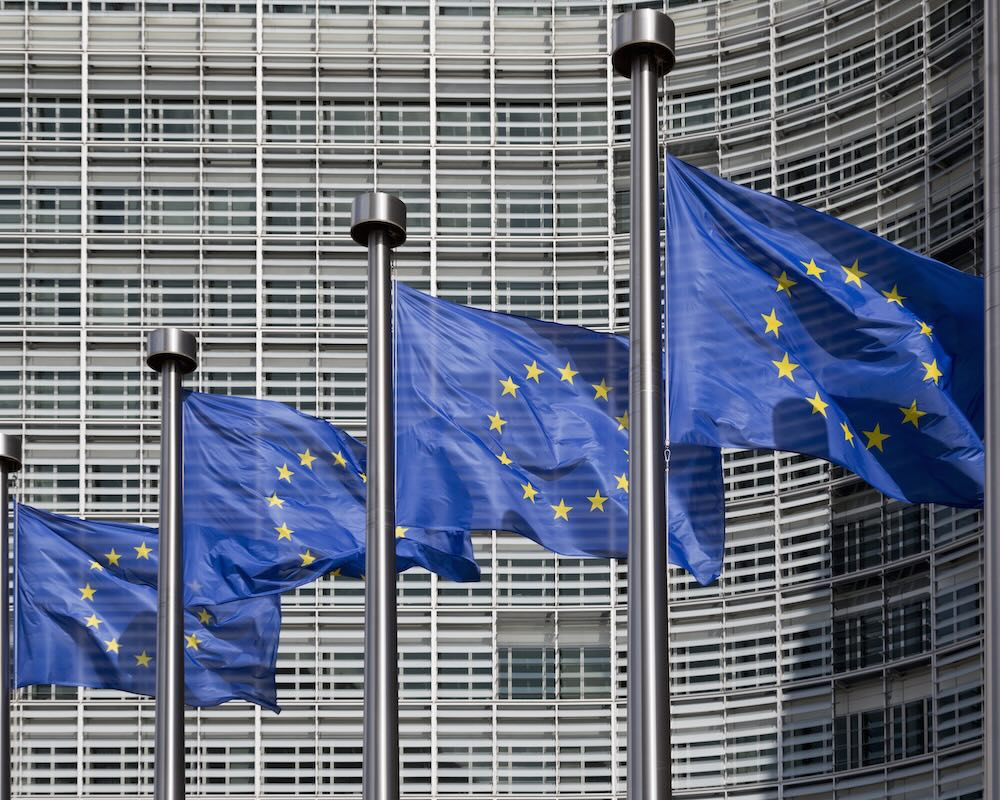
The deal, reached by the Council presidency and European Parliament negotiators on 10 June, forms part of the EU’s defence readiness simplification package. It aims to reduce administrative delays in procurement, permitting, reporting and cross-border industrial cooperation. The Council said the agreement is intended to give member states and industry “a clearer path to act quickly” and reinforce Europe’s defence capacity.
The new measures are not a substitute for higher defence budgets, ammunition production or new weapons orders. Their significance lies elsewhere. They show that Brussels now recognises that Europe’s capability problem is not only financial. It is also procedural.
Since Russia’s full-scale invasion of Ukraine in 2022, European governments have announced higher military spending, joint procurement initiatives and plans to expand industrial production. Yet the conversion of those commitments into equipment, stockpiles and deployable systems has remained uneven. Defence companies have repeatedly pointed to fragmented procurement, slow permits, uncertain demand, complex funding rules and national barriers to cross-border production.
The provisional agreement attempts to address some of those bottlenecks. According to the Council of the EU, the package simplifies the management of the European Defence Fund, clarifies how environmental and chemicals legislation applies to defence-readiness activities, and makes applications to the fund less administratively burdensome. It also increases support for small and medium-sized enterprises and seeks to make fund implementation more predictable.
One of the most concrete elements is the introduction of a maximum 102-working-day limit for permit-granting procedures for defence-readiness projects. If a competent authority has not taken a decision before the deadline expires, the permit request may be tacitly approved. National law will still be able to provide derogations where there is a grave risk to human health or national security.
That clause is important because production capacity depends not only on contracts but also on factories, testing facilities, supply-chain expansion and infrastructure. A government can allocate money to defence, but industry cannot increase output quickly if new facilities remain trapped in lengthy national procedures.
The agreement also changes rules on intra-EU transfers and security and defence procurement. It raises procurement thresholds, introduces scope for occasional joint procurement, adds a de minimis rule for contract modifications and allows more flexibility in framework agreements. It also introduces two mandatory general transfer licences: one for transfers between certified suppliers and recipients, and another for transfers within intra-EU industrial partnerships.
These details may appear technical, but they go to the core of Europe’s defence-industrial weakness. A fragmented market makes it harder to build scale. National procurement systems often remain separate, while supply chains frequently cross borders. Delays in transferring components or modifying contracts can slow production even when political agreement exists.
The EU has set a target of strengthening defence readiness towards 2030. That target has become more urgent because of the war in Ukraine, uncertainty over the long-term reliability of American security commitments, and the pressure on European stockpiles after years of military support for Kyiv. The question is no longer whether Europe should spend more, but whether it can spend faster and more coherently.
The agreement also reflects a wider political tension. Member states remain responsible for defence procurement and national security decisions, but the EU is increasingly trying to shape the industrial conditions under which those decisions are implemented. That means Brussels is moving into areas where national sovereignty, industrial policy and military planning overlap.
The provisional agreement still has to be endorsed by the Council and Parliament before legal and linguistic revision and formal adoption. That process is usually procedural once negotiators have reached a deal, but implementation will be the real test. A simplified EU framework will not automatically remove national delays, labour shortages, raw-material constraints or uneven demand from governments.
The main value of the agreement is therefore practical rather than symbolic. Europe’s defence debate often focuses on headline spending figures, but readiness depends on whether orders can be placed, facilities expanded, components moved and production lines scaled in time. If the new rules reduce delays, they could help industry respond more quickly to demand. If they merely simplify paperwork on paper, Europe’s 2030 readiness target will remain exposed to the same problem that has marked much of the post-2022 rearmament effort: political urgency moving faster than administrative systems can deliver.