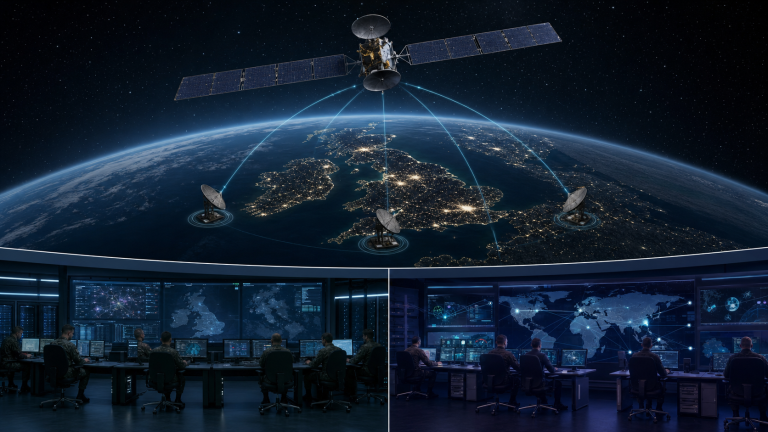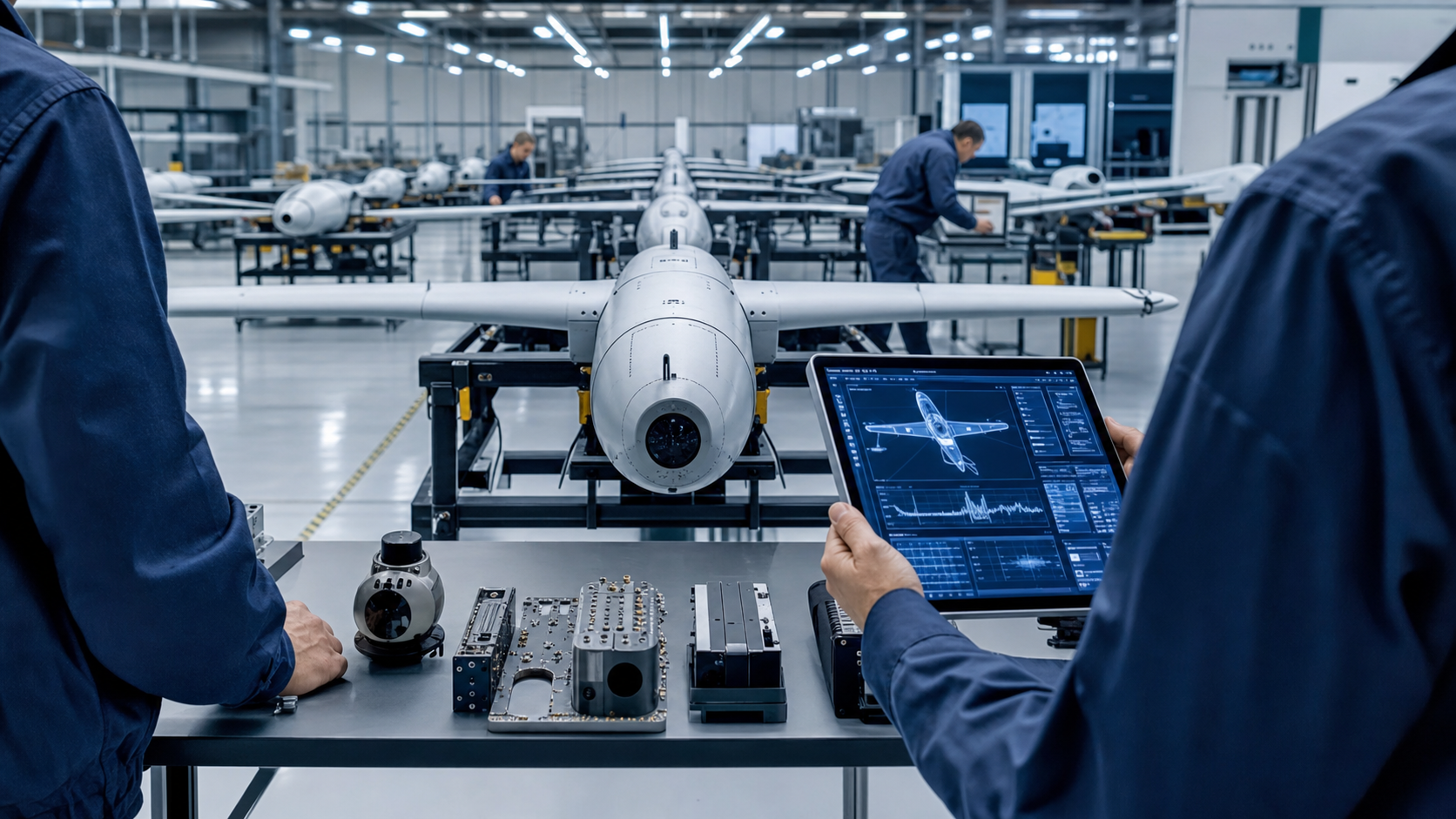
Proposed US production lines using Ukrainian drone technology could protect capacity and shorten Pentagon learning cycles, but intellectual property, procurement guarantees and Ukrainian access to output remain unresolved.
Ukraine and the United States are developing an arrangement that could establish American production lines using Ukrainian drone technology and connect Ukrainian companies to the Pentagon’s Drone Dominance programme.
President Volodymyr Zelenskyy described the initiative as part of a wider shift from emergency assistance towards joint industrial capacity. Until a signed agreement identifies companies, sites, systems and order volumes, it remains a framework under development rather than an operating factory.
The strategic idea is nevertheless important. Ukraine has accumulated battlefield knowledge in reconnaissance, first-person-view attack systems, interceptors, maritime drones, electronic warfare and long-range strike. The United States offers capital, secure manufacturing space, test infrastructure and a large procurement market.
Combining those strengths could give the Pentagon quicker access to technology refined under combat conditions while giving Ukrainian manufacturers production capacity less exposed to Russian attack.
Traditional aid relationships assume that the United States provides advanced systems and a partner receives them. Drone warfare has disrupted that hierarchy.
Ukrainian developers modify hardware and software in weeks as Russian jamming, detection and tactics change. Their advantage is not necessarily a single airframe; it is the feedback loop connecting soldiers, engineers and dispersed factories.
Defence Matters has reported how Ukraine’s drone partnerships with Denmark, Estonia and the Netherlands turn battlefield experience into NATO industrial cooperation. A US plant would extend that model into the world’s largest defence market.
The Pentagon should not treat Ukrainian designs as finished products that can be frozen into a conventional multi-year programme. The production system must preserve rapid changes and accept multiple suppliers.
Ownership is the first unresolved question. A Ukrainian company may contribute airframe design, software, communications methods and production know-how. A US partner may fund adaptation, certification and manufacturing.
Contracts should identify background intellectual property brought by each party and new intellectual property developed jointly. Ukraine needs the right to continue producing and modifying its own systems. The United States needs sufficient rights to sustain equipment purchased with public funds.
An arrangement that transfers control permanently in exchange for short-term investment could weaken Ukraine’s industry. Conversely, restrictions so tight that the Pentagon cannot maintain or compete production would make procurement unattractive.
Licensing, royalties and export control must be agreed before engineering data moves. Sensitive battlefield information requires protection, but classification should not become a mechanism for excluding the Ukrainian inventor from later improvements.
Factory location does not answer allocation. If US production is funded by Pentagon orders, output may be reserved for American forces. Ukraine may provide technology without receiving systems at the speed it needs.
A sound agreement should establish minimum Ukrainian access, surge rights during emergencies and rules for third-country exports. It should also state who pays when designs change.
Procurement guarantees are essential. Building a line without multi-year demand can leave a facility idle after an initial demonstration. The Pentagon can use staged orders tied to performance and cost, preserving competition while giving manufacturers enough confidence to invest.
Ukraine’s operational units should participate in testing. A platform that performs well on a US range may fail under dense electronic warfare. Test events must reproduce jamming, navigation denial, poor weather and contested communications.
Moving final assembly to the United States does not automatically produce a sovereign system. Motors, batteries, cameras, radios and semiconductors may still come from China or other external suppliers.
Defence Matters has examined how the EU-Ukraine drone deal exposed dependence on Chinese components. American production needs the same audit.
Not every commercial component requires domestic manufacture. The priority is to identify parts whose denial would stop production and qualify alternatives before a crisis. Designs should permit substitution rather than depend on a single proprietary component.
Manufacturing quality is another challenge. Ukraine’s distributed industry achieves speed through flexibility. Pentagon programmes demand traceability, safety and cyber standards. The partners need a certification model that improves reliability without extending development for years.
The Pentagon’s programme can provide a purchasing channel for systems that would struggle to enter traditional major-acquisition structures. Ukrainian companies need clear evaluation criteria and a fair opportunity to compete, not a showcase role attached to an American prime contractor.
US users can learn from Ukrainian concepts of operation as much as from hardware. Procurement should include training, data and iteration with developers.
The arrangement can also strengthen deterrence by dispersing production across allied territory. A factory outside Ukraine is less vulnerable to Russian missiles, although it remains exposed to cyber espionage, supply disruption and political change.
Announcements should be judged against five outcomes: signed intellectual-property terms, an identified production site, funded orders, guaranteed Ukrainian access and a schedule for operational testing.
Employment figures and ribbon-cuttings are secondary. A successful plant must deliver relevant systems at scale and modify them quickly as the threat changes.
The project also needs governance. Ukrainian anti-corruption safeguards, US export law and end-use monitoring must be integrated without creating parallel approval chains that halt urgent deliveries.
If designed well, the factory would mark a genuine change in the defence relationship. Ukraine would become a source of combat-proven technology, while the United States would turn that knowledge into protected industrial capacity.
If ownership is unclear and orders remain speculative, the initiative may amount to little more than political branding. The battlefield advantage lies in speed. The industrial agreement must preserve it.