A Russian frigate’s warning shots near a UK-flagged civilian yacht in the English Channel should be read less as an isolated sailing incident than as a warning about the crowded maritime risk environment now developing close to UK waters.
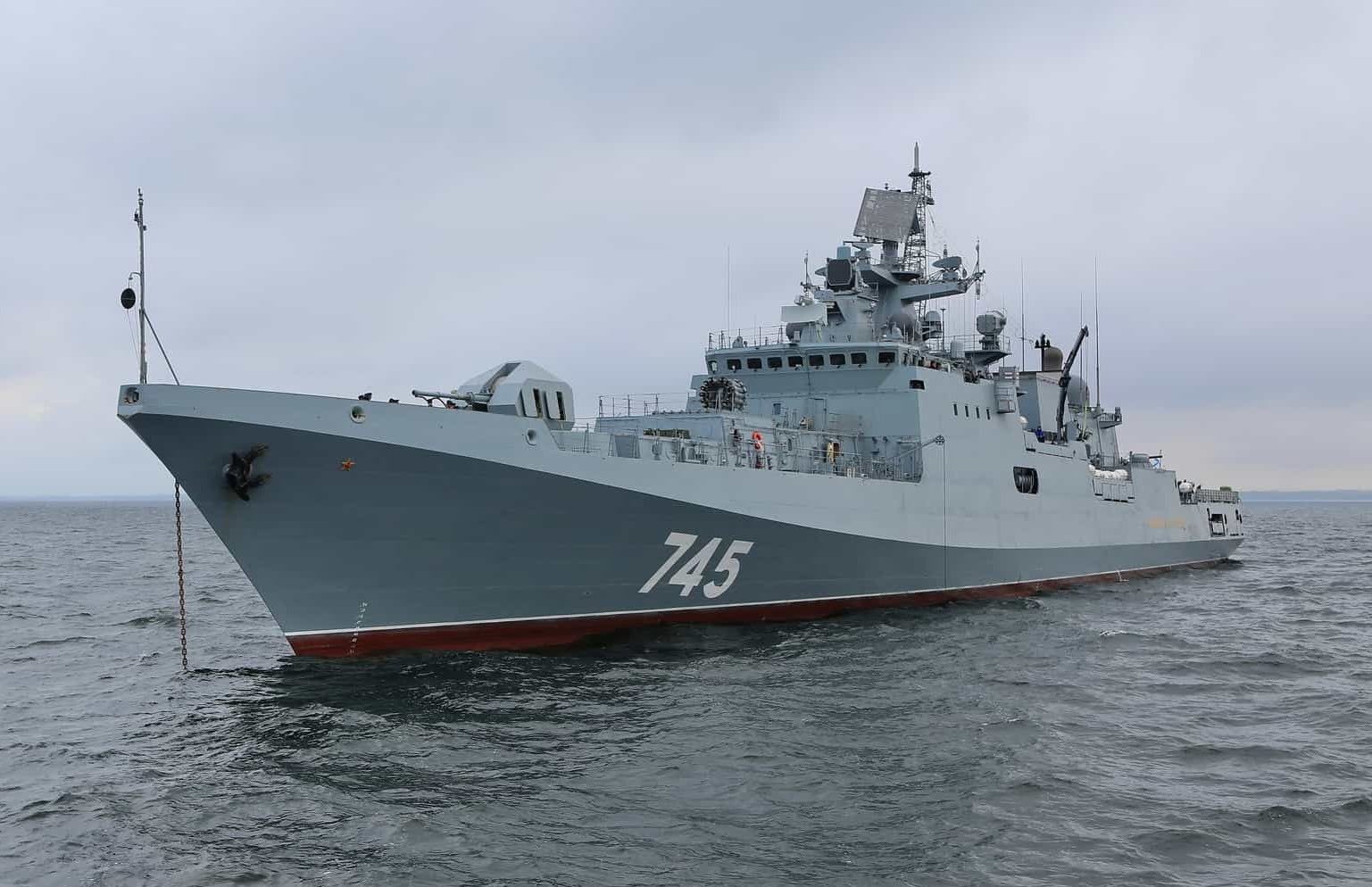
The incident occurred on 16 June when the Russian frigate Admiral Grigorovich fired warning shots near the British yacht Bright Future, roughly 20 nautical miles south of the Isle of Wight and outside UK territorial waters. The yacht, carrying a British couple, was not damaged and no injuries were reported. Russia said the shots were fired after the yacht came dangerously close and failed to respond to warnings. UK reporting and official accounts described the action as intended to prevent a collision, while the yacht’s occupants disputed parts of the Russian version.
On its own, the incident might appear to be a navigational scare in foggy conditions. In context, it is more serious. It came days after British forces intercepted the MV Smyrtos, a Russia-linked tanker suspected of operating in Moscow’s shadow fleet. That operation, and the subsequent legal proceedings against the tanker’s captain, placed UK enforcement of Russia sanctions directly into the Channel’s maritime security picture.
The English Channel is one of the world’s busiest maritime corridors. Commercial shipping, ferries, fishing vessels, leisure craft, naval units and patrol vessels all operate in a constrained space where miscommunication can escalate quickly. A Russian warship firing warning shots near a civilian yacht therefore has significance even if the immediate explanation is collision avoidance.
The key issue is not whether the Admiral Grigorovich deliberately threatened the yacht. UK Prime Minister Keir Starmer later described the episode as reckless rather than sinister, a careful distinction that avoided suggesting a deliberate Russian attack. But “reckless” is still a security concern when the vessel involved is a Russian frigate operating near dense civilian traffic and under Royal Navy observation.
Warning shots are rare in peacetime maritime encounters because they introduce uncertainty. Civilian crews may not understand naval signalling. Warships may assume an exclusion zone around themselves that small vessels do not recognise. In poor visibility, busy waters or politically charged circumstances, that creates room for miscalculation.
The MV Smyrtos case adds the wider operational context. The tanker, described in UK reporting as part of Russia’s shadow fleet, was intercepted by British forces in the Channel after allegedly breaching sanctions. Its captain has been charged in connection with the transport of Russian oil, while the vessel remains a symbol of the growing effort to enforce sanctions at sea.
Russia’s shadow fleet is not only a sanctions-evasion problem. It is a maritime-safety and security problem. Many such vessels operate with opaque ownership, uncertain insurance, complex flag histories and routes designed to avoid scrutiny. When coastal states move from monitoring to interception and legal enforcement, Russia’s naval presence around those routes becomes more politically sensitive.
There is no confirmed official link between the Smyrtos interception and the warning shots near Bright Future. UK officials have treated the yacht incident as separate. But the sequence matters because it shows how quickly different strands of maritime risk can converge: a sanctioned tanker, a Russian frigate, a civilian yacht, Royal Navy monitoring and a public debate over escalation.
Royal Navy patrol vessels, including HMS Mersey, were reported to have monitored the Russian warship and assisted the yacht after the incident. That is the visible part of a routine but increasingly important mission: tracking Russian naval movements close to UK waters while avoiding unnecessary escalation.
The operational challenge is delicate. The UK must enforce sanctions and protect its waters without turning every Russian naval passage into a confrontation. At the same time, it cannot treat warning shots near a civilian vessel as normal background noise. Maritime safety depends on predictable behaviour, clear communication and restraint, especially where warships and civilian craft share sea lanes.
For Russia, naval transits through the Channel are a way to demonstrate presence and probe allied responses. For the UK, the task is to maintain surveillance, protect civilian traffic and show that sanctions enforcement will continue. The risk is that each side’s signalling becomes more muscular while the physical space remains crowded and ambiguous.
The broader strategic point is that the Channel is becoming more than a trade route. It is part of the enforcement geography of the Russia-Ukraine war. Sanctioned cargoes, shadow-fleet vessels, naval escorts, patrol ships and civilian shipping now intersect in waters that were not designed to function as a low-level confrontation zone.
That does not mean a naval clash is likely. It does mean that maritime incidents near UK waters deserve more attention than their immediate scale may suggest. A warning shot, a boarding operation or a disputed vessel course can all become politically charged when they occur against the background of sanctions, Russian military activity and NATO surveillance.
The Admiral Grigorovich incident ended without injury or damage. That is the good news. The warning is that the operational environment is becoming less forgiving. Civilian crews, naval commanders and coastguards are now operating in a Channel where Russia’s war economy, sanctions enforcement and naval signalling are all present at once.
The yacht may have sailed on safely. The maritime-risk problem remains.
UK Forces Intercept Sanctioned Russian Shadow Fleet Tanker in English Channel