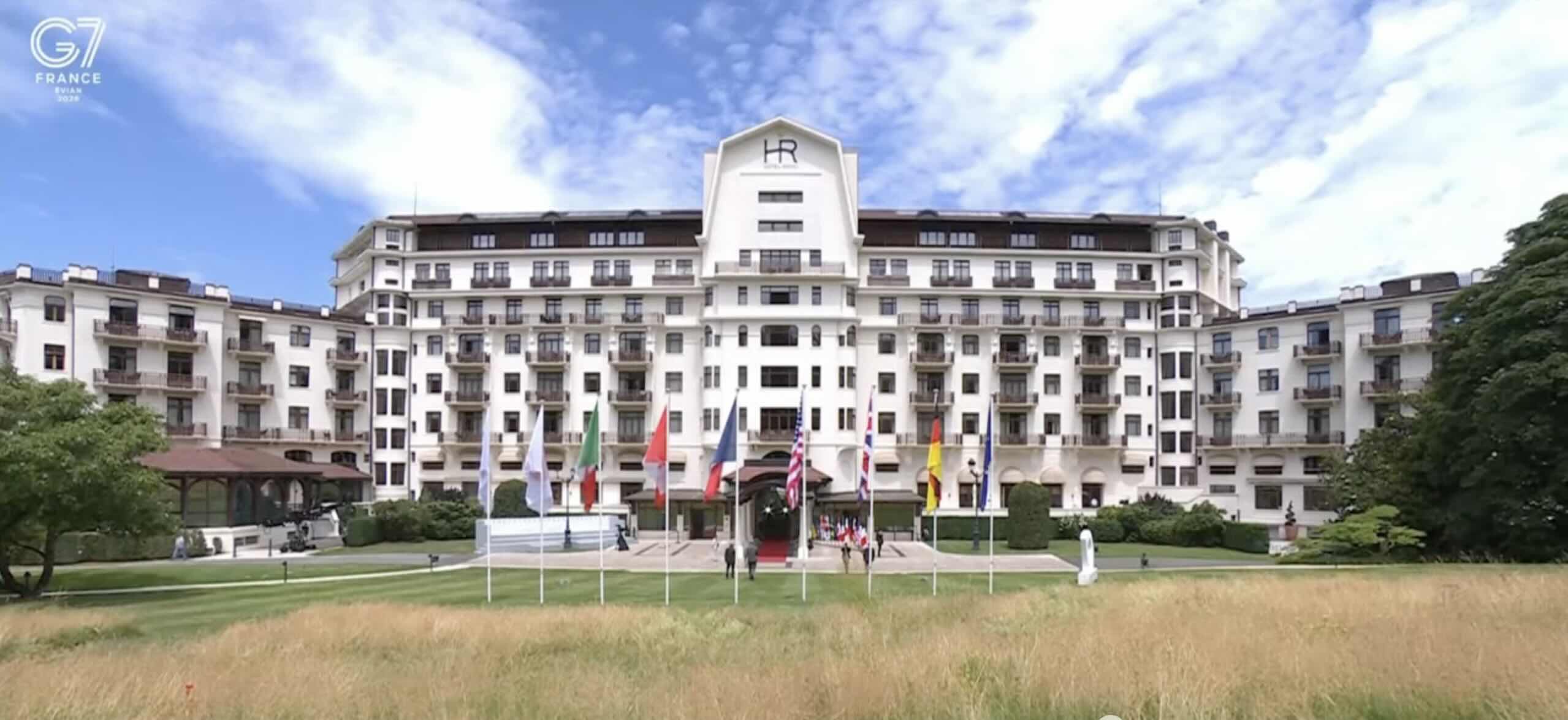
The G7 summit in Évian has produced a renewed pledge to strengthen Ukraine’s air defences, but the practical test will be whether the statement leads to rapid deliveries of systems, interceptors and production licences rather than another round of political commitments.
In their statement on geopolitical issues, G7 leaders said they would increase the delivery of “air defence capacities, additional systems and interceptors, and long-range capabilities” to Ukraine. They also said they were ready to consider extending licences to Ukraine to increase domestic military production.
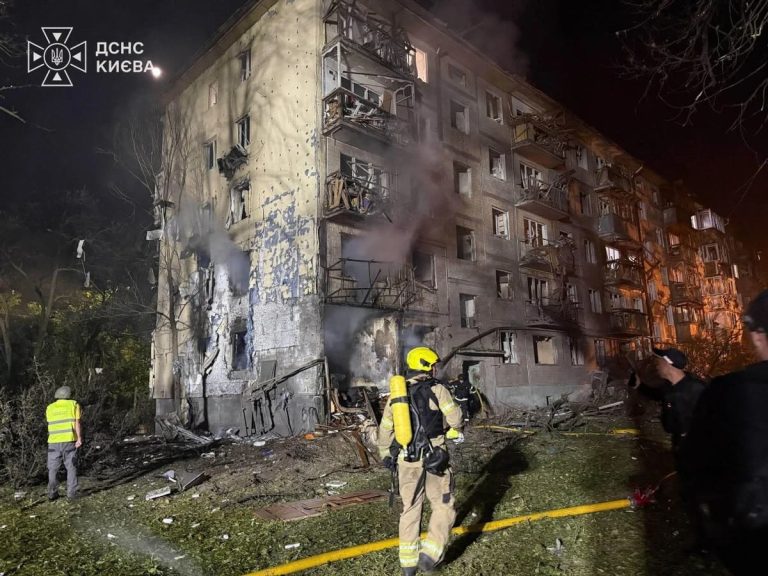
The wording is important because Ukraine’s air-defence requirement is no longer limited to the supply of individual systems. Kyiv needs layered protection against drones, cruise missiles and ballistic missiles, as well as a reliable flow of interceptors. Without that, even advanced systems can lose operational effect once missile stocks fall below the level needed to respond to repeated Russian strikes.
Ukrainian President Volodymyr Zelenskyy presented the summit outcome as a concrete gain for Kyiv. In a statement after the G7 meeting, he said the most important result was agreement on additional strengthening of Ukraine’s air defence, alongside new pressure on Russia and support for defence and energy resilience.
The official Ukrainian readout of the G7-Ukraine meeting also placed air defence at the centre of the discussions, listing the strengthening of Ukraine’s air defences, licences for the production of anti-ballistic missiles and systems, energy support and pressure on Russia among the main subjects raised in France. That framing reflects Kyiv’s current priority: protection of cities, energy infrastructure, military logistics and industrial capacity.
The G7 statement linked the air-defence pledge to a broader assessment that Ukraine has gained “new momentum” on the battlefield. That phrase is politically useful for Kyiv, but it also raises the burden on its partners. If Ukraine is to preserve battlefield initiative while protecting its rear areas, the supply of interceptors cannot be treated as a secondary issue. Russia’s long-range strike campaign is designed not only to damage infrastructure but also to exhaust Ukrainian air-defence stocks.
The summit text did not specify which systems would be delivered, how many interceptors would be provided, or when they would arrive. That absence leaves the central question unresolved. Ukraine has repeatedly sought Patriot systems and missiles, as well as other Western and European air-defence assets, but allied stockpiles remain limited and production lines cannot be expanded overnight.
The possible licensing element may prove as important as immediate deliveries. If Ukraine receives authority to produce certain Western-designed missiles or air-defence components domestically, it could reduce dependence on slow external supply chains. However, licensing alone would not solve the problem quickly. It would require industrial capacity, secure production sites, financing, technology transfer, and protection from Russian strikes.
The energy dimension adds further urgency. G7 leaders said they would support Ukraine through the coming winter, based on needs identified by Ukrainian authorities. That commitment reflects experience from previous Russian winter campaigns, when power-generation and transmission assets were targeted to impose civilian and economic pressure. Air defence and energy resilience are therefore linked: repairing infrastructure matters, but protecting it is the harder task.
The sanctions element of the G7 statement follows the same logic. Leaders said they would increase pressure on Russia’s war economy, including through stronger measures against the oil and gas sectors. For Kyiv, sanctions and air defence are connected instruments. Sanctions aim to reduce the resources available for Russia’s missile and drone campaign; air defence is the immediate means of limiting its effect.
For European governments, the pledge also exposes a wider defence-industrial issue. Ukraine’s needs are testing whether Western production can meet the demands of a prolonged high-intensity war. The supply of interceptors, launchers, radar components and spare parts is no longer only a Ukraine policy question. It is also a measure of NATO’s own readiness and Europe’s ability to sustain munitions production under pressure.
The Évian statement therefore gives Ukraine a stronger political signal, but not yet a full answer. Its value will depend on decisions taken after the summit: which systems are released, which countries provide interceptors, whether licensing is approved, and whether production financing is accelerated.
For Kyiv, the risk is that the G7 language raises expectations while delivery remains constrained by stockpile shortages and political hesitation. For the G7, the risk is reputational and strategic. If leaders recognise Ukraine’s air-defence shortage but fail to close it before Russia’s next winter campaign, the gap between declaration and delivery will become part of the battlefield calculation.
The summit has moved the issue up the political agenda. It has not yet resolved the operational problem. Ukraine’s air-defence test will be measured not by the wording agreed in Évian, but by what arrives in Ukrainian batteries, factories and energy sites before the next wave of Russian strikes.