Defence Minister Boris Pistorius confirmed that Berlin had formally ended the project, citing delays, rising costs and excessive programme risk. Around €2.3 billion had already been spent. The decision closes a long-running procurement dispute, but it does not remove the military requirement that the programme was intended to meet.
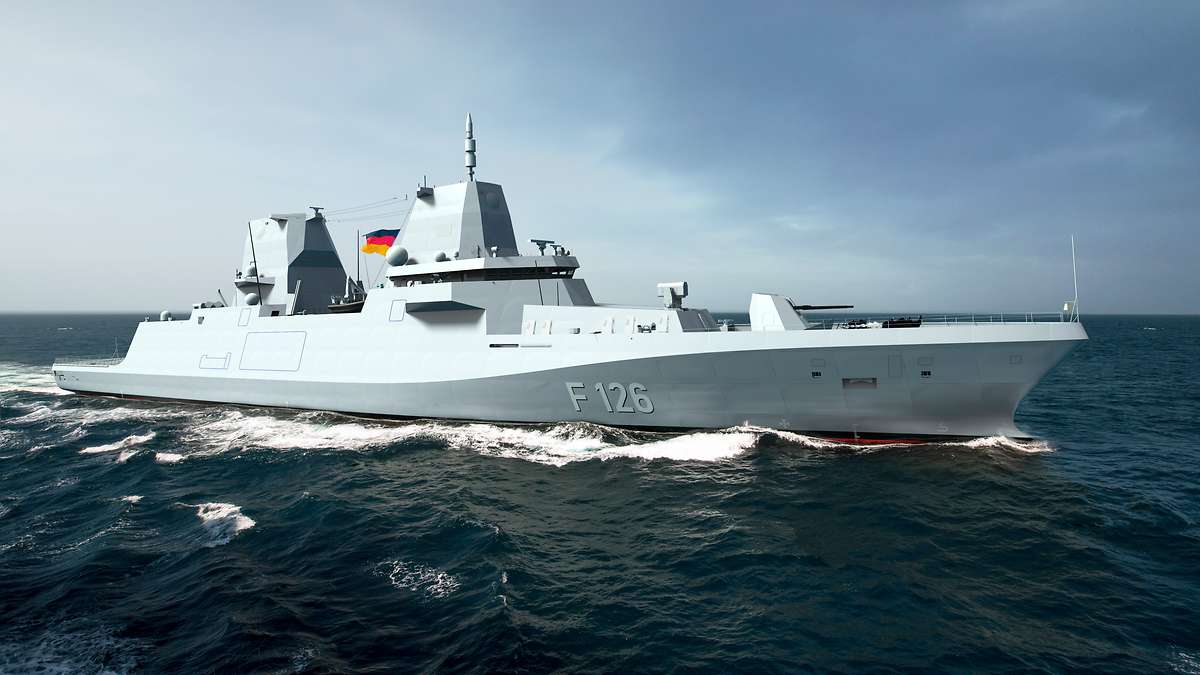
The F126 was planned as a new class of large German Navy frigates. Six ships were expected under a programme initially estimated at about €10 billion. The project later faced cost pressure and schedule delays, with projections reportedly rising to more than €18 billion if it continued. The first ship had been expected in 2028, with later vessels following into the early 2030s, according to German reporting on the official termination of the programme.
Berlin has now chosen to shift towards smaller Meko A-200 frigates from Thyssenkrupp Marine Systems. The alternative plan is expected to involve up to eight ships, with the first vessel planned for delivery in 2029. That change reduces one risk but creates another: Germany must still close a naval capability gap at a time when NATO is placing greater emphasis on maritime security, anti-submarine warfare and protection of critical infrastructure in northern European waters.
The cancellation is more than a German procurement story. It comes as European governments are under pressure to raise defence spending, rebuild military stocks and increase industrial output after years of underinvestment. The political debate is usually framed around headline budgets. The F126 case shows that additional money does not automatically translate into usable capability.
For Germany, the problem is particularly sensitive. Berlin has promised a more serious defence posture since Russia’s full-scale invasion of Ukraine in 2022. Yet major German programmes have repeatedly encountered delays, cost growth and industrial disputes. The F126 decision therefore raises a practical question: whether Germany can convert its larger defence ambitions into delivered equipment on predictable timelines.
The industrial impact is also considerable. Rheinmetall, which had sought a major role in rescuing the programme through its naval business, saw its shares fall sharply after the cancellation became public. The market reaction reflected a broader reassessment of where future German naval orders may go and how much political confidence Berlin still has in different parts of its defence-industrial base. One market analysis described the decision as a blow to Rheinmetall’s naval ambitions after the company had been positioning itself to take over the troubled programme.
The original F126 contract had involved Damen Schelde Naval Shipbuilding as prime contractor. German officials had already raised concerns about the programme’s timetable and budget. Berlin is reportedly examining whether damages can be claimed, although Pistorius has indicated that the prospects for success may be limited. That suggests Germany may have to absorb a substantial sunk cost while trying to replace the cancelled capability through a new route.
For NATO, the operational issue is not the industrial dispute itself, but the time lost. The Baltic Sea and North Sea have become more important to alliance planning. Russia’s naval activity, the vulnerability of underwater infrastructure, energy security and reinforcement routes have all increased the importance of credible European naval forces. A delayed or cancelled frigate programme therefore affects more than shipyard order books.
The planned alternative may offer a faster and less costly path, but it is not a simple like-for-like replacement. The F126 was conceived as a large, flexible platform with extensive mission capacity. The Meko A-200 is smaller. It may be easier to procure and operate, but the change still requires Berlin to explain how the new fleet structure will meet the same operational demands.
The episode also exposes a wider European defence dilemma. Governments want national industrial participation, rapid delivery, technological ambition and cost control at the same time. In naval procurement, where platforms are complex and production runs are small, those objectives often collide. When they do, the result can be years of delay before a programme is reset.
For Germany, the immediate challenge is credibility. Cancelling a troubled project may be defensible if the alternative is faster, cheaper and operationally adequate. But the decision will be judged by delivery, not by the announcement itself. If replacement ships arrive late, or if costs rise again, the F126 cancellation will be seen not as a correction but as another stage in the same procurement failure.
Europe’s rearmament debate has focused heavily on spending targets. The F126 case points to a more difficult measure: how quickly governments can turn money into ships, aircraft, ammunition and air-defence systems that forces can actually use. Germany has chosen to stop a failing naval programme. It now has to prove that the replacement does not become the next one.