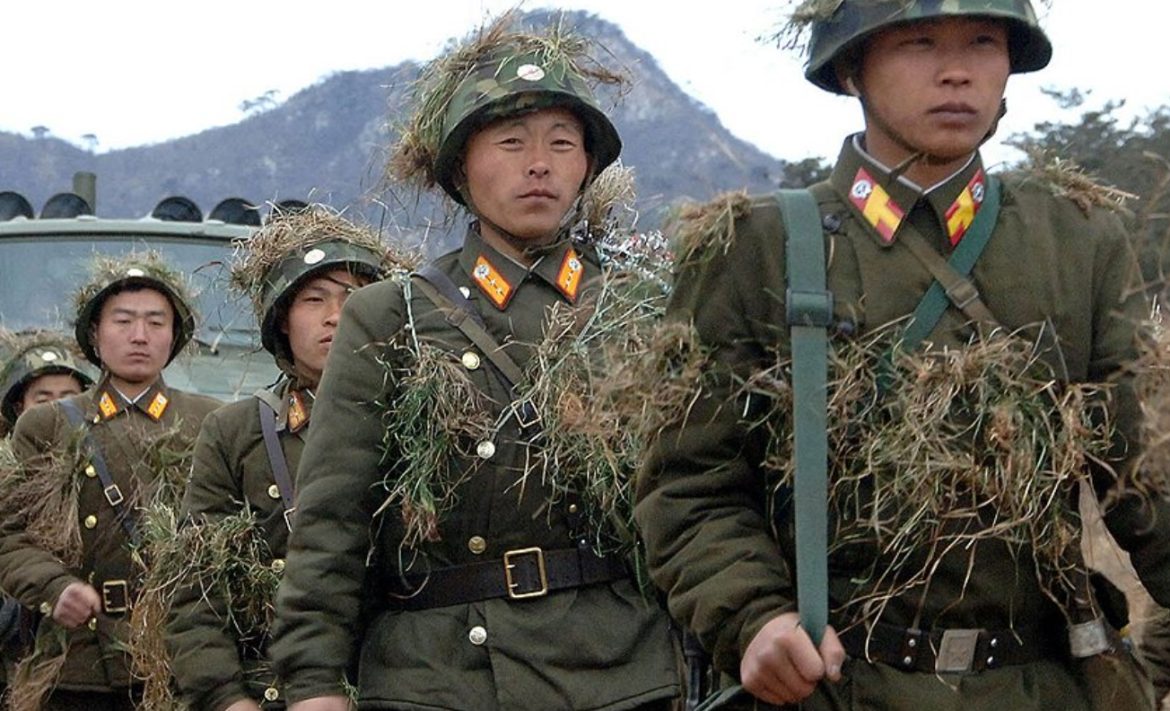
North Korean forces suffered more than 7,000 killed and wounded while fighting alongside Russia in the Kursk region, according to a new assessment from Ukraine’s military intelligence agency.
The HUR figure covers North Korean participation during Ukraine’s cross-border operation in Kursk in 2024 and 2025. The report explicitly notes that the claim could not be independently verified and that Pyongyang has not published its own casualty total.
That uncertainty should remain central to any assessment. Casualty figures in wartime are difficult to establish, and all parties have an incentive to shape perceptions of battlefield effectiveness. Even so, the Ukrainian estimate adds to a body of South Korean and British intelligence that has placed North Korean losses in the thousands.
Previous South Korean and British assessments put North Korean casualties in Kursk at about 6,000 killed and wounded. HUR’s new figure raises the estimated total above 7,000 without providing a public breakdown between fatalities, wounded personnel, missing troops and those returned to service.
That distinction matters. A casualty is not necessarily a death, and wounded soldiers may return to duty. The figure nevertheless indicates a severe attrition rate when compared with estimates of the overall North Korean deployment.
South Korean intelligence was reported earlier this year to have placed approximately 11,000 North Korean troops in the Kursk region. If the totals refer to broadly comparable contingents and periods, losses on the scale claimed by Kyiv would represent a major cost.
Initial reports from Ukrainian troops described North Korean soldiers as disciplined but poorly prepared for the density of drones, electronic surveillance and precision fires on the modern battlefield.
That picture evolved. North Korean units reportedly became more dispersed, improved their response to unmanned systems and adjusted small-unit tactics. Their willingness to continue attacks under fire made them useful to Russia even where coordination and communications were initially weak.
This adaptation is important because the deployment was not only a manpower transaction. It gave Pyongyang access to combat experience against Ukrainian forces using Western weapons, electronic warfare and drone-heavy reconnaissance.
North Korea can carry those lessons into the training of its wider army. Russia, meanwhile, gained troops that could be used on its own internationally recognised territory without immediately increasing another round of domestic mobilisation.
Russia’s use of North Korean forces helped internationalise the war while concealing part of its true manpower cost from the Russian public.
Defence Matters previously reported that South Korean intelligence placed about 10,000 North Korean troops near the Russia-Ukraine border. Their presence gave Moscow additional infantry and engineering capacity at a time when Russian forces were sustaining heavy losses across several fronts.
The arrangement, however, is not free. Pyongyang has supplied artillery ammunition, missiles and personnel while seeking money, food, energy and military technology in return.
HUR says North Korean ammunition and equipment deliveries increased in early 2026, particularly 122mm and 152mm shells and ballistic missiles. The military relationship therefore connects the casualty claim to a much larger exchange involving manpower, munitions and technology.
The human cost to North Korean soldiers and their families is substantial, especially in a state where casualty reporting is tightly controlled. Strategically, however, the regime may still see the deployment as beneficial.
Combat experience is rare for the North Korean military. Units that survive can provide lessons on drone warfare, counter-battery operations, battlefield medicine, electronic warfare and the performance of Russian systems.
Technology transfers are potentially more consequential. Assistance with air defence, missiles, satellites or nuclear delivery systems could improve capabilities that directly affect South Korea, Japan and US forces in the Indo-Pacific.
This means North Korean losses cannot be assessed only through the Kursk campaign. They form part of an exchange in which Pyongyang accepts attrition in return for resources and knowledge that may strengthen its position at home and abroad.
Neither Moscow nor Pyongyang has an incentive to publish a complete accounting. Russia avoids acknowledging how much foreign manpower was needed to restore control in Kursk. North Korea avoids exposing the price paid by troops sent to a distant war.
Ukraine has the opposite incentive: highlighting North Korean losses demonstrates the effectiveness of its Kursk operation and the extent of Russia’s dependence on external partners.
Independent confirmation may emerge slowly through intelligence disclosures, repatriation records, honours, memorials or testimony from captured soldiers. Until then, the 7,000 figure should be described as a Ukrainian intelligence claim rather than an established total.
The precise number does not change the central development. North Korean troops fought in a European war in meaningful numbers, suffered substantial losses and gained practical combat experience under a mutual-defence relationship with Russia.
For NATO and Asian allies, that links two security theatres often discussed separately. Ammunition and soldiers move west from North Korea; money, technology and operational knowledge can move east from Russia.
The hidden manpower bill is therefore larger than the number of casualties in Kursk. Moscow reduced pressure on its own mobilisation system, but it deepened a military partnership that can strengthen a nuclear-armed state in northeast Asia.
Whether the final casualty total is 6,000, 7,000 or another figure, the deployment has already altered the strategic balance. Russia’s war has given North Korea a battlefield, a customer and a route to military modernisation.