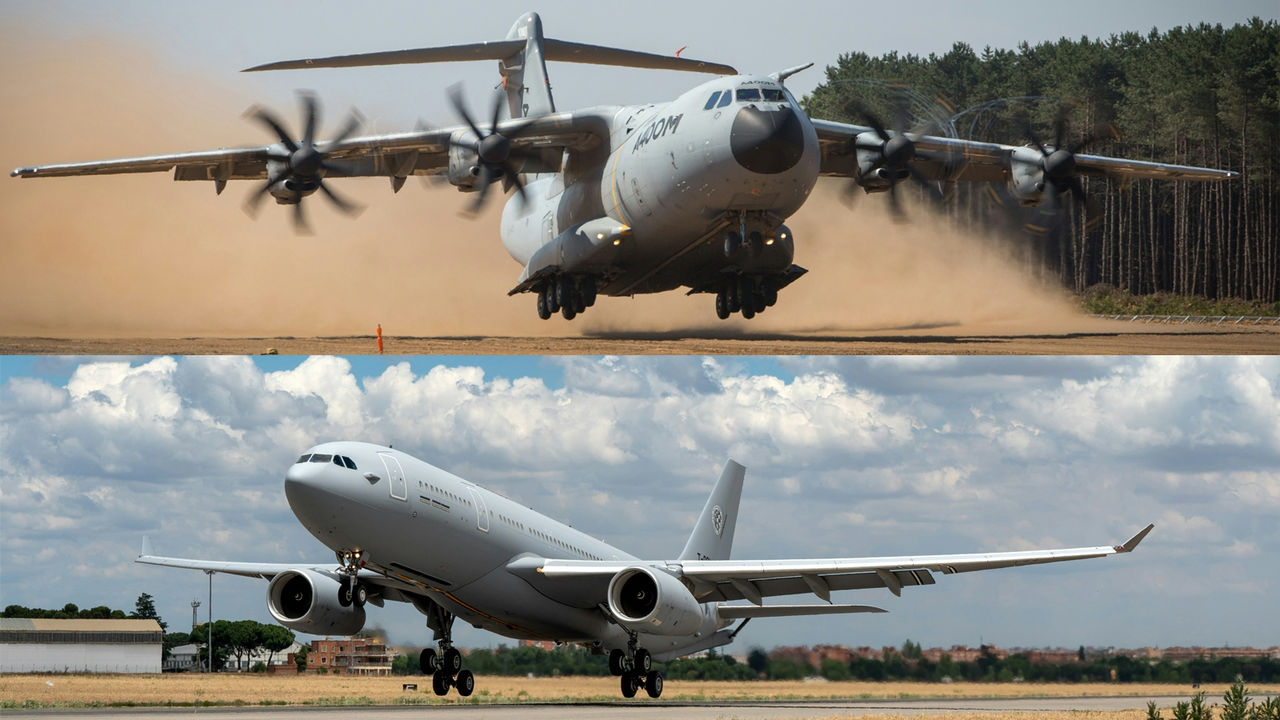
NATO allies have launched a multinational initiative to create a shared Airbus A400M fleet and expand their pooled A330 multi-role tanker force, addressing two of the least visible but most consequential weaknesses in European defence.
Belgium, Croatia, France, Poland, Spain, Turkey and the United Kingdom signed the A400M High Visibility Project in Ankara. NATO also announced the imminent delivery of a tenth A330 MRTT to the existing multinational fleet, which is expected ultimately to operate 12 aircraft.
The Alliance described the initiatives as a major step in strategic airlift and tanker capability. The announcement is less dramatic than a new fighter or missile contract, but it addresses the machinery that makes every other deployment possible.
European armies may possess brigades, air-defence batteries and combat aircraft, yet deterrence depends on placing them where NATO plans require. Personnel, armoured vehicles, helicopters, ammunition and spare parts must cross national borders quickly and continue moving after commercial transport is disrupted.
The A400M can carry outsized military cargo, operate from relatively austere airfields and support tactical as well as strategic missions. Pooling aircraft allows countries that cannot justify a full national fleet to buy access to flying hours and common support.
Poland and Croatia are particularly significant participants because neither currently operates the aircraft. The arrangement could give them capability without duplicating the entire training, maintenance and command structure.
The A330 MRTT fleet addresses a related weakness. Fighters cannot sustain long-range patrols or rapidly reinforce distant regions without aerial refuelling. Tankers also move passengers and cargo and can conduct medical evacuation.
European reliance on US tankers has long limited independent operations. Expanding the multinational fleet does not replace American capacity, but it gives NATO’s European members more ability to sustain air missions on the northern, eastern and southern flanks.
Defence Matters recently reported that Europe had filled many gaps in NATO planning while remaining exposed in specialised US capabilities. Airlift and refuelling are areas where pooled European assets can reduce that exposure in a practical way.
A multinational fleet offers scale, common maintenance and better utilisation. Aircraft do not sit idle simply because one national air force has no immediate mission, and maintenance downtime can be absorbed across a larger pool.
The model also requires rules for priority and availability. Several members may request the same aircraft during a crisis. Governments need agreed procedures governing national emergencies, NATO operations, evacuations and support to partners such as Ukraine.
Crewing, basing and funding must also be settled. The A330 fleet demonstrates that a common structure can work, but the A400M project remains an initiative rather than a fully contracted fleet with a declared number of aircraft and delivery schedule.
Strategic autonomy is often discussed through combat systems. Mobility deserves equal attention. A force dependent on another country to transport, refuel or sustain it is not operationally autonomous, even if its tanks and fighters were manufactured domestically.
Air mobility must also connect with rail, ports, roads and pre-positioned stocks. Aircraft cannot compensate for weak military corridors or insufficient handling capacity at destination airfields. NATO’s 1.5 per cent security and resilience spending category gives allies an opportunity to fund those supporting systems.
The A400M initiative will matter if it moves rapidly from declaration to available flying hours. The Alliance should publish the fleet size, basing arrangement, readiness requirement and timetable once negotiations mature.
Ankara’s largest contracts may attract more attention. The shared airlift plan addresses something more fundamental: whether Europe can convert national equipment into a force that arrives on time. Without lift and refuelling, readiness exists mainly on paper. With them, multinational defence becomes physically possible.