The first UNITE–Brave NATO call pairs Ukrainian battlefield experience with allied companies and up to €1m for each joint project.
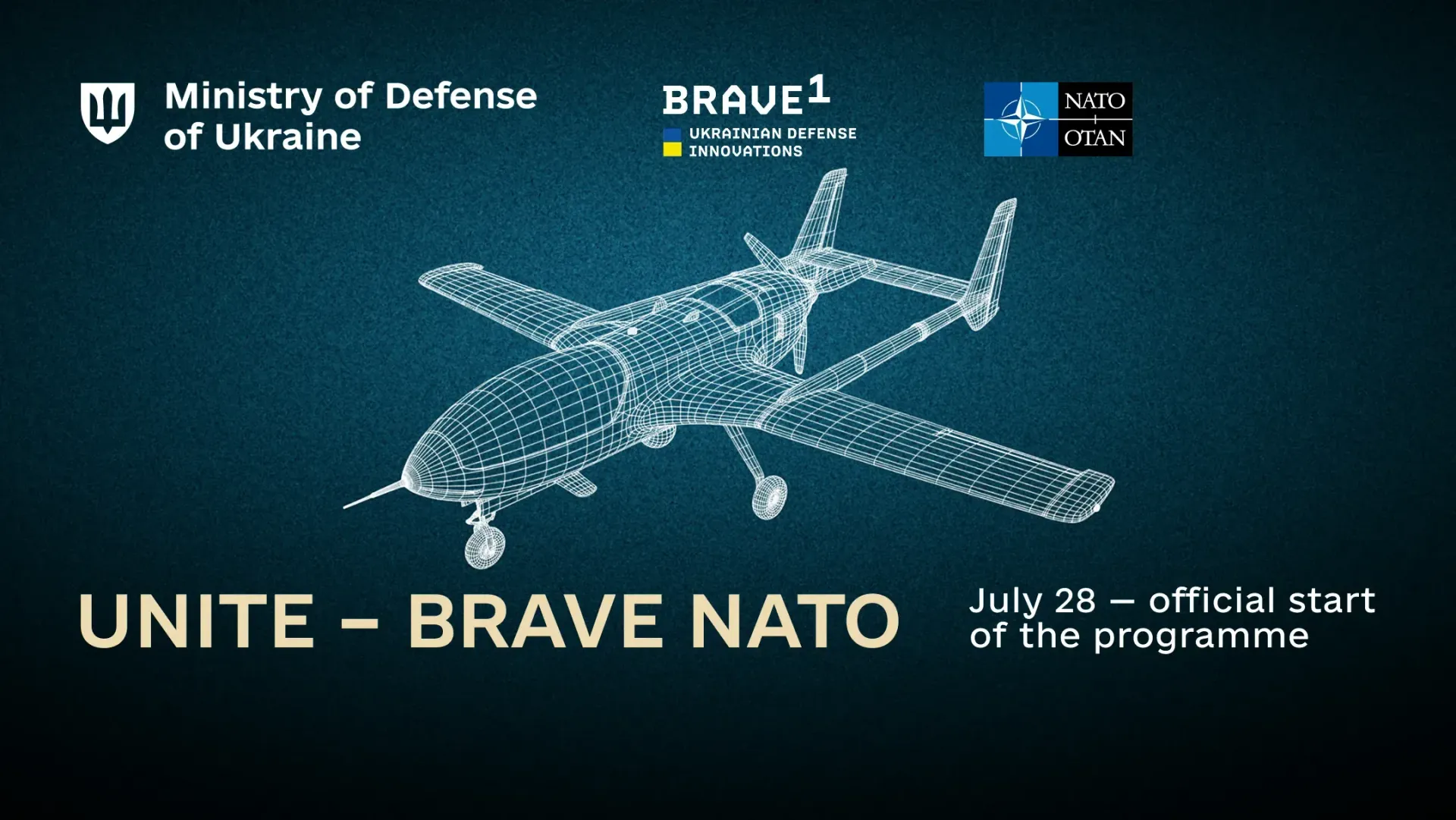
Ukraine and NATO have opened applications for their first joint defence-innovation grant programme, creating a formal route through which Ukrainian companies and businesses from allied states can develop counter-drone and air-defence systems together.
The Ukrainian Ministry of Defence announced the application phase on 28 July. The first competition under UNITE–Brave NATO has a budget of €10 million. Each joint project can receive up to €1 million, divided equally between the Ukrainian and allied sides.
The programme focuses on active protection against first-person-view drones, countering Shahed-class attack drones, signals intelligence and electromagnetic capabilities, autonomous guidance, and high-altitude platforms.
Its importance lies less in the total funding—which is modest beside conventional procurement programmes—than in the structure. Applicants must form a Ukrainian-NATO business partnership. That condition is intended to combine operational knowledge from an active war with the capital, manufacturing and market access available in allied countries.
Russia and Ukraine have demonstrated that inexpensive uncrewed systems can threaten vehicles, artillery, logistics and infrastructure worth many times their cost. Traditional air-defence missiles remain essential against high-end threats, but using them against every low-cost drone is economically unsustainable.
The programme’s priorities reflect that cost-exchange problem. Active protection against FPV drones may need to work at short range around individual vehicles or positions. Shahed-class systems require detection and interception over a wider area. Electronic warfare can interrupt control or navigation without expending a missile, although autonomy and resistant communications can reduce its effect.
No single technology solves the problem. A layered system needs sensors, command software, electronic measures, guns, interceptor drones and missiles. It also needs to distinguish targets quickly enough to avoid wasting scarce ammunition.
Ukraine provides a demanding test environment in which systems encounter changing tactics and heavy electronic interference. NATO companies provide engineering depth and routes to production. The grant scheme attempts to connect those strengths before a technology becomes obsolete.
Requiring a joint team prevents the programme becoming a simple transfer of money to one national industry. It should encourage shared development and make it easier for successful products to enter more than one market.
Partnerships can also slow decisions. Companies must agree on intellectual property, export permissions, data access, production rights and liability. A Ukrainian developer may want rapid iteration and freedom to change a design after frontline feedback. An allied prime contractor may require a longer assurance and certification process.
The application and contracting system should therefore provide standard terms for common disputes. Negotiating a bespoke intellectual-property agreement for every €1 million project could consume time and legal costs disproportionate to the grant.
The ownership of battlefield data will be particularly sensitive. Performance information is essential to improve systems, but it can reveal Ukrainian tactics or vulnerabilities. Partners need rules that allow technical learning without uncontrolled distribution.
Defence Matters has previously examined how Ukraine’s start-ups are changing battlefield procurement. UNITE–Brave NATO tests whether that faster model can work across national and institutional boundaries.
Ukraine has produced a large number of prototypes and rapid modifications. The next challenge is turning useful designs into reliable systems made at scale.
A battlefield unit may accept equipment that requires frequent adjustment by its designer. NATO procurement normally expects documented configuration, quality assurance, training, maintenance and secure supply. Neither model is sufficient on its own: excessive bureaucracy delays adaptation, while an undocumented prototype cannot be supported across thousands of units.
Successful teams should be required to plan for production early. They need identified component suppliers, alternatives for scarce electronics, test procedures and a method for incorporating software updates.
The equal division of grant funding may encourage both sides to invest. It may also prove rigid if one partner carries most manufacturing cost. Programme managers should retain enough flexibility to support the work actually required while preserving a genuine partnership.
The Ministry’s earlier launch announcement described matchmaking as the first stage and said winners were expected in the summer. The application opening now moves the initiative from finding partners towards selecting deliverable projects.
The alliance needs counter-drone capability for bases, deployed forces and critical infrastructure. It also needs a faster way to absorb lessons.
Traditional requirements can take years to define, by which time drone frequencies, autonomy and tactics have changed. A joint grant programme can shorten the feedback loop by keeping Ukrainian users, small technology companies and allied manufacturers in the same development process.
That does not mean every Ukrainian solution is ready for NATO adoption. Systems designed for a permissive procurement environment may use components with uncertain origin, lack cyber assurance or require frequencies that cannot be employed elsewhere. The purpose of partnership should be to address those constraints without removing the design’s cost and speed advantages.
The alliance can also learn from failure. Programme results should record why a system was defeated, too expensive or difficult to operate. Negative evidence is valuable if it prevents several nations repeating the same experiment.
The first competition should be assessed by more than the number of grants awarded. Relevant measures include time from application to contract, time from funding to field trial, unit cost, performance under electronic attack, and the existence of a realistic production plan.
Procurement pathways must be clear. A grant that ends with a successful demonstration but no buyer creates another prototype rather than a military capability. Ukraine should be able to purchase effective systems rapidly, while NATO members need a route into national or alliance acquisition.
Programme managers must also protect competition. Pairing a Ukrainian start-up with a large allied company can provide manufacturing access, but terms should not allow the larger partner to acquire technology cheaply and then delay it in favour of existing products.
The €10 million budget will not transform allied air defence by itself. Its value is experimental: it establishes a shared mechanism for selecting, testing and industrialising solutions under wartime pressure.
If the first round produces deployable systems and repeat orders, UNITE–Brave NATO can be expanded. If it becomes a slow grant process detached from procurement, its formal partnership requirement will add paperwork without adding capability.
Ukraine has already supplied the battlefield lessons. The programme’s test is whether NATO and industry can convert them into equipment faster than adversaries change the threat.