Ukraine’s assessment that Russia used a North Korean ballistic missile after an 11-month gap points to a renewed supply channel and greater pressure on scarce interceptors.
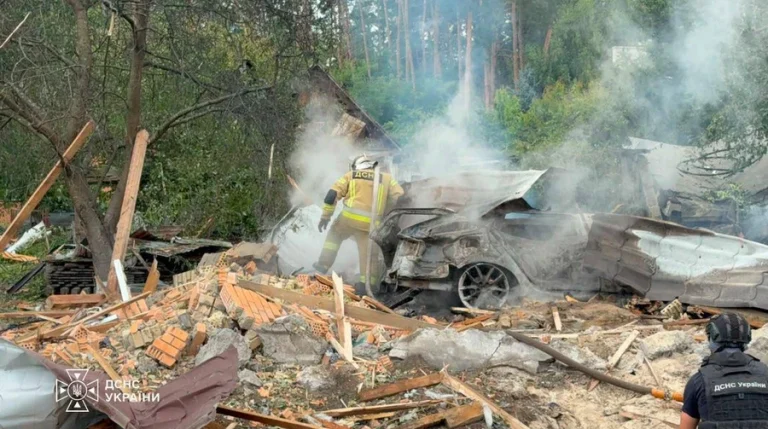
Russia probably used a North Korean-made ballistic missile in a strike near Kryvyi Rih that killed five members of one family, according to Ukrainian officials.
President Volodymyr Zelenskyy identified the weapon as North Korean, while a Ukrainian military source said its use after an absence of about 11 months suggested that Russia may have received new stocks. Neither Moscow nor Pyongyang had provided public confirmation, and the identification has not been independently established.
The assessment should therefore remain attributed to Ukraine. If it is correct, the significant development is not only the individual missile but the apparent renewal of a supply route between two heavily sanctioned states.
Reuters reported that the strike killed a family of five. The human consequence is immediate. The military consequence is that Russia may be adding ballistic weapons to an inventory already designed to stretch Ukraine’s limited high-end air defences.
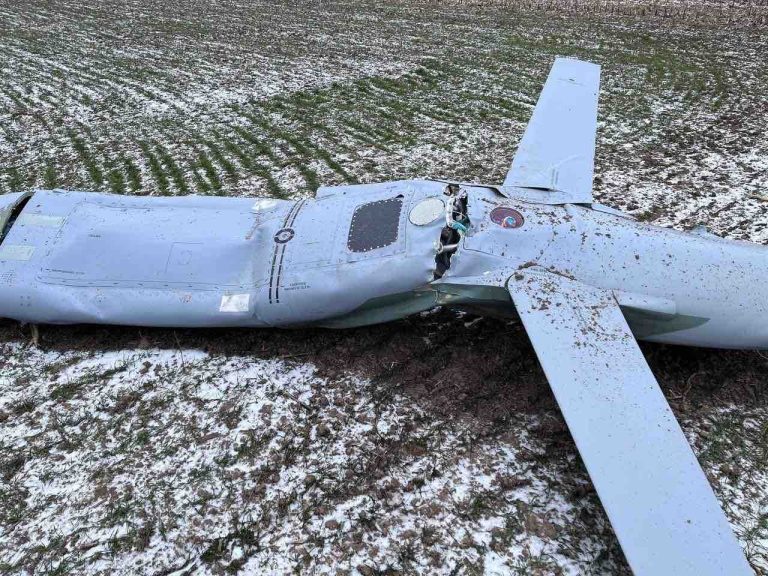
Ukraine has previously recovered debris from missiles it assessed as North Korean. Analysts distinguish imported systems through airframe design, propulsion, guidance components, manufacturing marks and patterns in recovered fragments.
An initial wartime statement cannot substitute for that examination. Russian ballistic missiles and North Korean designs influenced by them can share characteristics. A conclusive public account should explain which fragments support the assessment and whether specialists can identify a production period.
The timing is important. A recently manufactured component would provide stronger evidence of an active supply chain than an older weapon drawn from Russian storage.
Ukraine may withhold some details for intelligence reasons. It should still publish enough material for independent specialists and partner governments to evaluate the claim. That is particularly necessary when evidence could support further sanctions or diplomatic action.
A pause in observed use can have several explanations. Russia may have exhausted an earlier batch, held remaining weapons in reserve, experienced reliability problems or chosen other missiles for operational reasons.
Renewed use after nearly a year does not by itself prove that a new shipment arrived. The weapon could have remained in storage. The Ukrainian source’s assessment becomes more persuasive if debris points to recent production or intelligence shows renewed transport from North Korea.
The supply route can operate by rail through the land border between Russia and North Korea, avoiding the maritime inspections and airspace permissions that complicate other sanctions-evasion channels. Rail movements can still be observed by satellite, but stopping them would require political or physical action against traffic inside Russian and North Korean territory.
The arrangement offers clear benefits to both governments. Russia receives weapons and ammunition without drawing further on domestic stocks. North Korea receives revenue, commodities, political support and potentially military technology.
Combat use also gives Pyongyang information about performance against Western-designed air defences and electronic warfare. Failed missiles and inaccurate strikes may still produce engineering lessons.
Ballistic missiles are among the most demanding threats Ukraine faces. Their speed and steep terminal trajectory sharply reduce engagement time. Many shorter-range air-defence systems effective against drones and cruise missiles cannot reliably defeat them.
Patriot systems equipped with PAC-3 interceptors are central to Ukraine’s defence against this class of weapon. Batteries and missiles are limited, while launchers must protect cities, energy infrastructure, military facilities and command sites.
A fresh North Korean batch would force Ukraine to spend scarce interceptors on an additional supply stream. Even an unreliable attacking missile must be treated as dangerous when its projected impact threatens a populated area.
Defence Matters has examined how Ukraine’s air-defence missile stocks have come under pressure after repeated barrages and why future production cannot solve an immediate Patriot shortage. North Korean deliveries worsen that arithmetic.
The exchange is particularly unfavourable if an imported missile costs Russia less than the interceptor used to destroy it. Defence cannot be reduced to price—protecting lives and infrastructure has its own value—but magazine depth determines how long that protection can be sustained.
Moscow uses a mixture of ballistic missiles, cruise missiles, hypersonic weapons, one-way attack drones and decoys. Each presents different detection and interception requirements.
The mixture is designed to complicate Ukrainian decision-making. Slow drones can exhaust guns and mobile teams; cruise missiles exploit low-altitude routes; ballistic weapons demand the most capable interceptors. Simultaneous attacks create saturation.
Imported North Korean missiles do not need to match Russia’s best systems to be useful. They add launch capacity and uncertainty. Some may fail or miss, but volume itself can impose costs.
Russia can also reserve domestic missiles for targets requiring greater accuracy while using imported weapons against broader area targets. That possibility makes evidence about accuracy and targeting important when assessing their operational role.
North Korea’s missile exports would violate UN Security Council restrictions adopted with Russian support before relations between Moscow and Pyongyang deepened. Russia’s position on the Council now prevents an effective enforcement response.
Unilateral sanctions can target banks, transport companies and procurement networks. They are less effective against direct state-to-state rail transfers supported at the highest political level.
Partner governments can still raise the cost by identifying the entities involved, restricting access to components used in North Korean production and publishing evidence of shipments. China’s position is also important because it remains North Korea’s largest economic partner, though Beijing has shown little appetite for pressure that might destabilise the country.
The deeper consequence is institutional. A permanent Security Council member is alleged to be benefiting from conduct prohibited by resolutions it helped adopt. That weakens the credibility of the sanctions system far beyond Ukraine.
One strike does not establish the size of a shipment. The next evidence will come from recovered debris, satellite observation of transport, the frequency of additional launches and any change in the models used.
Ukraine’s partners will also examine whether North Korean engineers or military personnel are supporting deployment and analysing performance. The relationship has already extended beyond ordinary arms sales into training and personnel co-operation.
The five deaths near Kryvyi Rih should not be reduced to evidence in a supply-chain argument. They demonstrate what the weapons are intended to do. At the same time, establishing their origin matters because it defines the scale and durability of the threat.
If the Ukrainian assessment is confirmed, Russia has not merely found an old missile in storage. It has probably reopened a state-backed supply line capable of replenishing ballistic pressure as Ukraine’s interceptor stocks remain constrained.
Russia’s Reported Plan for 30,000 North Korean Troops Points to a Larger Manpower Exchange