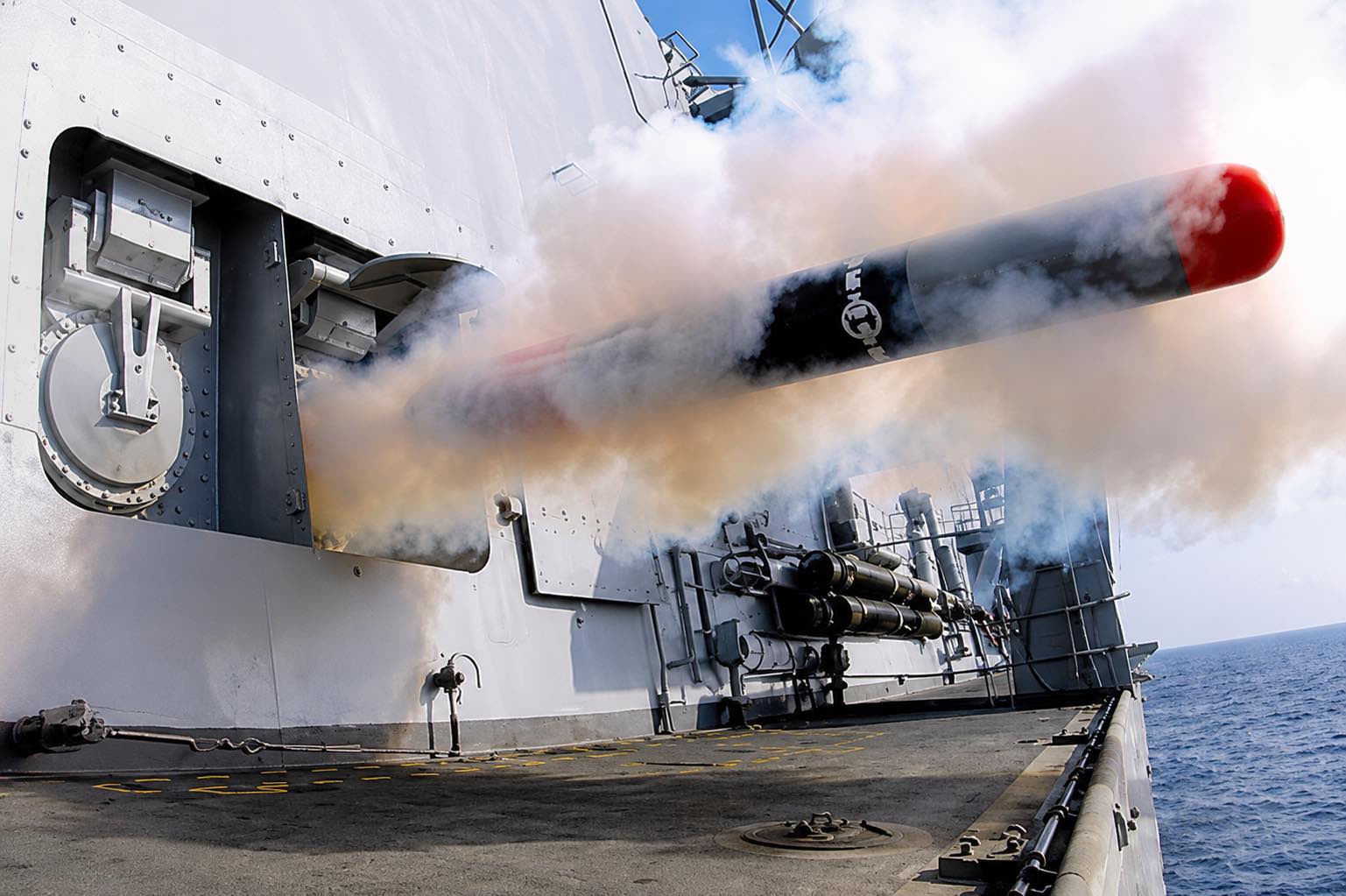
The contract, announced by the Ministry of Defence, illustrates how defence procurement is increasingly being used to reinforce national industrial resilience, sustain highly specialised engineering skills and strengthen Britain’s position within a rapidly evolving European security environment.
The agreement, worth several hundred million pounds, will support hundreds of skilled jobs while ensuring the continued availability of heavyweight Spearfish and lightweight Sting Ray torpedoes used across the Royal Navy’s submarine and anti-submarine fleets. At a time when NATO members are reassessing their military readiness following Russia’s invasion of Ukraine and growing tensions in the Indo-Pacific, maintaining credible underwater capabilities has become an increasingly important strategic priority.
Unlike major warships, which dominate public attention and political announcements, torpedoes represent one of the less visible but most essential components of naval power. A modern attack submarine derives much of its deterrent value not simply from remaining undetected, but from carrying weapons capable of neutralising both hostile submarines and surface combatants. Without reliable munitions and continuous maintenance, even the most advanced submarine fleet rapidly loses operational credibility.
That reality explains why governments are placing greater emphasis on sustainment contracts rather than focusing exclusively on new procurement. Modern weapons require constant inspection, refurbishment, software upgrades and lifecycle management to remain operational over decades of service. These support programmes often generate stable, highly skilled employment while preserving industrial expertise that would be difficult—and expensive—to recreate if lost.
The Ministry of Defence has increasingly framed such contracts within a broader economic narrative. Rather than presenting defence expenditure solely as a national security requirement, ministers now argue that military investment also represents an engine of regional growth, technological innovation and supply-chain resilience. Similar messaging has accompanied recent contracts supporting naval vessels, munitions production and Britain’s wider defence industrial base.
This reflects a wider shift taking place across Europe. Defence budgets are rising after decades of relative decline, but governments are also seeking to maximise domestic economic returns from higher military spending. Sovereign manufacturing capability, once regarded as an expensive luxury, is increasingly viewed as an essential element of national resilience.
The war in Ukraine exposed the vulnerability of relying upon fragmented international supply chains for ammunition and military equipment. Many European nations discovered that their industrial capacity had contracted significantly during years of reduced defence spending. Rebuilding those capabilities has become a strategic objective in its own right.
For Britain, maintaining expertise in advanced underwater weapons carries particular importance. The Royal Navy remains one of NATO’s leading undersea forces, operating Astute-class attack submarines while preparing for the arrival of the Dreadnought-class ballistic missile fleet. Those platforms depend upon sophisticated domestic support networks extending well beyond shipbuilding itself.
The industrial ecosystem surrounding torpedo production includes software engineers, systems integration specialists, precision manufacturers, electronics suppliers and testing facilities. Many of these capabilities have applications extending beyond defence into wider advanced manufacturing sectors.
The contract therefore serves two interconnected purposes. Operationally, it guarantees that front-line naval units retain effective weapons throughout their service lives. Economically, it provides continuity for companies investing in apprenticeships, engineering skills and research programmes that might otherwise become vulnerable to fluctuations in procurement cycles.
There is also an important alliance dimension. As NATO places renewed emphasis on protecting Atlantic sea lanes and critical undersea infrastructure—including communications cables and energy pipelines—the ability to sustain effective anti-submarine warfare capabilities assumes greater significance. Britain’s contribution extends beyond its own territorial waters to collective alliance deterrence.
Critics will inevitably question whether growing defence expenditure represents the most efficient use of public finances during a period of continuing fiscal pressure. Yet successive governments have become increasingly willing to argue that defence spending should be viewed not merely as consumption but as productive investment supporting innovation, exports and advanced manufacturing.
Whether that broader industrial strategy ultimately succeeds will depend on consistency. Sporadic procurement announcements provide short-term certainty, but maintaining specialist workforces requires predictable long-term investment. Defence companies are far more likely to recruit apprentices, expand facilities and invest in research when future demand appears credible.
The latest Royal Navy torpedo contract therefore represents more than a routine maintenance agreement. It reflects Britain’s wider attempt to integrate national security with industrial policy at a time when both have become inseparable. In an era defined by geopolitical competition and renewed military modernisation, sustaining the quiet technologies that underpin undersea deterrence may prove every bit as important as commissioning the ships that carry them.