If Reuters’ reporting is accurate, the United States has consumed a substantial portion of some of its most valuable long-range strike capabilities over a five-month campaign that, whatever its tactical successes, was directed against an adversary that has never represented the scale of military challenge posed by either China or Russia.
President Donald Trump has frequently presented himself as a leader determined to restore American strength through military superiority. Yet strength is measured not simply by a willingness to employ force, but by the discipline to preserve finite capabilities for the conflicts that matter most. Precision-guided missiles are not political props. They are strategic assets, developed over decades at enormous expense and in limited numbers because they are intended for the most demanding operational environments imaginable.
Those environments are increasingly found in the western Pacific and Eastern Europe.
China continues to modernise its armed forces at extraordinary pace, expanding its naval fleet, investing in anti-access and area-denial systems, and refining the capabilities that would underpin any future confrontation over Taiwan. Russia, despite years of attrition, remains a nuclear superpower capable of threatening NATO’s eastern flank while rebuilding significant portions of its conventional military. Both powers possess sophisticated integrated air-defence systems and long-range strike capabilities that would test American forces to an extent Iran never could.
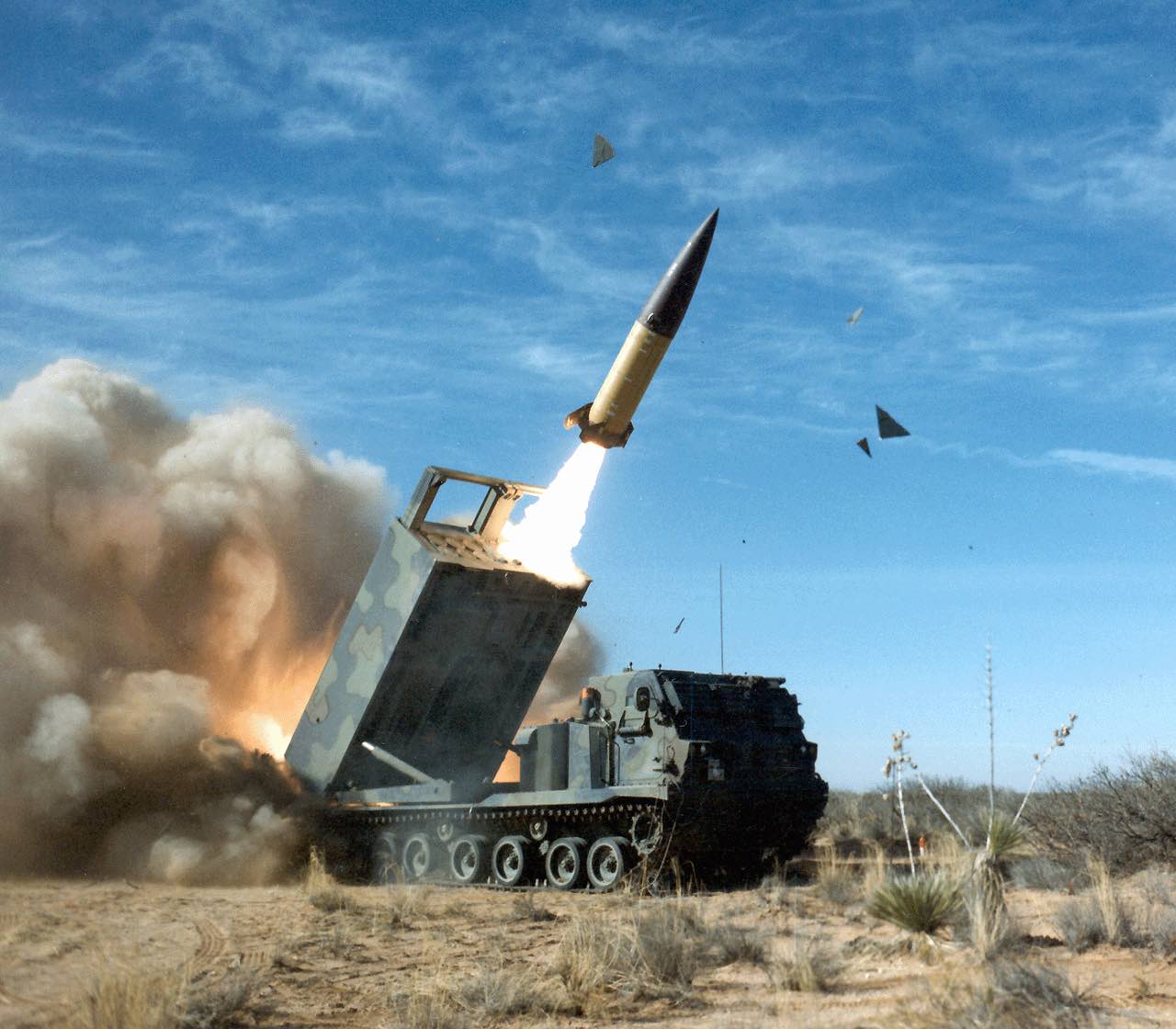
Against that backdrop, expending large quantities of ATACMS, Precision Strike Missiles, Tomahawks and missile-defence interceptors in the Middle East appears, at the very least, strategically debatable. Reuters reports that military officials are privately concerned not only about offensive missile inventories but also about stocks of Patriot and THAAD interceptors—systems central to defending American forces and allies.
The White House insists production is accelerating and that the United States retains sufficient capability. That reassurance deserves consideration. America retains the world’s largest defence budget and possesses an industrial base that, if properly mobilised, can replenish depleted inventories. Yet industrial capacity is not instantaneous. Modern precision munitions require complex supply chains, specialised components and years of investment. Replacement cannot occur overnight.
History repeatedly demonstrates that wars expose assumptions about production capacity. The conflict in Ukraine transformed Western thinking about artillery ammunition. The Iran campaign now appears to be forcing a similar reassessment regarding precision weapons.
This is not an argument for isolationism, nor does it minimise the security concerns posed by Iran. Tehran has long sponsored proxy organisations, pursued advanced missile programmes and challenged regional stability. But strategic judgement requires prioritisation. Every administration must distinguish between threats that are serious and those that are existential.
China represents America’s foremost long-term strategic competitor. Russia remains its principal military challenger in Europe. Iran occupies neither category.
That distinction matters because deterrence rests as much upon visible capability as political will. Potential adversaries constantly assess inventories, production rates and logistical resilience. If reports of depleted stockpiles prove accurate, military planners in Beijing and Moscow will undoubtedly study them with interest—not because they necessarily indicate weakness today, but because they reveal the costs America is prepared to incur in secondary theatres.
Nor should the financial dimension be ignored. Precision missiles cost millions of dollars apiece. Their use represents not only military expenditure but also opportunity cost. Resources devoted to replenishment cannot simultaneously fund next-generation technologies, submarine construction, cyber resilience or advanced space capabilities. Strategy is ultimately about choices, and choices always involve trade-offs.
Perhaps the administration calculated that the benefits of sustained military pressure on Iran justified these costs. Reasonable analysts may disagree over that judgement. What is harder to defend is any suggestion that the depletion of strategic munitions carries no wider consequences. The Pentagon itself appears sufficiently concerned to accelerate production dramatically.
The central question is therefore not whether American forces performed effectively. By most accounts, they did. The more important question is whether the objectives justified consuming capabilities originally intended to underpin deterrence against peer competitors whose military power dwarfs that of Iran.
Washington’s strategic vocabulary increasingly revolves around “great-power competition.” If that phrase is to mean anything, then procurement, deployment and combat operations must all reflect it. Otherwise, strategy becomes little more than rhetoric while scarce resources disappear in conflicts that, however dramatic, remain peripheral to the defining geopolitical contest of the twenty-first century.
And one final question, uncomfortable though it may be, inevitably lingers over the entire episode: was all this in order to manipulate oil prices for the benefit of a chosen few?