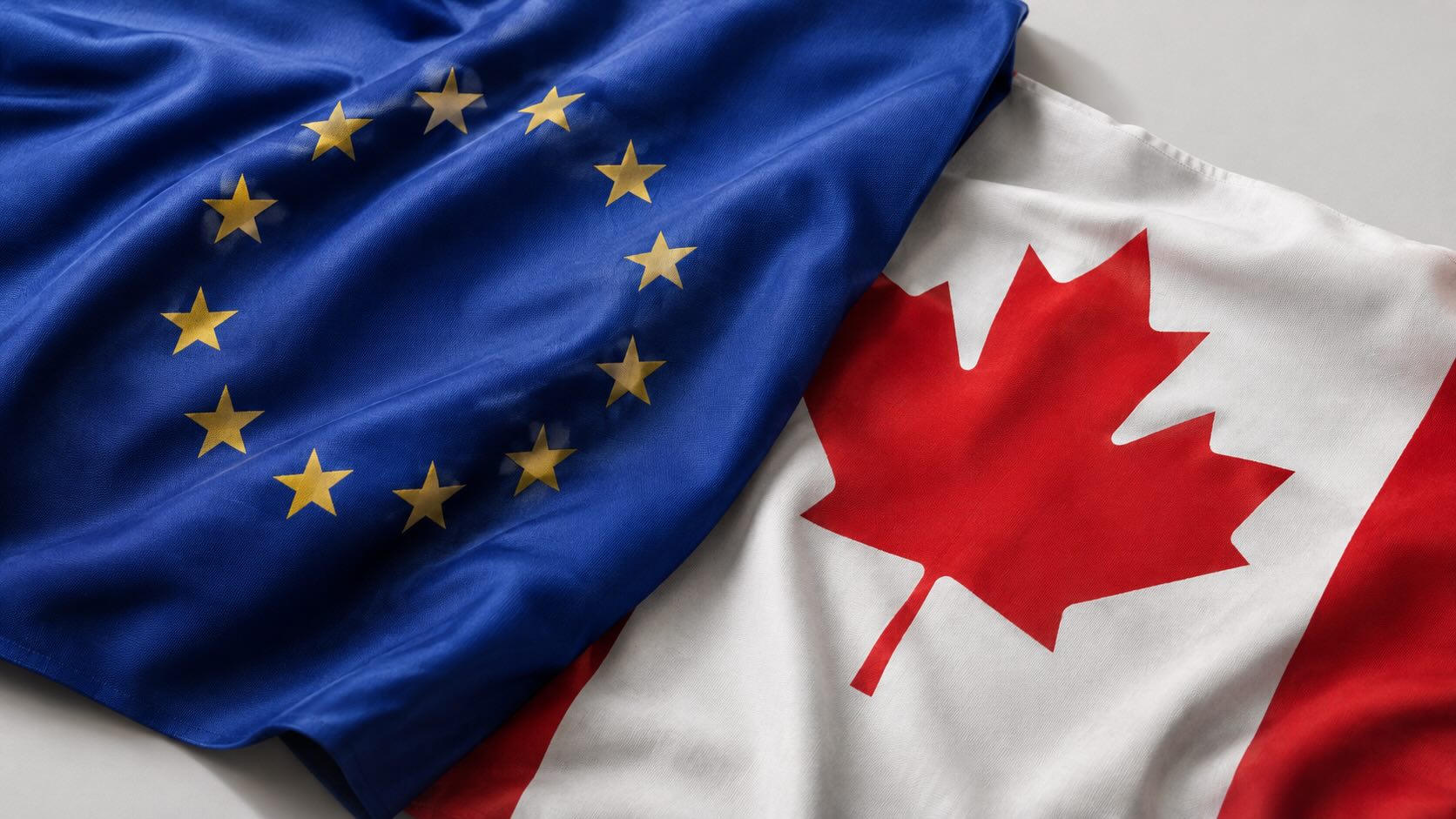
The EU-Canada agreement on participation in the Security Action for Europe procurement instrument has entered into force, opening part of Europe’s rearmament finance architecture to Canadian suppliers and giving the SAFE programme a more transatlantic industrial shape.
The Council concluded the agreement with Canada in June, and the legal text published by the Council confirms the framework for Canadian involvement in procurement supported through the €150 billion SAFE instrument. The agreement is available through the Council’s official document register, while the Council’s earlier announcement stated that Canada’s participation concerns supplier access rather than a SAFE loan to Canada itself.
That distinction matters. Canada is not receiving borrowing support under SAFE. The agreement allows Canadian economic operators to participate in eligible procurement projects under defined conditions, while the financial instrument remains an EU mechanism designed to support member-state defence investment.
The agreement is important because SAFE is not only about money. It is also about who is allowed into Europe’s defence procurement ecosystem at a time when governments are trying to accelerate orders, expand production and reduce capability gaps exposed by Russia’s war against Ukraine.
Canadian participation gives EU buyers more potential suppliers in areas where Europe may face bottlenecks. It could be relevant for ammunition, protected mobility, sensors, aerospace components, communications, naval systems and other equipment where Canadian industry has capacity or technology that complements European demand.
But supplier access is not unlimited. SAFE’s purpose is to strengthen Europe’s defence industrial base, not simply to subsidise imports. The practical question for each procurement project will be how European-content requirements, security-of-supply provisions, intellectual-property arrangements and export-control conditions are applied.
That makes the agreement a procurement story rather than a diplomatic courtesy. It will matter only if governments and companies use it to deliver equipment faster.
Canada is a NATO ally with a defence industry linked to both US and European supply chains. Its inclusion in SAFE procurement fits a wider effort to build defence-industrial partnerships with trusted non-EU states while avoiding complete dependence on any single supplier base.
For Europe, this is a balancing act. On one hand, the EU wants to spend more of its defence money inside Europe and reduce fragmentation. On the other, immediate readiness needs may require trusted external partners, particularly where European production lines are already stretched.
Defence Matters has previously covered how Europe’s rearmament debate is moving from political pledges to production capacity, procurement rules and industrial control. The Canada agreement belongs in that category: it is a legal gateway that could affect which companies compete for urgent European orders.
The agreement opens the door to Canadian participation in SAFE-financed projects, but it does not determine which companies, products or contracts will ultimately qualify. Those decisions will depend on the projects submitted by member states and whether they meet the programme’s procurement conditions.
Its immediate effect is therefore limited. Canadian defence products will not automatically enter European inventories, nor does the agreement guarantee orders for Canadian suppliers. It establishes a route through which they may take part in eligible projects.
The value of the arrangement will be judged by results: whether it shortens delivery times, expands the supplier base and adds production capacity in areas where European armed forces face shortages.
If it produces additional military output, SAFE could develop into a wider mechanism for defence-industrial co-operation with selected partners. If procurement remains slow and production fails to increase, the agreement will add another institutional framework without resolving Europe’s underlying capability gaps.