Russia appears to be concentrating resources on missile systems it can manufacture in quantity and employ regularly, with new Ukrainian intelligence figures showing increased ballistic-missile output alongside accelerated development of a sovereign low-Earth-orbit communications network.
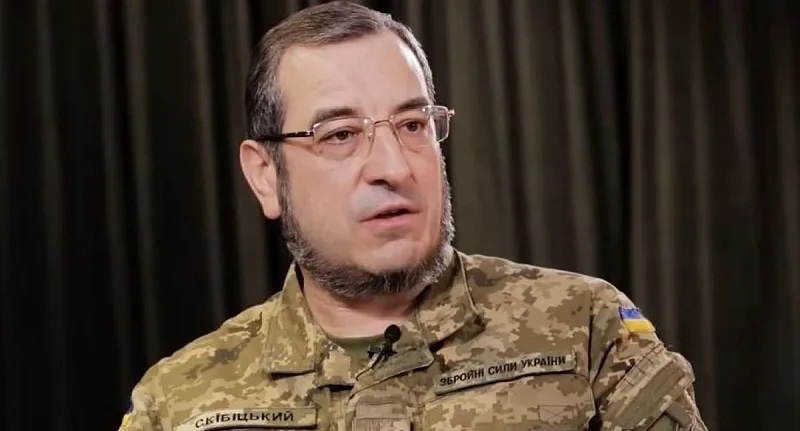
Major-General Vadym Skibitsky, deputy head of Ukraine’s Main Intelligence Directorate, said Russian industry is meeting monthly production plans for its principal missile categories at approximately 110–120 per cent.
According to production figures attributed to Ukrainian military intelligence, Russian manufacturers had already completed the entire 2026 programme for Zircon and modernised Oniks missiles by early August.
The reported totals are 33 Zircon and 60 Oniks missiles produced during the first seven months of the year. Both originated as anti-ship weapons, although Russia has adapted them for attacks against land targets.
The more operationally important figure concerns the 9M723 ballistic missile used by the Iskander-M system. Ukrainian intelligence estimates that Russia manufactured 65 in July against a monthly target of 60 and had approximately 130 allocated to its deployed force grouping as of 5 August.
If accurate, the figures help explain Russia’s ability to maintain a substantial ballistic component in its long-range strike packages.
Skibitsky said Russian forces launched 61 ballistic missiles in April, 107 in May and 134 in June. In July, the Ukrainian intelligence count placed the combined use of ballistic and hypersonic weapons — including 9M723 missiles, ground-attack missiles fired through S-400 systems and Zircon — at 198.
The numbers remain intelligence estimates rather than independently audited Russian production data. They nevertheless indicate the scale of the industrial problem facing Ukrainian missile defence if production continues at or above the levels described by Kyiv.
One of the more consequential elements of Skibitsky’s assessment concerns the redistribution of production resources.
Russia has suspended manufacture of the Kinzhal and Kh-32 since April, according to the same Ukrainian intelligence account of Russia’s missile-production programme.
Propellant previously allocated to Kinzhal and components and expenditure associated with the Kh-32 programme are reportedly being redirected towards other missile systems.
That does not mean Kinzhal has disappeared from Russian service. The assessment concerns current production rather than existing inventories, and previously manufactured weapons remain available.
The decision nevertheless illustrates the importance of production economics. A technically advanced missile offers limited operational utility if its manufacturing requirements restrict output compared with alternatives capable of delivering comparable effects against the intended target set.
Redirecting resources towards systems that can be manufactured more consistently would allow Russia to increase magazine depth and maintain pressure on Ukrainian defensive inventories.
This is particularly important because ballistic defence remains one of the narrowest layers of Ukraine’s air-defence architecture. Defence Matters has previously examined how concentrated ballistic attacks can consume interceptors faster than Ukraine can replace them, especially where Patriot batteries provide the principal defence against Iskander-class threats.
The production figures also demonstrate the limitations of a strategy based predominantly on interception.
Even highly capable missile-defence batteries have finite ready-to-fire interceptor stocks. Sustained ballistic production therefore increases the importance of launcher dispersal, hardened infrastructure, redundancy, passive defence and the ability to strike elements of the missile-production and launch chain before weapons reach the interception stage.
The issue is consequently not simply how many missiles Russia can launch in a single attack, but whether its industrial base can replace them at a rate that permits repeated high-intensity strike packages.
A second component of the Ukrainian intelligence assessment concerns Russia’s Rassvet satellite communications constellation.
The distinction between communications and reconnaissance is important. Rassvet does not constitute an imaging constellation capable by itself of locating Ukrainian targets. Its potential military contribution is connectivity: providing resilient data links for headquarters, field formations, mobile command systems and potentially unmanned platforms.
Bureau 1440 launched the first 16 operational Rassvet satellites from Plesetsk in March. One spacecraft subsequently re-entered after apparently failing to raise its orbit, while a further group of satellites was launched in July.
Defence Matters has previously examined the military implications of Russia developing an independent satellite communications architecture, particularly as both sides increasingly depend on resilient connectivity for unmanned systems, battlefield command and the transmission of reconnaissance data.
Skibitsky says Moscow intends to increase the constellation to 292 satellites during 2027 and eventually to 924 by 2035. At its present scale, however, the system reportedly provides only intermittent coverage over Ukraine as individual spacecraft pass overhead.
The objective is considerably broader. Rassvet is being developed as Russia’s answer to low-Earth-orbit broadband constellations, giving Moscow a communications infrastructure it can operate independently of foreign commercial providers.
Its value to the Russian armed forces would not be that it automatically generates targeting information. Instead, a mature constellation could provide another route for moving reconnaissance data, commands, telemetry and targeting information between sensors, headquarters, launch units and unmanned systems.
That distinction is central to understanding its military relevance. Modern long-range strike operations depend not only on the weapon but on the wider chain connecting detection, identification, targeting, command, launch and battle-damage assessment.
A sovereign low-orbit network would make parts of that chain less dependent on terrestrial infrastructure and potentially more difficult to disrupt through conventional attacks against fixed communications nodes.
The combination of expanded missile output and the Rassvet programme therefore illustrates two separate but complementary aspects of Russia’s evolving military capacity.
One is industrial: increasing the supply of long-range weapons capable of placing repeated pressure on Ukrainian air defences. The other is networked: constructing communications infrastructure capable of supporting increasingly distributed forces and unmanned systems.
For Ukraine and its partners, the resulting contest extends beyond the number of Patriot interceptors available at any particular moment. It increasingly involves production capacity, magazine depth, satellite communications, targeting networks, hardened infrastructure and the ability to disrupt the opposing kill chain before a missile reaches the interception stage.