Attacks or alerts affected facilities in Makhachkala, Enem, Adygeysk and Nevinnomyssk, extending a campaign that Kyiv says is aimed at dual-use supply networks. The immediate operational effect differs sharply between the four sites.
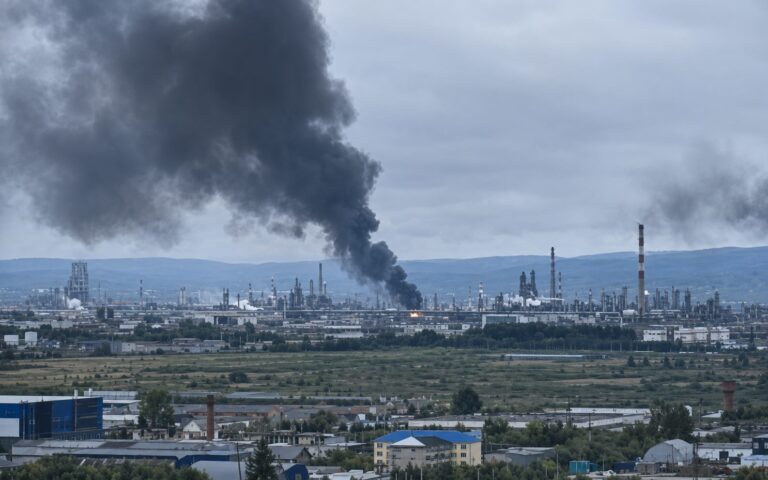
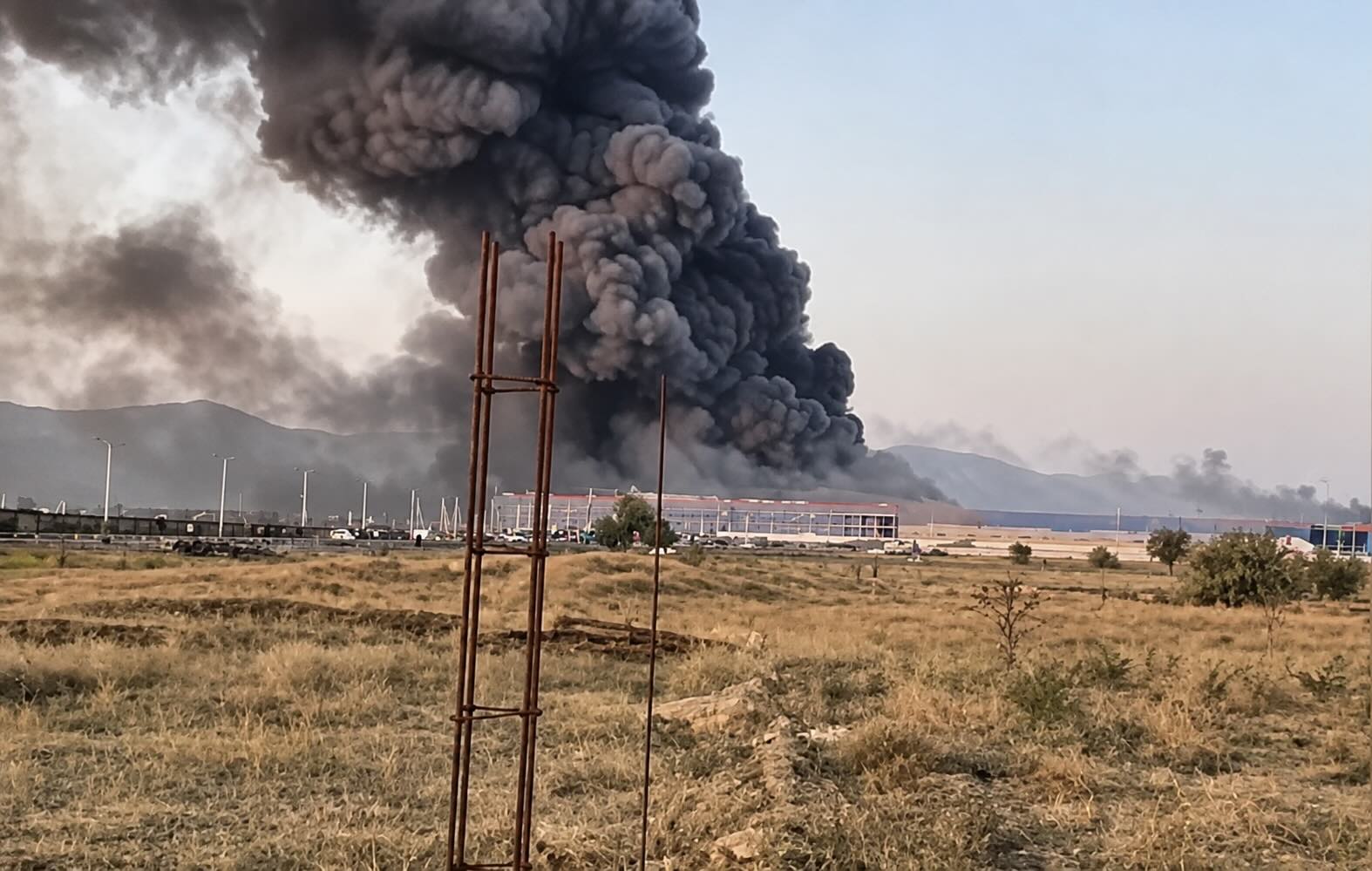
Ozon said facilities in Makhachkala, Enem, Adygeysk and Nevinnomyssk were affected. A fire at the Makhachkala site injured several people and halted operations, while a large fire was reported at Enem. Staff at Adygeysk and Nevinnomyssk were evacuated and the company said those facilities sustained no damage.
Reuters reported that Ozon shares fell by as much as 12 per cent in Moscow trading, with major shareholder AFK Sistema also losing almost 13 per cent at one stage. Six Ozon facilities have now been targeted since 22 August, including a site in Samara where operations were suspended.
Ukraine’s defence ministry says Ozon warehouses hold dual-use products and form part of supply chains supporting Russian forces. That claim has not been independently verified for each location. Ozon describes the buildings as civilian logistics infrastructure and has emphasised the effect on employees and customer deliveries.
The military relevance of the campaign lies less in the identity of one retailer than in the distribution model being tested. Large fulfilment centres concentrate inventory, sorting equipment, vehicle movements, information systems and regional dispatch capacity. Damaging a hub can impose delays across a network even if most of the goods inside are civilian.
At the same time, commercial warehouses are not automatically military objectives. The presence of items that can have civilian and military uses does not by itself prove that a particular facility made an effective contribution to Russian military action. Target selection therefore raises legal and evidential questions alongside the operational calculation.
The four incidents also illustrate why strike counts alone give a poor measure of effect. Enem and Makhachkala appear to have suffered physical disruption; Adygeysk and Nevinnomyssk were precautionary evacuations without reported damage. The campaign generated a common corporate and market response, but not four equivalent tactical outcomes.
Geography is part of the pressure. Makhachkala lies in Dagestan on the Caspian coast, while the other facilities are in southern Russia and the North Caucasus region. Reaching several dispersed sites in one period forces Russia to protect a much wider rear area rather than concentrating air defence around refineries, air bases and command facilities.
That follows a broader Ukrainian effort to strike the infrastructure that sustains Russian operations beyond the front. Defence Matters has documented attacks on command and logistics nodes, as well as the growing reach of Ukraine’s drone campaign against refineries and targets deep inside Russia.
Targeting a national distribution network adds another dimension to Ukraine’s campaign against the systems that sustain Russia’s war effort. Even where individual facilities are primarily commercial, disruption can force operators to reroute goods, suspend activity, inspect sites and strengthen protection, while Russian authorities may have to spread air-defence and electronic-warfare resources across a larger number of potential targets.
The operational effect is therefore cumulative rather than confined to the damage at any single warehouse. A large e-commerce network has considerable redundancy, but repeated strikes can raise transport costs, lengthen delivery times and complicate the movement of dual-use goods and other supplies across Russia’s rear areas.
The key measure will be whether that disruption persists: how long affected hubs remain out of service, whether alternative depots can absorb their workload, and whether Russia is compelled to divert additional resources to protecting logistics infrastructure far from the front.
The latest attacks suggest that Ukraine is widening its deep-strike campaign beyond refineries, air bases and military installations to include parts of the civilian distribution system that Kyiv says contribute to Russian military sustainment. Their strategic value will ultimately depend on whether repeated disruption of those networks imposes costs on Russia’s war effort greater than the resources Ukraine commits to striking them.