President Volodymyr Zelenskyy said Ukrainian forces had successfully targeted an Iskander launcher positioned close to Ukraine, although Kyiv has withheld the location, weapon used and other details of the operation.
In remarks to journalists reported on 23 August, Zelenskyy said the sensitivity of the operation prevented him from providing further information.
“Today we have another success,” he said. “We struck an Iskander launcher near our borders.”
Zelenskyy presented the strike as part of a broader Ukrainian effort to hunt Russian ballistic-missile systems operating within reach of the country.
The approach is intended to address one of Ukraine’s most difficult air-defence problems: the limited supply of interceptor missiles capable of engaging Russian ballistic weapons after launch.
Zelenskyy said Ukraine had developed an alternative tactic involving attacks on positions close to its borders from which Russian ballistic missiles are launched. He described it as a separate programme and operation and said the Iskander strike demonstrated that the method could work.
The announcement follows repeated warnings from Kyiv about shortages of missiles for its Patriot air-defence systems. In an official address on 20 August, Zelenskyy said ballistic missiles remained considerably more difficult for Ukraine to intercept than Russian cruise missiles and that additional Patriot missiles depended on supplies from Ukraine’s partners.
Earlier this month, he also said Ukraine and European partners were developing the FREYJA joint European anti-ballistic programme, with ten countries already involved. The programme is intended to develop longer-term capabilities, while hunting launchers offers a more immediate means of reducing the number of ballistic missiles reaching Ukrainian airspace.
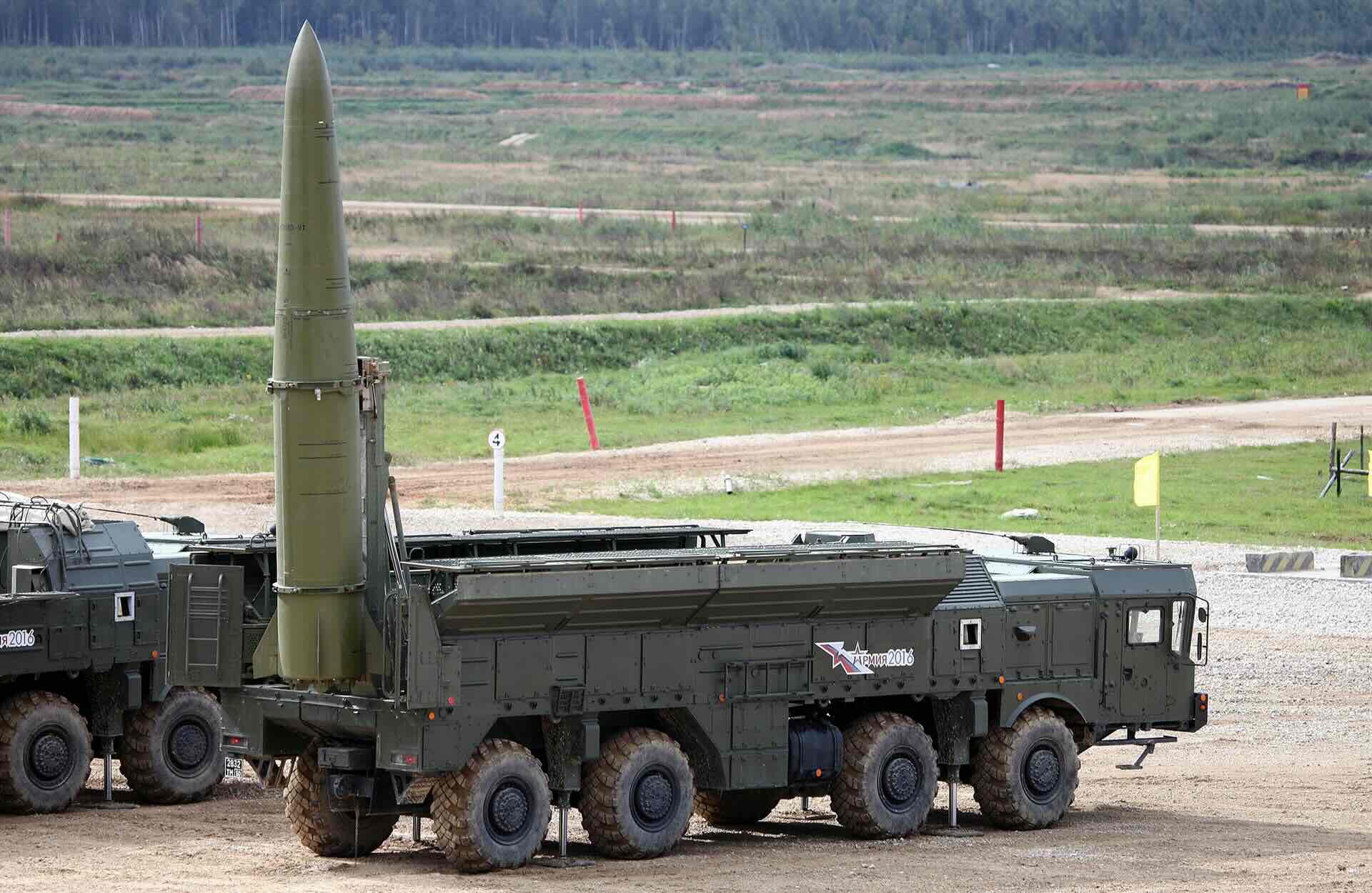
The Iskander-M is particularly difficult to target because it is road-mobile. Its transporter-erector-launcher can move between concealed locations, deploy, launch its missiles and relocate rather than remaining at a fixed firing site.
US Army assessments describe the Iskander as a mobile short-range ballistic-missile system and put the range of the Iskander-M at approximately 500 kilometres. Each launcher can carry two missiles.
That mobility creates a demanding targeting problem. Ukrainian forces must first identify the launcher, maintain sufficiently accurate information on its position and deliver a weapon before the vehicle moves again.
Kyiv has not disclosed how this was achieved in the latest operation.
There is consequently no public evidence supporting suggestions that the strike involved Starlink, another satellite communications system or a particular type of drone. No footage of the attack has been released, and Zelenskyy explicitly said operational details were being withheld.
The absence of such information may itself indicate that Ukraine wants to prevent Russia from identifying the reconnaissance, communications or strike mechanisms involved. It does not, however, establish which technology was used.
The operational consequences will depend on whether Ukraine can repeat the attack.
One successful strike on an Iskander launcher would remove or damage a valuable Russian asset, but would not by itself substantially alter Russia’s ballistic-missile capability. A sustained ability to locate and attack mobile launchers could have a broader effect by forcing Russian units to change their operating procedures.
Launchers might have to operate farther from the Ukrainian border, spend less time at firing positions, use more heavily protected areas or devote additional air-defence and electronic-warfare assets to protecting missile units. Moving launch sites farther away could also reduce the territory that some missile variants can reach and increase their flight time.
The strike fits with a policy Zelenskyy had already outlined before the latest operation. On 3 June, following talks with Nato Secretary-General Mark Rutte, he identified Russian ballistic missiles as one of Ukraine’s principal unresolved defence problems and called for additional countermeasures. The presidential office said at the time that Russia was using ballistic weapons more frequently and that they were objectively harder to intercept.
Ukraine has also documented the scale of Russia’s use of the Iskander family. According to figures published by the Ukrainian presidency, Russian missile units had carried out more than 1,100 attacks using Iskander-K cruise missiles and Iskander-M ballistic missiles during the war.
The latest strike therefore points to a potentially important change in Ukraine’s response to that threat. Instead of relying solely on intercepting an Iskander missile after launch, Ukrainian forces are attempting to attack the mobile system before another missile can leave the ground.
Whether that becomes an operationally significant capability will depend on what follows. Repeated confirmed strikes against Iskander launchers on Russian territory would provide stronger evidence that Ukraine has developed a sustainable method for hunting one of Russia’s most mobile and closely protected long-range strike systems.