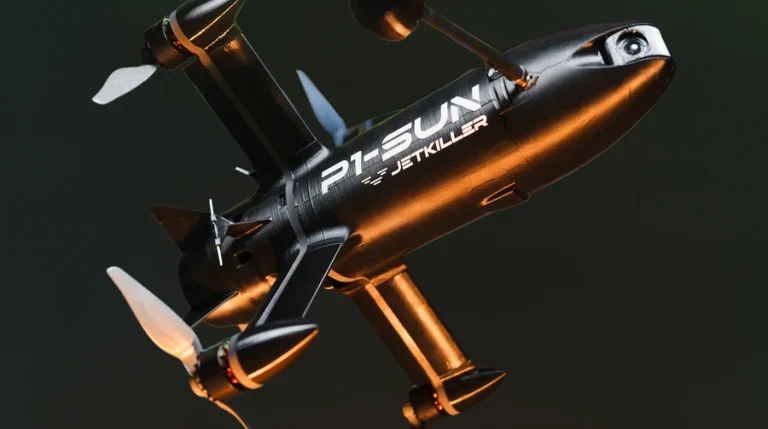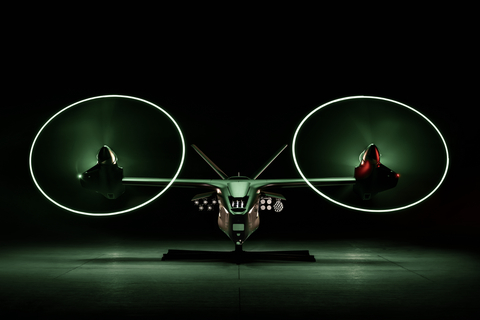
Archer Aviation and Anduril have unveiled Thunder, an autonomous hybrid-electric aircraft intended for military strike, logistics and operations alongside crewed helicopters. The companies’ official announcement describes Thunder as a Group 5 autonomous attack rotorcraft built from a jointly developed VTOL platform. Reuters reporting carried by Euronext said the platform was unveiled at Farnborough on 20 July.
The military question is not whether Thunder looks impressive on a trade-show floor. It is whether autonomous rotorcraft can assume missions now carried out by crewed helicopters or abandoned because they are too dangerous. The Apache was designed to fight in contested low-altitude environments, but modern air defence, drones and electronic warfare have made that environment far more lethal.
The UK’s Project Nyx is the most direct procurement lens. Defence Matters has previously examined Project Nyx and Britain’s attack-helicopter wingman programme. The aim is to explore uncrewed systems that can operate with Apache helicopters, extending reconnaissance, strike and survivability without placing crews in every high-risk position.
Thunder appears designed for that problem. A hybrid-electric VTOL aircraft can take off vertically, transition to forward flight, fly low and operate in support of crewed aircraft. Anduril’s defence variant is pitched as an autonomous attack rotorcraft rather than a small expendable drone. That places it between traditional helicopters and low-cost unmanned systems.
The escort role is changing. In older concepts, a scout helicopter or crewed platform might move ahead of Apaches to identify targets and draw fire. In Ukraine and other modern conflicts, that mission is extremely dangerous. Small drones, infrared missiles, radar-guided air defence and electronic surveillance make low-altitude flight more exposed. An autonomous system can take more risk.
The payload question will determine operational value. If Thunder can carry meaningful sensors, launched effects, rockets or anti-armour weapons, it can do more than observe. It can suppress threats, designate targets, attack air-defence positions or provide a defensive screen against hostile drones. If payload is limited, its role may be narrower.
Autonomy is equally important. A wingman that requires constant pilot control can become a workload burden inside an Apache cockpit. A useful system must accept mission tasks, navigate, avoid threats, share data and engage under defined rules without requiring a human to fly every metre. That is a difficult software and trust problem.
Survivability cannot be assumed. A larger Group 5 autonomous rotorcraft will be more expensive than small drones and may be visible to radar, infrared sensors and acoustic detection. It must either be cheap enough to lose, stealthy enough to survive, or valuable enough to justify protection. The business case depends on where it lands in that triangle.
For the British Army, Thunder and similar systems offer a way to preserve attack-helicopter relevance. If crewed helicopters cannot safely scout, screen or penetrate, they become standoff weapons carriers. Autonomous escorts could restore reach by pushing sensors and weapons forward.
The programme also reflects a broader industry shift. Archer brings commercial VTOL technology and propulsion experience. Anduril brings autonomy, defence integration and a willingness to build ahead of formal programmes. That partnership model may become more common as defence companies seek speed from commercial aerospace.
Thunder’s first-flight target in 2027 and possible operational role by 2030 will test whether this is near-term capability or strategic theatre. The concept is strong because it addresses a real military requirement. The proof will come when aircraft fly with crews, sensors, weapons and command links in realistic conditions.
The Apache escort role is not disappearing. It is becoming too dangerous to assign only to humans. Thunder is one answer to that problem. Whether it is the right answer will depend on autonomy, payload, survivability and cost.
For European forces, the lesson is uncomfortable but useful. Many armies are still trying to extend the life of traditional helicopter fleets while also studying unmanned teaming. Thunder suggests that the window between concept and flyable prototype is narrowing. That rewards procurement systems able to experiment early, write modular requirements and accept that some platforms will evolve after entry into service. It also punishes armies that insist on resolving every doctrinal and certification question before touching hardware. Autonomous escorts may not replace attack helicopters, but they could change how those helicopters survive. Waiting too long would leave commanders with exquisite aircraft and too few ways to protect them.