Austria’s coalition wants longer military service and compulsory reserve training, but the proposal will test whether parliamentary agreement can be converted into a larger usable force.
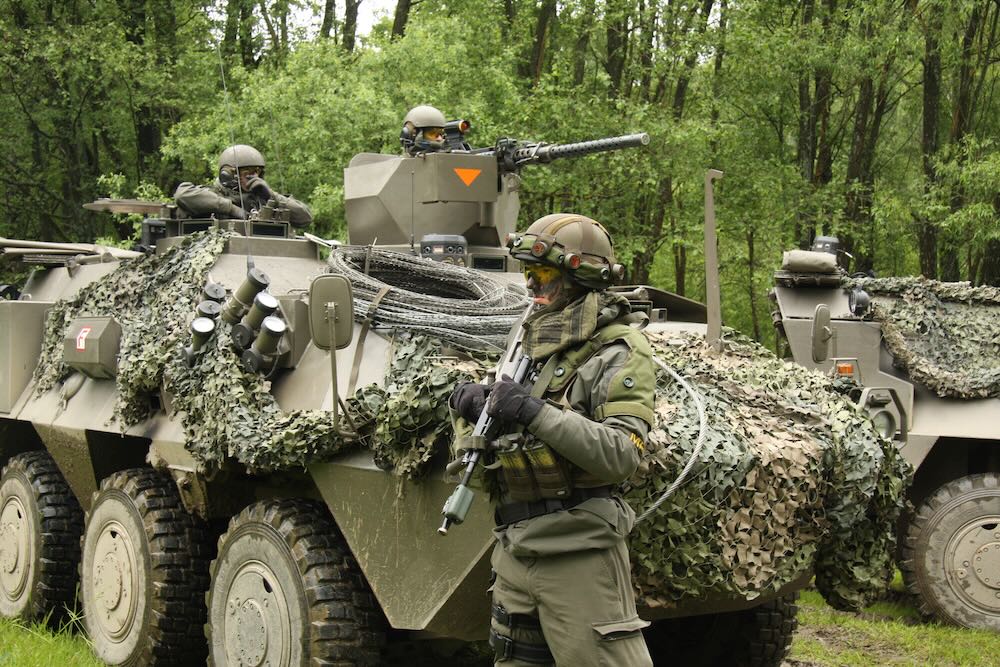
Austria’s coalition government has agreed to extend compulsory military service from six to nine months, restore mandatory militia exercises and increase conscript pay, placing manpower at the centre of the neutral country’s response to Europe’s deteriorating security environment.
The Federal Chancellery’s proposal is intended to take effect in January 2027. It would increase a conscript’s monthly payment to €1,000 and require former conscripts to complete recurring militia training over a ten-year period.
The agreement is politically significant, but it is not yet a completed reform. Elements require the two-thirds parliamentary majority needed for constitutional changes, which means the coalition must secure opposition support. The eventual design may therefore differ from the government’s opening position.
Austria is not a member of NATO, and its constitutional neutrality remains an important part of its political identity. Yet neutrality does not remove the need to defend territory, infrastructure and airspace. If anything, a country that does not rely on the alliance’s collective-defence guarantee must be particularly clear about the forces it can mobilise.
Extending service by three months increases the pool of labour available to the armed forces. It does not automatically create combat-ready units.
The military must decide how the additional time will be used. If it is absorbed by administration, guard duties or repetitive basic training, the reform will add cost without producing a proportional improvement in capability. If it supports collective exercises, specialist instruction and integration into reserve formations, it could give Austria a more credible mobilisation system.
Modern armies need drone operators, air-defence crews, communications specialists, medics, mechanics and cyber personnel as well as infantry. Nine months remains a short period in which to select, train and employ people in technically demanding roles.
The case for compulsory militia exercises is consequently stronger than the headline extension alone. Skills fade, equipment changes and units that exist only on paper cannot be assumed to assemble effectively during a crisis. Periodic training allows the armed forces to update records, test mobilisation and maintain relationships between commanders and reservists.
Defence Matters has described Europe’s wider military recruitment problem and the growing shortage of armed-forces personnel. Austria is choosing a compulsory route partly because the demographic and labour-market pressures behind those shortages are not expected to disappear.
Austria sits inside the European Union and shares borders with NATO members. Its airspace, roads, railways and Danube infrastructure are relevant to European movement and resilience even if Austrian troops are not assigned to alliance defence plans.
The war in Ukraine has also changed the practical meaning of military readiness. Long-range drones and missiles can cross borders; cyber operations can disrupt civilian systems; and sabotage does not require a conventional invasion. Austria’s armed forces may be asked to protect critical infrastructure, support civil authorities and monitor airspace while still retaining the ability to respond to a military threat.
The government says its objective is to make the country capable of defending itself by 2032. That deadline imposes a useful test. Personnel reform must be matched with equipment, ammunition, accommodation, instructors and functioning mobilisation procedures. A larger intake can strain an army if barracks and training ranges cannot absorb it.
Pay matters here. Raising compensation may reduce resentment and make compulsory service less financially disruptive, particularly for young people entering work or education. It will also increase the cost of the programme. Vienna must publish a credible multi-year estimate rather than treating personnel as a marginal expense attached to equipment budgets.
Austria permits alternative civilian service, which supports hospitals, emergency organisations and social institutions. A longer or better-paid military obligation may alter the balance between the two systems.
The government has indicated that changes to civilian service may be triggered if military recruitment proves insufficient. That creates a sensitive policy choice. Making civilian service less attractive could strengthen the armed forces while weakening organisations that depend on alternative-service workers.
The decision cannot be reduced to competition for young men. Austria needs a national resilience model that accounts for military defence, healthcare, disaster response and infrastructure protection together. A crisis would demand all of them.
There is also a question of fairness. Compulsory service applies to men, while women may volunteer. As the obligation expands, pressure for a broader debate over gender, exemptions and equal treatment is likely to grow. Several European states have adopted or discussed gender-neutral models, but each reflects different social and military requirements.
Opposition parties now have leverage because of the constitutional majority required. Their scrutiny should focus on implementation rather than symbolic arguments about toughness or neutrality.
Parliament needs figures for the expected number of conscripts, reserve exercise days, instructor requirements and annual costs. It should ask how many formations will become deployable, what tasks they will perform and which equipment shortfalls could prevent that.
The government must also define the legal conditions for mobilisation and the obligations placed on employers. Reservists cannot attend regular training without predictable notice and protection against workplace disadvantage.
Austria’s reform is therefore a test of more than conscription. It will show whether a European government can connect a worsening threat assessment to the slow, expensive work of building usable personnel capacity.
Nine months of service will be politically visible. The more important measure will be what happens years later: whether trained people remain part of coherent units, whether their records and skills are current and whether the state can call them up without administrative confusion.
Neutrality may describe Austria’s alliance status. It does not provide readiness. That has to be organised, funded and practised—and the coalition’s agreement is only the beginning.