

Britain’s new long-range missile prototypes for Ukraine point to a wider defence-industrial problem: European weapons are increasingly being designed to avoid reliance on US export controls and political approval. The United Kingdom has unveiled three prototype long-range missiles for Ukraine…

Finland-based miniFactory’s technology enables production of complex ducting components for one of the United Kingdom’s most important defence modernisation programmes. Rheinmetall UK has confirmed that industrial 3D printing, also known as additive manufacturing, is now the baseline production method for…

France’s trial of the AI-powered Arcadia battlefield command system points to a wider European defence challenge: strategic autonomy will depend not only on higher military spending, but on control over the technologies, intellectual property and decision-making systems that underpin modern…

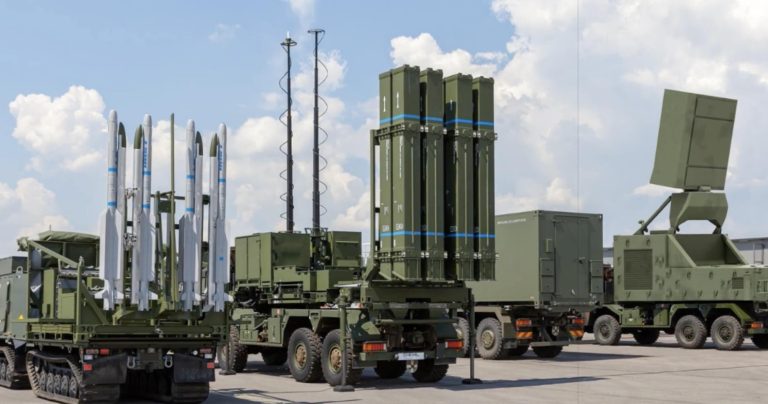
Kyiv’s agreement with Berlin on anti-ballistic capabilities comes as Ukrainian defence manufacturers seek European industrial partners for systems intended to reduce reliance on scarce US-made interceptors. Ukraine and Germany have signed an agreement to develop anti-ballistic capabilities, placing missile defence…

The Court of Justice of the European Union has ruled that Italy’s compulsory Covid-19 vaccination requirement for military personnel did not breach EU anti-discrimination law, in a judgment clarifying the legal scope of personnel rules for armed forces. The Court…

The Czech Republic’s decision to miss NATO’s defence spending target for yet another year could hardly come at a worse moment for the Atlantic alliance. At a time when Russia’s war against Ukraine continues to reshape Europe’s security landscape and…

Pete Hegseth’s remarks in Brussels this week have unsettled many European policymakers. Yet for those who spent time serving alongside American military personnel during the Cold War, his words sounded less like provocation and more like a statement of reality…

NATO’s Nuclear Planning Group has agreed to modernise the alliance’s nuclear capabilities and strengthen planning capacity, moving deterrence policy from reassurance language into practical adaptation as Russia pressure and US burden-sharing demands converge. NATO’s decision to modernise its nuclear capabilities…

Berlin’s decision to move the minehunter Fulda and supply ship Mosel towards the Red Sea shows that Europe’s proposed Hormuz mission is no longer only a diplomatic concept. It is becoming a test of naval capacity, legal authority and regional…

Washington’s call for a tougher “NATO 3.0” is not only a spending demand. It forces European allies to plan for crises in which US aircraft, carriers, tankers and command assets may no longer be available by default. The United States’…