


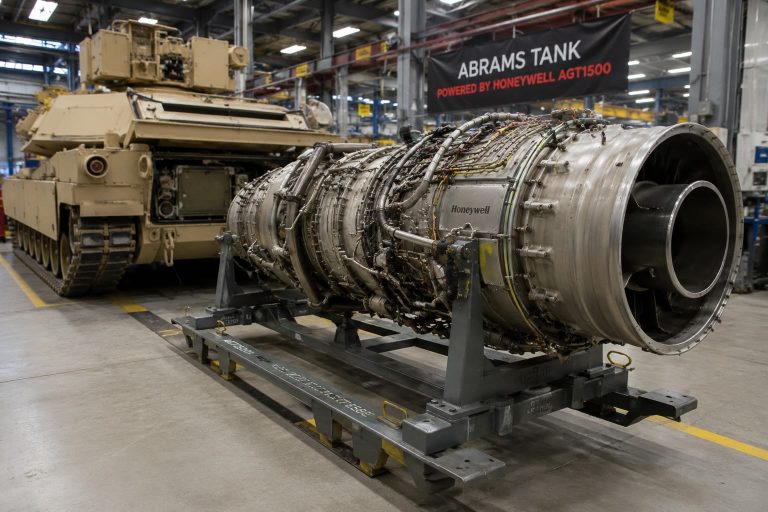
A January deadline is meant to drive China, Russia, Iran and North Korea out of US defence supply chains, but the domestic capacity needed to replace them remains far from sufficient.
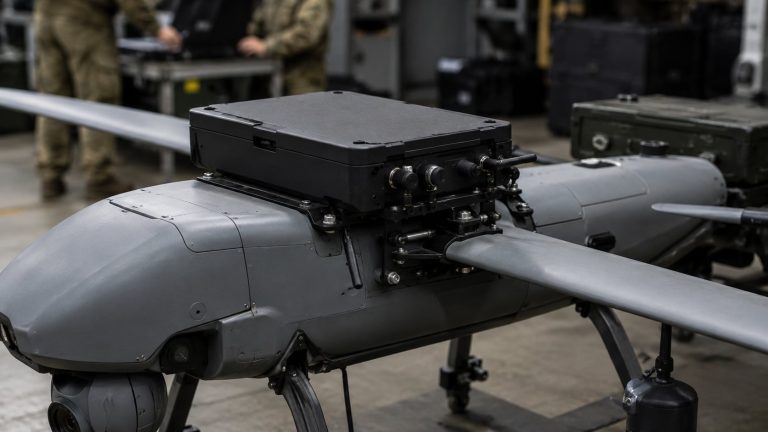
Britain’s decision to transfer the intellectual property behind Stone Cloak gives Ukraine more than another electronic-warfare device: it creates the basis for domestic manufacture, faster battlefield adaptation and a more reciprocal defence-industrial partnership.

By Liam Bowman, Co-Founder and Chief Technology Officer, ETA Green Power

Iran’s conditional halt has created room for diplomacy, but Washington’s diminishing target set and the opportunity cost of scarce interceptors help explain why an operational pause may now be more valuable than another night of strikes.
Large defence contractors have joined a record $4.1bn of military start-up funding rounds in 2026. The money offers access to faster innovation, but could also reproduce the procurement culture the newcomers were meant to challenge.
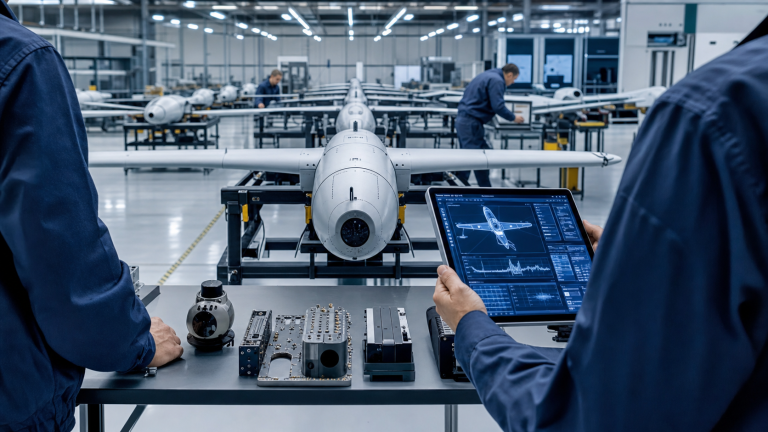
Proposed US production lines using Ukrainian drone technology could protect capacity and shorten Pentagon learning cycles, but intellectual property, procurement guarantees and Ukrainian access to output remain unresolved.

European governments increasingly want maintenance, software access and manufacturing authority alongside US weapons, forcing American suppliers to localise production without surrendering their most sensitive technology.

The Airbus–Lockheed Martin contest for Skynet 6 tests how Britain values domestic jobs, intellectual property and assured military communications against the benefits of deeper US integration.
Beijing’s export controls against 14 European organisations show how commercial dependencies can be converted into operational pressure on defence production. The decision to restrict exports of dual-use items to Rheinmetall and 13 other European organisations has moved the EU-China sanctions dispute…
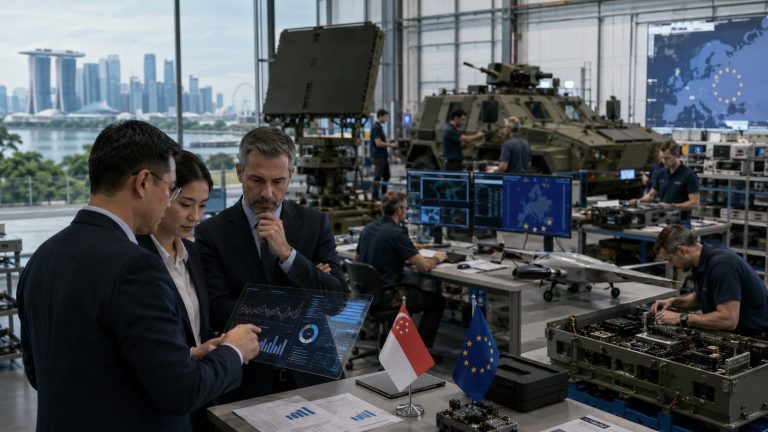
Singapore’s state investor is identifying European defence as an investment opportunity, illustrating how rising military budgets are changing the boundaries of institutional capital. Temasek has placed defence among the sectors in which it sees selective opportunities in Europe, marking a…
