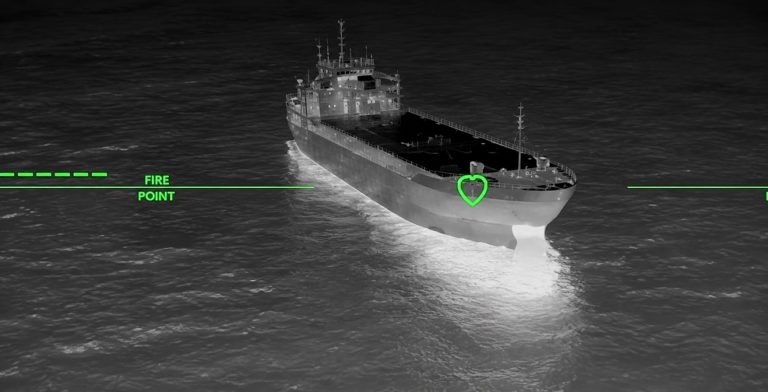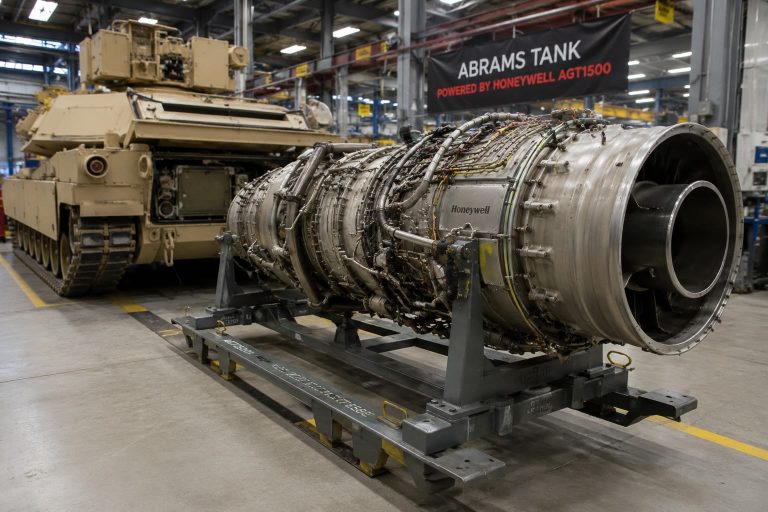
Iran’s conditional halt has created room for diplomacy, but Washington’s diminishing target set and the opportunity cost of scarce interceptors help explain why an operational pause may now be more valuable than another night of strikes.
Iran has offered to suspend its attacks for as long as the United States maintains its pause in air strikes, creating a reciprocal but fragile cessation that neither side has yet presented as a settled ceasefire.
A senior Iranian official told Reuters that Tehran’s position remained “attack for attack”. The statement followed President Donald Trump’s decision to halt a bombing campaign that had run for roughly two weeks. The immediate diplomatic opportunity is evident. The more revealing defence question is why the marginal value of another strike may have fallen for Washington while its military cost continued to rise.
An operational pause is not proof that the United States has exhausted its ammunition, nor that Iran has imposed its terms. Armed forces stop or slow campaigns for many reasons: political direction, weather, intelligence gaps, humanitarian risk, deconfliction and the need to assess damage. Yet the decision cannot be separated from two constraints that intensify as a campaign proceeds. The most valuable targets become harder to find, while each missile expended carries an opportunity cost in another theatre.
That combination changes the calculation. An additional night of bombing is worthwhile only if the targets available justify the weapons, aircraft hours, intelligence effort and escalation risk required to attack them.
Air campaigns are not factories in which effort produces a constant output. The opening phase normally concentrates on targets that are both important and sufficiently well understood: air-defence sites, command nodes, launchers, storage facilities and fixed infrastructure. Those that survive may be mobile, concealed, redundant, already dispersed or located where civilian harm would be unacceptable.
The result is diminishing returns. It can take more surveillance, more sorties and more expensive weapons to produce less additional military effect. Re-striking damaged sites may delay repair, but it does not necessarily justify the same operational risk as destroying an intact capability. Hunting mobile missile launchers can consume large amounts of intelligence and air power without guaranteeing a successful engagement.
The pause therefore need not be interpreted as a choice between military necessity and diplomacy. Diplomacy becomes more attractive when the next available military action offers a poorer exchange. Iran, facing damage to its own launch capacity and the cost of sustained retaliation, has a parallel incentive to stop. The conditional formula allows both governments to describe restraint as reciprocal rather than as concession.
It remains unstable. An unattributed militia strike, a misidentified aircraft or a disputed incident at sea could restart the exchange. Because no comprehensive agreement has been announced, US forces must stay ready to defend bases and partners even while offensive sorties are suspended. A pause can reduce consumption; it does not remove the requirement for costly readiness.
Public discussion often treats the “munition problem” as a shortage of bombs. The more difficult issue is that offensive and defensive inventories are linked by the same industrial limits and by a single global force.
Iran can impose costs even when US aircraft are not attacking. Ballistic missiles and one-way attack drones require detection, tracking and, where necessary, interception. The United States and its partners must decide which threats justify the use of Patriot, THAAD, SM-3 or SM-6 interceptors and which can be handled by aircraft, electronic warfare or less expensive systems. That is a technical decision with strategic consequences: high-end interceptors are expensive, produced slowly and relevant to contingencies well beyond the Gulf.
The Congressional Research Service’s assessment of Aegis ballistic-missile defence records concern about the rate at which the Navy has used key weapons and the adequacy of inventories and production. A separate CRS review of THAAD describes a highly specialised system with a small number of batteries and interceptors that cannot be replaced on wartime timescales.
The Pentagon’s fiscal year 2026 budget briefing said many critical munitions were already being produced at maximum industrial capacity. It requested billions of dollars for conventional and hypersonic weapons and for expanding production. Money is necessary, but it cannot instantly create solid-rocket motors, seekers, energetics, test capacity or skilled labour.
Defence Matters has previously reported that US weapons deliveries to European allies face pressure as American stocks are replenished. The present pause advances that story from procurement into operations. Inventory pressure is no longer only a question of when an ally receives a missile. It may influence how Washington values the next target and how long it is prepared to sustain a campaign.
No responsible official measures readiness by asking whether one theatre has enough weapons for tonight. The relevant question is what remains if another crisis begins tomorrow.
Ukraine continues to require air-defence interceptors against Russian ballistic and cruise missiles. NATO members are rebuilding national stocks. US forces in the Indo-Pacific plan against a conflict that could demand large numbers of long-range anti-ship weapons, air-defence missiles and precision strike systems in its opening weeks. Israel and Gulf partners also rely on overlapping American production lines.
These demands are not interchangeable. A THAAD interceptor cannot replace every Patriot missile, and a Tomahawk cannot perform the task of an air-to-air weapon. But they compete for appropriations, components, production facilities, transport and political priority. Every campaign reveals not a single shortage but the depth of the whole system.
That is why claims of “running out” are usually too crude. The United States can retain a substantial inventory and still face a serious constraint if military planners believe the remainder must be protected for higher-priority contingencies. The last missile is not the point at which pressure begins. Pressure begins when using the next missile reduces confidence in a separate war plan.
The issue was visible earlier in the conflict when Defence Matters examined the unusually rapid use of critical missiles. Washington’s new decision should be read against that record, but not reduced to it. The target set, escalation risk and defensive burden all matter alongside stock numbers that remain largely classified.
For military planners, a halt creates several forms of value. Aircraft and crews can rest; maintenance backlogs can be addressed; damage assessments can be compared with original campaign objectives; magazines can be redistributed; and intelligence assets can watch how Iran moves or restores surviving systems. It also allows the administration to test whether Tehran can control the forces and partners acting in its name.
Iran receives its own advantages. It can recover personnel, conceal surviving launchers, repair networks and assess damage. A pause that lasts long enough can therefore improve the position of both sides without resolving the political dispute. This is one reason operational pauses are often easier to begin than to turn into durable agreements.
Washington must consequently keep two propositions in view. First, preserving scarce munitions is sound strategy, not an admission of defeat. Second, an inventory problem cannot be solved simply by suspending fire until the next crisis. Production needs predictable multi-year orders, diversified suppliers and less expensive ways to defeat mass drones and missiles. Allies need clearer expectations about delivery priority. Commanders need weapons whose cost is proportionate to the targets they destroy.
The US–Iran pause may hold because both sides now find restraint preferable to the next exchange. That would be valuable. It should not obscure what the campaign has demonstrated: American military power remains formidable, but its freedom of action depends on a finite industrial and operational reserve shared among several theatres.
The strategic measure of the pause is therefore not whether it can be described as victory or retreat. It is whether Washington uses the time to preserve credible options, replenish the force and convert a temporary alignment of military incentives into a political arrangement before the target cycle and the missile cycle begin again.