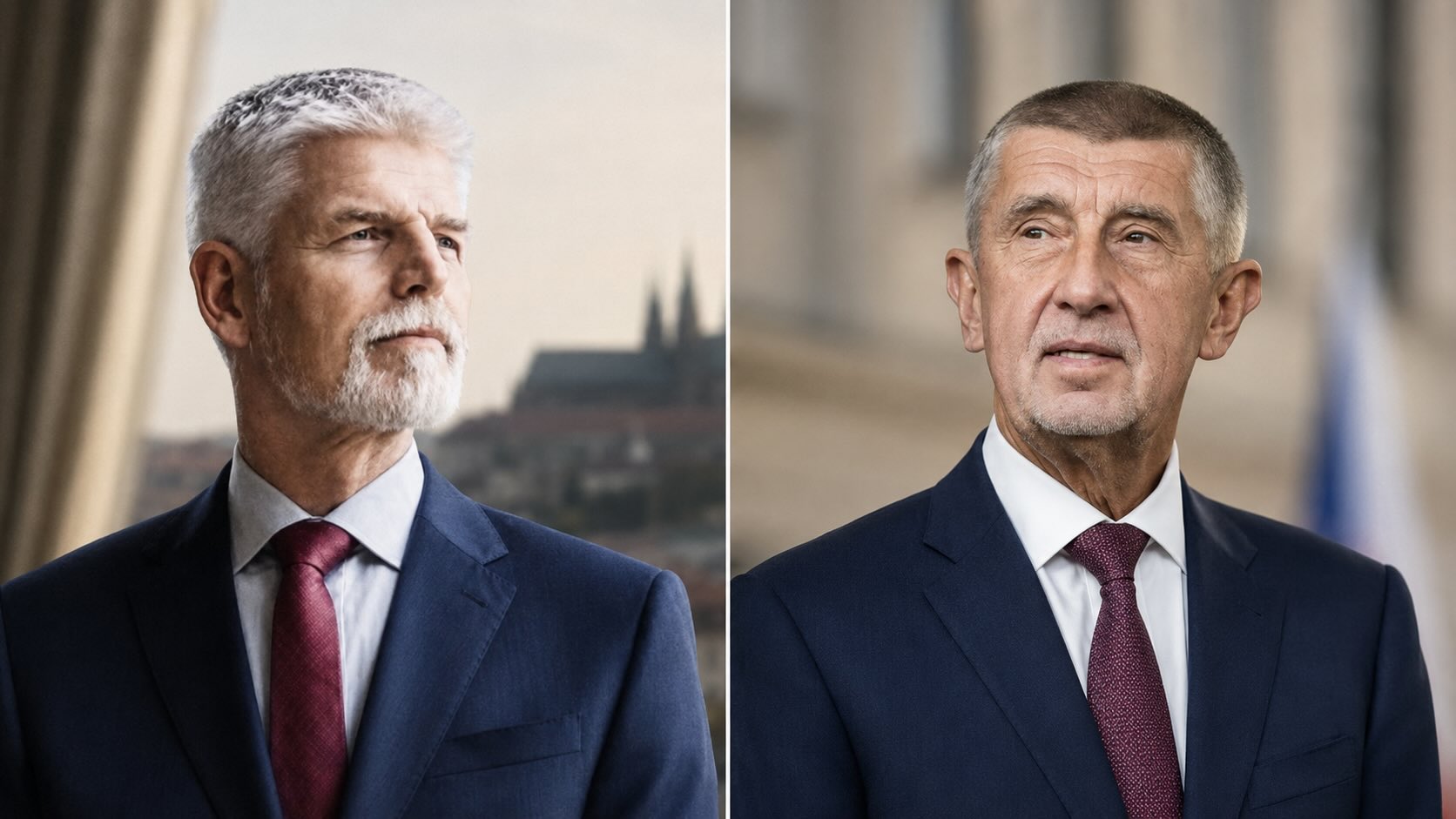
A dispute between Czech Prime Minister Andrej Babiš and President Petr Pavel over the country’s representation at the forthcoming NATO summit has developed into a broader institutional confrontation in Prague.
The immediate issue was whether Pavel should be included in the Czech delegation to the NATO summit in Ankara on July 7-8. The government sought to exclude him, arguing that it needed room to explain its own defence and foreign policy directly to allies. Pavel challenged the decision before the Constitutional Court, which issued an interim measure ordering the government to accredit him for the summit.
The ruling does not settle the wider constitutional argument. It does, however, prevent the government from excluding a president who has unusually strong NATO credentials. Pavel is a former Czech army chief and served as chairman of NATO’s Military Committee between 2015 and 2018. Czech presidents have also usually led delegations to NATO summits, giving Pavel’s challenge a basis not only in law but in established practice.
For Babiš, the dispute comes at an awkward moment. NATO allies are under pressure to demonstrate higher defence spending and sustained support for Ukraine. The Czech government has reduced its 2026 defence spending plan to around 1.7-1.8 per cent of GDP, below NATO’s long-standing two per cent benchmark. Babiš has argued that the government must first repair public finances. Pavel has said that such reductions are inappropriate while Russia’s war against Ukraine continues.
The row is therefore not only about protocol. It concerns the direction of Czech security policy. Pavel has maintained a firm pro-NATO and pro-Ukraine position. Babiš leads a coalition that includes the right-wing Motorists party and Freedom and Direct Democracy, both of which have challenged parts of the previous government’s foreign policy line.
Ukraine is one of the clearest points of divergence. Earlier this year, Prague blocked the possible sale of Aero L-159 light combat aircraft to Ukraine, despite Pavel having spoken positively about aircraft that could help counter incoming drones. Babiš said the aircraft were still needed by the Czech armed forces, citing their remaining service life. The decision was presented as a defence requirement, but it also signalled a more cautious approach to further military transfers to Kyiv.
The dispute between Pavel and the government had already begun before the NATO summit row. Pavel refused to appoint Filip Turek of the Motorists party as environment minister, a decision that triggered early tension between Prague Castle and the new cabinet. Babiš later said he did not intend to pursue a competence complaint over the matter, but the episode left relations between the president and the coalition strained.
The confrontation has now expanded into the media sphere. Czech public broadcasters have protested against government plans to replace the licence fee system with direct state budget funding. Employees of Czech Television and Czech Radio staged a warning strike, arguing that the proposed system would make public media more vulnerable to political pressure. The government says the change is intended to modernise funding and improve efficiency.
International media freedom organisations have also raised concerns. Reporters Without Borders warned that a rapid abolition of the licence fee could undermine the independence of public media. The European Centre for Press and Media Freedom has argued that the proposal may raise questions under the European Media Freedom Act, which requires public service media funding to be adequate, sustainable and predictable.
A further point of controversy is the government’s interest in legislation on foreign influence. Critics have compared such proposals with laws used by Moscow to restrict civil society, independent media and non-governmental organisations. Government supporters reject that comparison, but the debate has reinforced claims by opponents that the Czech Republic risks moving towards the type of institutional conflict seen in Hungary and Slovakia.
The Ankara summit dispute has therefore become a marker of a deeper struggle over the Czech state. On one side stands a president with a strong NATO background, arguing that the head of state cannot be excluded from key foreign policy representation. On the other stands a government seeking to assert greater executive control over foreign policy, defence spending and domestic institutions.
The Constitutional Court has given Pavel a place in Ankara. It has not resolved the political conflict. The government is expected to comply with the court’s order, but disagreement over defence spending, Ukraine policy and public media funding is likely to continue.
For NATO, the Czech dispute is not simply a domestic quarrel. At a summit intended to project allied cohesion, Prague will arrive with visible disagreement between its head of state and head of government. That does not remove the Czech Republic from the alliance consensus, but it does raise questions about how far Babiš intends to revise Czech foreign and defence policy — and how much Pavel can still act as a constitutional counterweight.