

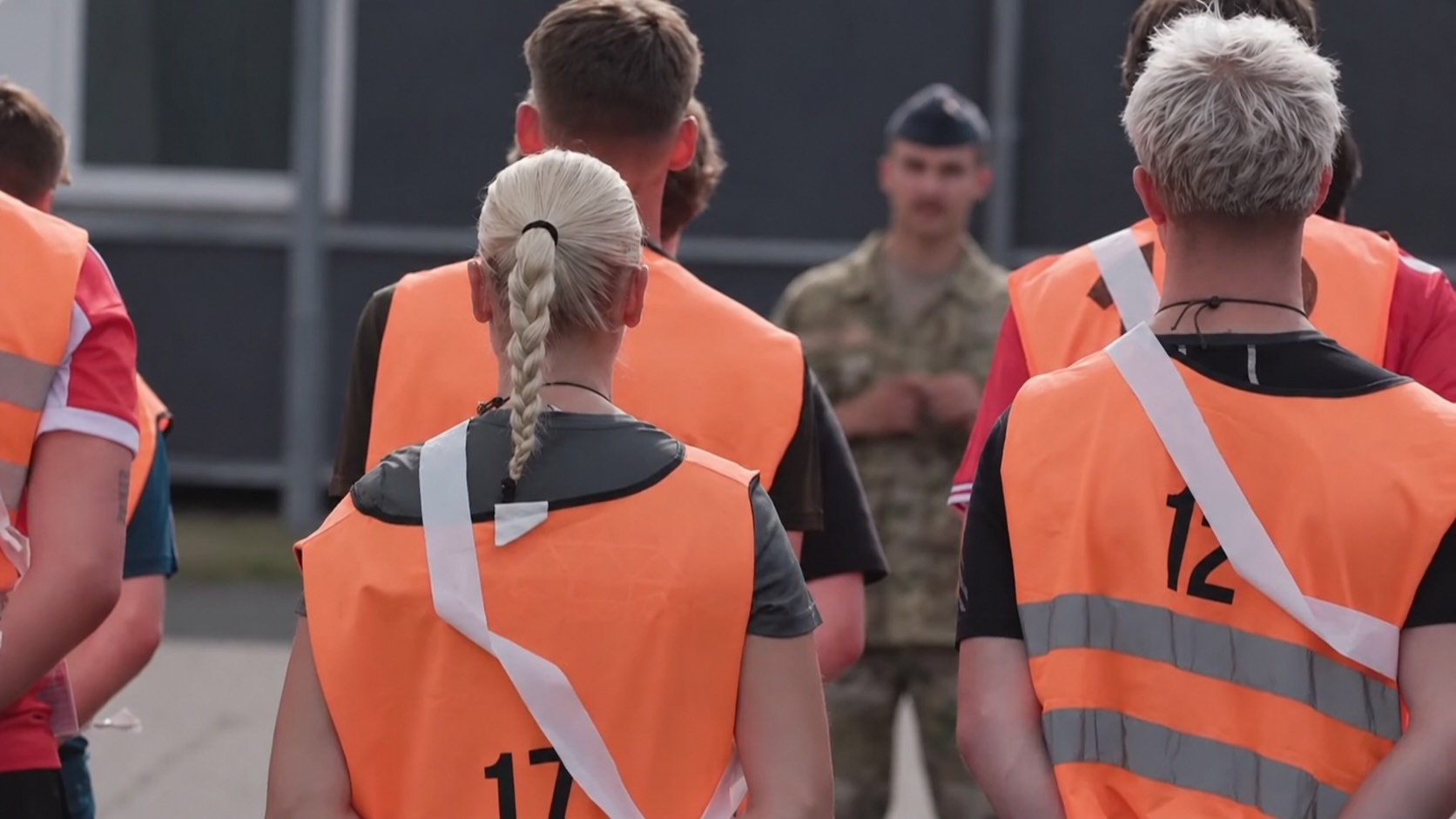
Denmark’s first recruits under its new 11-month conscription cycle have begun service, turning a political agreement on manpower into a practical force-generation experiment. The question is no longer whether Copenhagen wants more soldiers. It is whether the armed forces have the instructors, equipment, facilities and unit structure to turn a larger intake into capability.
About 1,600 recruits started the extended service model on 3 August, according to Reuters reporting. The reform follows Denmark’s 2024-2033 defence agreement and legal changes set out in Danish legislation, including the 2025 conscription act text. Copenhagen intends to raise annual intake from about 5,000 to 7,500 by 2033.
This is the first real test of that ambition. The new model gives recruits five months of basic training followed by six months of operational service. That second stage is the critical difference. It implies that conscripts are not simply being trained and released into the reserve. They are expected to contribute to units.
Several European states are reconsidering conscription or wider national service as the war in Ukraine exposes the thinness of professional forces. But a conscript on paper is not a deployable soldier. Capability depends on training quality, equipment availability, command integration and whether professional units can absorb new personnel without losing effectiveness.
Defence Matters has previously examined Europe’s military training crisis, where instructor shortages and limited facilities can slow even well-funded rearmament plans. Denmark’s model will encounter the same constraint. Longer service is useful only if the extra months are filled with relevant training, not administrative waiting time.
The inclusion of women also matters, but it should be separated from the start of the 11-month system. Gender-neutral conscription belongs to the broader manpower reform. The immediate news is implementation: the first cohort is now inside the system and will reveal how much capacity the armed forces can actually generate.
The new intake also arrives as Denmark expands its security role in Greenland. The defence ministry has separately described how the Danish Armed Forces will expand their presence and continue exercises in Greenland. That does not mean every conscript will be sent north, nor that short rotations amount to a permanent Arctic force. But it does show why manpower reform is being tied to real operational pressure.
Greenland is no longer a remote sovereignty file. It sits inside NATO’s Arctic security debate, US interest in the North Atlantic and Russia’s military activity across the High North. Defence Matters has previously covered how recruitment and reserve depth are returning as hard strategic questions, including in the broader armed-forces recruitment reckoning.
Drone-related duties add another dimension. Denmark’s new pathways point towards a force in which conscripts may support unmanned systems, surveillance and battlefield adaptation. That reflects the Ukrainian lesson: modern manpower is not only infantry mass. It is also the ability to train operators, maintainers and small-unit specialists quickly.
Denmark’s reform will be watched because it is concrete. Defence debates often remain trapped in spending percentages and future procurement promises. A conscription intake is harder to disguise. Either the armed forces can train, equip and use the recruits, or they cannot.
The risk is that political leaders treat larger intake numbers as proof of readiness. They are not. More recruits can relieve professional personnel, strengthen reserves and expand mobilisation depth. They can also strain instructors, consume equipment and create weak units if the system grows faster than its foundations.
For NATO, the Danish experiment is therefore relevant beyond Denmark. Europe is trying to rebuild force depth after decades of small professional militaries. The 11-month model is one answer. Its success will depend less on the patriotic symbolism of service than on the dull mechanics of training calendars, barracks space, vehicles, radios, ammunition and competent NCOs.
Denmark has now moved from declaration to execution. The result will help show whether conscription can become a serious instrument of European readiness, or merely another number in a defence plan.


Ukraine’s Defence Industry and Its European Future