The discussions, reported during the ILA Berlin Air Show, concern potential co-operation on the FP-5 Flamingo, a long-range Ukrainian-designed cruise missile. Diehl Defence chief executive Helmut Rauch said the company was in discussions with Fire Point over how the two sides could work together, with further meetings expected in the coming weeks.
The talks remain preliminary. No production agreement has been announced, and there is no confirmed timetable for a German production line. Even so, the discussions are significant because they show that Ukraine’s wartime weapons development is no longer being treated only as a battlefield necessity. It is now being considered as part of Europe’s wider defence-industrial response to Russia.
Diehl is best known in the Ukraine context as the manufacturer of the IRIS-T air-defence system, which has become one of the most important European-supplied systems used by Kyiv against Russian missiles and drones. Fire Point, by contrast, is a newer Ukrainian defence company that has focused on long-range drones, missiles and air-defence concepts shaped by battlefield experience.
The potential partnership would therefore join two different industrial models. Diehl brings an established European production base, certification culture and supply-chain network. Fire Point brings a design cycle developed under wartime pressure, where range, cost, production speed and operational use have been central from the start.
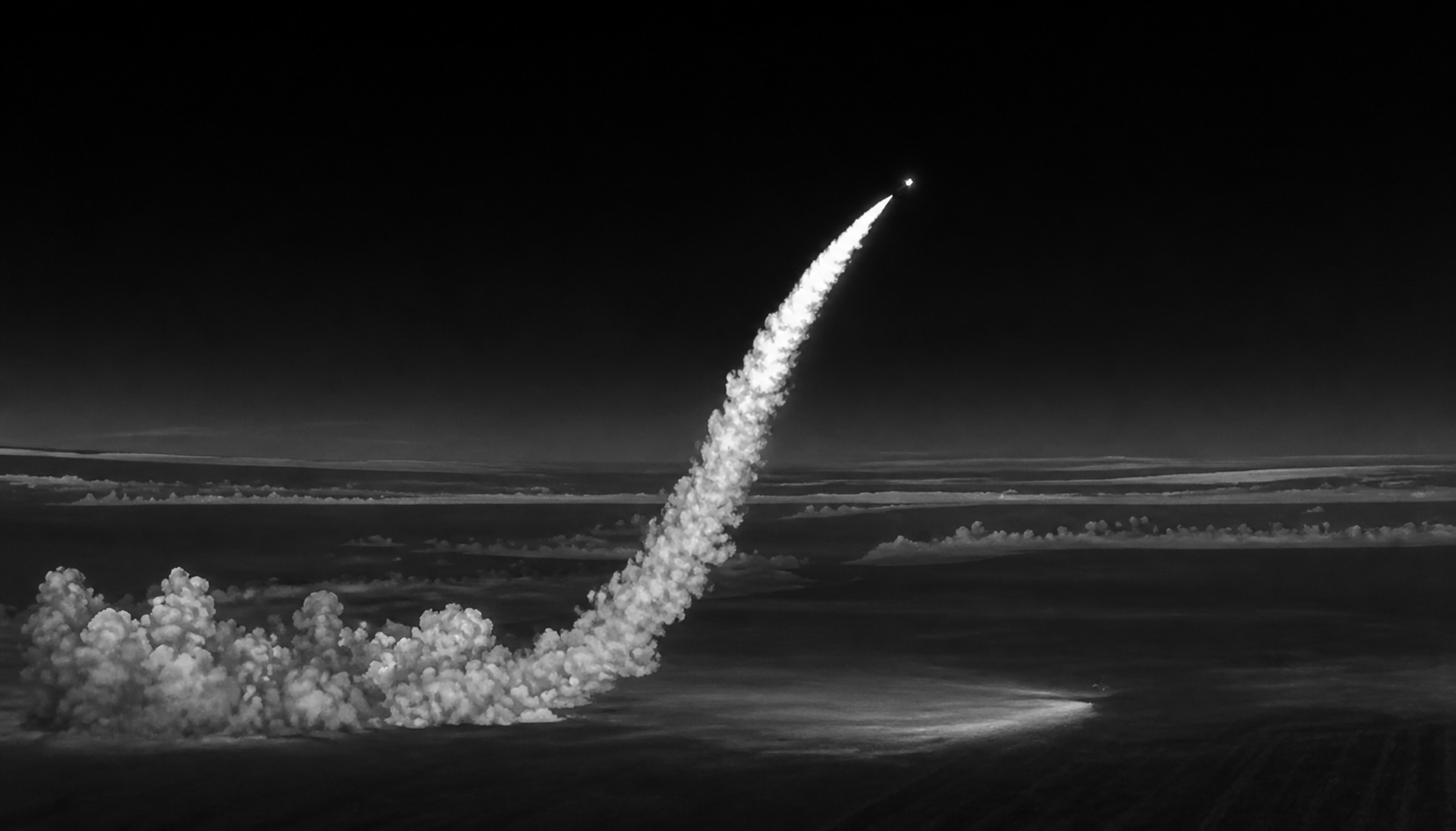
The Flamingo is reported to have a range of up to 3,000 kilometres. If produced at scale, such a missile would fit directly into the capability gap now being discussed across Europe: long-range conventional strike. European governments have spent heavily on air defence, artillery ammunition and armoured vehicles since Russia’s full-scale invasion of Ukraine. Long-range strike, however, remains more politically sensitive and industrially underdeveloped.
Germany has been at the centre of that debate. Berlin has repeatedly resisted transferring Taurus cruise missiles to Ukraine, partly because of concern over escalation and the risk of strikes deep inside Russian territory. At the same time, Germany and other European states are discussing how to strengthen their own long-range precision-strike capacity as doubts persist over the future availability of US systems and US strategic priorities.
That makes the Diehl-Fire Point talks politically important. Producing a Ukrainian-designed missile in Germany would not be the same as transferring Taurus missiles from Bundeswehr stocks. It would, however, raise similar questions: who controls target selection, where the missiles may be used, how production is financed, and whether Germany is prepared to host production of a weapon designed for deep-strike operations.
For Ukraine, the logic is clear. Domestic missile and drone production has become one of the few areas where Kyiv can partly offset Russia’s advantage in numbers, territory and industrial depth. Ukrainian long-range systems have been used to strike Russian oil refineries, military-industrial sites and logistics targets far from the front line. Those operations have forced Russia to defend more of its rear infrastructure and have widened the economic cost of the war.
For Europe, the attraction is different. Ukraine has become a live testing ground for systems designed under combat conditions against a major Russian military threat. European defence companies and governments are looking at Ukrainian technology not only as assistance to Kyiv, but as a source of operational lessons for their own forces. Drones, electronic warfare, low-cost interceptors and long-range strike systems are now central to that exchange.
Fire Point’s wider programme has already attracted attention beyond cruise missiles. The company has conducted a flight test of a ballistic missile intended to support a future missile air-defence system, with the project presented as a potential lower-cost alternative to existing Western systems. That development, alongside talks with European companies, shows how Ukraine’s defence sector is trying to move from emergency production towards exportable and jointly produced systems.
The challenge is whether European industry can absorb Ukrainian innovation without slowing it down. Much of Europe’s defence procurement remains shaped by long development cycles, strict certification processes, fragmented national requirements and political hesitation over offensive capabilities. Ukraine’s wartime production model has had to move faster, accepting risk and iteration in ways that peacetime European procurement systems often avoid.
A German production partnership could help solve some problems. It could provide safer production facilities, more reliable access to European components, stronger quality control and greater financing options. It could also reduce Ukraine’s vulnerability to Russian strikes on domestic production sites. At the same time, moving production into Germany would place the programme inside a more complex legal and political environment.
Export controls, end-use conditions, funding sources and parliamentary scrutiny would all matter. German-made or German-assembled Flamingo missiles would inevitably become part of Berlin’s wider Ukraine policy, rather than a purely commercial defence project. That may strengthen the programme if political backing is clear. It could also slow it down if the German government treats long-range strike as too sensitive.
The talks also reflect a broader shift in European defence. For much of the war, Ukraine was seen principally as a recipient of Western weapons. That is changing. Ukrainian companies are increasingly being viewed as partners, suppliers and technology developers. The war has compressed years of battlefield learning into months, particularly in drones, electronic warfare, targeting systems and long-range attacks on military-industrial infrastructure.
There is no guarantee that the Diehl-Fire Point discussions will lead to a production agreement. Defence co-operation of this kind depends on technical compatibility, supply-chain security, government approval and financing. But the fact that talks are taking place is itself a signal.
Europe’s rearmament debate is moving beyond budgets and stockpiles. It is now about which technologies can be produced quickly, which systems are relevant to a war with Russia, and whether European companies can work with Ukrainian firms as equals rather than only as donors or subcontractors.
If the project advances, it would place a Ukrainian long-range missile inside Germany’s defence-industrial ecosystem. That would be a notable development not only for Ukraine, but for Europe’s understanding of its own security needs.