The North Atlantic Treaty Organisation announced on Friday that it would optimise the posture of the Kosovo Force, known as KFOR, over the coming year, citing an improved security environment and the growing capabilities of local institutions. The adjustment, alliance officials stressed, will be gradual, conditions-based and reversible should tensions re-emerge.
KFOR has maintained a presence in Kosovo since June 1999, following the end of the conflict between Serbian forces and ethnic Albanian separatists. Established under a United Nations mandate, the mission was designed to guarantee a safe and secure environment for all communities while supporting broader international efforts to foster political stability.
More than a quarter of a century later, NATO believes the circumstances on the ground have evolved sufficiently to justify a smaller military footprint.
“The current conditions provide an opportunity to optimise KFOR’s size and posture further,” General Alexus Grynkewich, NATO’s Supreme Allied Commander Europe, said in remarks accompanying the announcement. The alliance noted that Kosovo’s own security structures have become increasingly capable, contributing to the country’s improved internal stability.
The decision carries significance beyond Kosovo itself. It reflects NATO’s broader strategic dilemma: how to allocate limited military resources amid competing demands across Europe and beyond.
In recent years, the alliance has devoted increasing attention to its eastern flank in response to Russia’s war against Ukraine. At the same time, policymakers in Washington have urged European allies to assume greater responsibility for regional security challenges. Against this backdrop, reducing commitments where conditions permit has become both a military and political necessity.
Nevertheless, NATO has sought to emphasise that optimisation should not be interpreted as disengagement.
Alliance officials were careful to underline that troop reductions would proceed gradually and in accordance with developments on the ground. The organisation reiterated its commitment to maintaining a secure environment and preserving freedom of movement for all communities throughout Kosovo. Any deterioration in conditions could prompt a reassessment of the mission’s size and configuration.
That caution is understandable.
The Western Balkans have a long history of political volatility, and relations between Belgrade and Pristina remain fraught despite years of European Union-facilitated dialogue. Periodic flare-ups in northern Kosovo have demonstrated how quickly local disputes can acquire wider regional implications.
As recently as 2023, NATO reinforced KFOR with additional personnel after heightened tensions raised concerns about potential instability. Although those reinforcements were intended as a temporary measure, they underscored the continuing relevance of the alliance’s peace support role. NATO subsequently ended the rotation of reserve forces earlier this year, reflecting its assessment that immediate risks had receded.
The challenge now will be to balance optimism with realism.
Kosovo has undoubtedly travelled a considerable distance since the aftermath of the 1998-99 conflict. Democratic institutions have developed, security structures have matured and large-scale violence has been avoided. These developments deserve recognition.
Yet unresolved political questions continue to cast a shadow over the region’s future. Serbia does not recognise Kosovo’s declaration of independence, while disputes over governance, minority rights and municipal authority periodically inflame nationalist sentiment on both sides.
NATO’s continuing support for the EU-led dialogue process reflects an understanding that military stability and political reconciliation are inseparable objectives. Lasting peace cannot be secured through troop deployments alone.
For the alliance, the planned reduction in KFOR personnel represents a qualified success story. It demonstrates that international peacekeeping missions, given sufficient time and resources, can help create conditions in which local institutions assume greater responsibility.
At the same time, the measured language surrounding the announcement reveals an appreciation of the region’s enduring complexities.
Twenty-seven years after NATO forces first entered Kosovo, the mission is entering a new phase. Whether this transition ultimately becomes a blueprint for responsible disengagement or merely another chapter in a prolonged international commitment will depend less on troop numbers than on the willingness of political leaders in the region to pursue genuine reconciliation.
For now, NATO is betting that Kosovo has reached a point where less can indeed be more.
The alliance will hope that history proves it right.
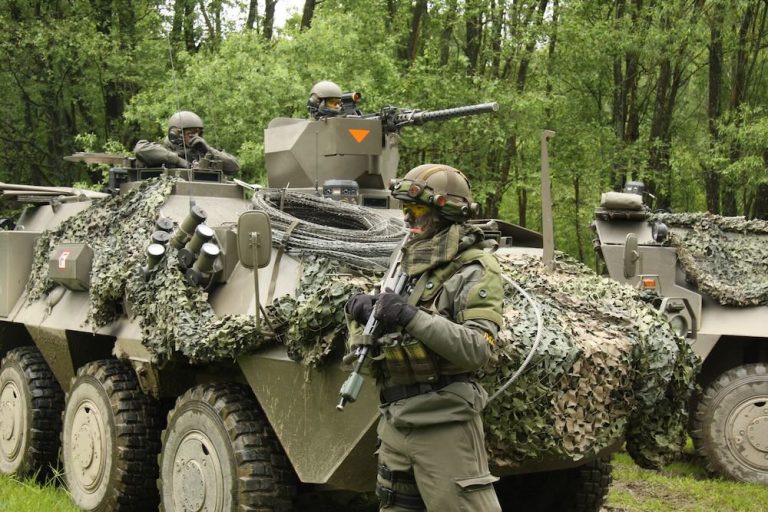
Main Image: By Staff Sgt. Anna Pongo – Public Domain, https://commons.wikimedia.org/w/index.php?curid=152708037