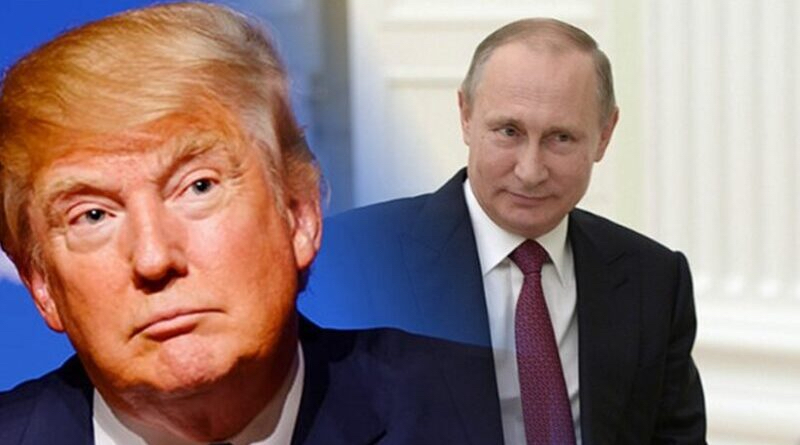
Mr Trump and the Russian president are due to meet in Alaska on Friday in an attempt to find a way out of the three-year war. It will be their first face-to-face encounter since Mr Trump’s return to the White House, and comes amid mounting diplomatic manoeuvres on both sides of the Atlantic.
On Sunday, the leaders of France, Germany, Italy, Poland, Britain and Finland, together with European Commission president Ursula von der Leyen, issued a rare joint statement. “The path to peace in Ukraine cannot be decided without Ukraine,” they declared, urging Washington to push Moscow into “serious negotiations” that include both Kyiv and European powers.
The statement reflects deep unease in European capitals over the optics – and potential consequences – of an exclusively US-Russia summit. There is particular anxiety that Moscow will press for concessions on land it has seized, and that Mr Trump, keen to deliver a headline peace breakthrough, could be tempted to agree.
A senior EU diplomat said: “If Ukraine is not in the room, there is a danger that the rest of us are simply presented with a fait accompli. That would be unacceptable.”
The issue will dominate an extraordinary meeting of EU foreign ministers on Monday, held by video link, with Ukraine’s foreign minister Andriy Sybiga invited to join the discussions. The gathering was convened by the bloc’s foreign policy chief Kaja Kallas, who made clear her view that both Kyiv and Brussels must be directly involved.
“President Trump is right that Russia has to end its war against Ukraine. The US has the power to force Russia to negotiate seriously,” Ms Kallas said. “Any deal between the US and Russia must have Ukraine and the EU included, for it is a matter of Ukraine’s and the whole of Europe’s security.”
In Kyiv, President Volodymyr Zelensky spent much of the past three days in a flurry of calls with foreign leaders. His office confirmed that he had spoken to 13 counterparts, including Germany’s Friedrich Merz, Britain’s Sir Keir Starmer, and France’s Gabriel Attal.
Mr Merz said on Sunday he “hoped and assumed” Mr Zelensky would be invited to the Alaska summit. “Any peace worth having will require his presence,” the German chancellor said.
The push for Ukrainian participation is underpinned by fears that the Kremlin will seek to formalise its gains. Moscow has demanded Kyiv withdraw from the front lines, pledge military neutrality, abandon its NATO ambitions, and shun Western defence aid.
For Mr Zelensky, those demands amount to a blueprint for surrender. While he acknowledges that retaking Russian-held territory by force is currently out of reach, he insists any settlement must be negotiated on Ukraine’s terms and in line with international law.
“As we work towards a sustainable and just peace, international law is clear: all temporarily occupied territories belong to Ukraine,” Ms Kallas said on Sunday, reiterating Kyiv’s red line.
The territory question is likely to be the most intractable element of any future deal. NATO’s secretary-general Mark Rutte told ABC’s This Week that Mr Trump was “putting pressure on Putin” ahead of Friday’s meeting. “Next Friday will be important because it will be about testing Putin – how serious he is on bringing this terrible war to an end,” he said.
Mr Rutte acknowledged the reality on the ground. “Russia is controlling some Ukrainian territory,” he noted. “When it comes to acknowledging, for example, maybe in a future deal, that Russia is controlling – de facto, factually – some of the territory of Ukraine, it has to be effectual recognition and not political de jure recognition.”
His remarks will be watched closely in Kyiv, where even informal acknowledgement of Russia’s grip on parts of the country is politically sensitive. Mr Zelensky has repeatedly said that recognition of Moscow’s claims – even in a limited or non-binding form – would embolden the Kremlin and undermine Ukraine’s sovereignty.
On the battlefield, Ukraine’s armed forces announced on Sunday that they had recaptured a village in the Sumy region, about 20 kilometres west of the heaviest fighting in the north. While the gain is modest, it comes as Russian forces have made recent advances elsewhere, particularly in the east.
The timing of the Alaska summit adds urgency to Europe’s diplomatic efforts. Mr Trump, who has made no secret of his desire to end US military aid to Ukraine, has framed the meeting as an opportunity to “bring this war to a close quickly”. His administration has so far declined to confirm whether Mr Zelensky will be invited.
European officials fear that a bilateral deal could be presented as a “take it or leave it” arrangement, with Western unity fracturing if Kyiv refuses. “We have learned from history that peace deals reached over the heads of those most affected rarely hold,” one senior European official said.
The Alaska talks will also be closely monitored in Beijing, which has deepened its partnership with Moscow since the war began, and in capitals across the Global South, many of which have called for a negotiated settlement.
For now, the EU is preparing to make its case forcefully in Monday’s ministerial meeting. “We must avoid a repeat of past mistakes, where decisions about European security were made without Europeans,” one diplomat said. “That principle applies doubly when it is Ukraine’s survival at stake.”
With just days before Mr Trump and Mr Putin sit down together, the scramble in European capitals is a reminder that, even after three years of fighting, the diplomatic battle is only just beginning.
Main Image: Donald Trump and Vladimir Putin. Photo montage from Wikipedia Commons sources.