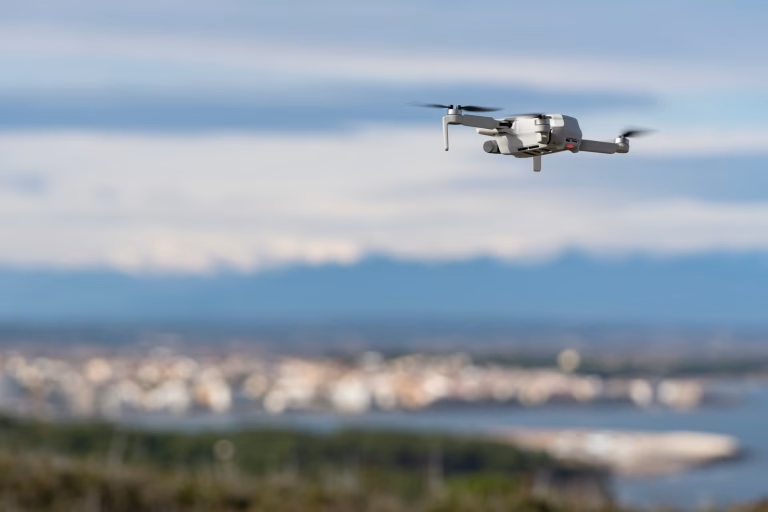
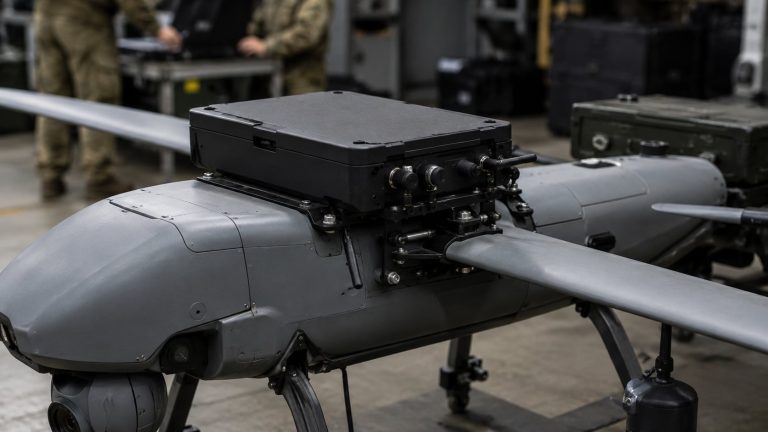
Yet the reality behind them tells a far more consequential story—one of a continent that has finally begun to take its security seriously, and of governments awakening to the hard truth that freedom is not preserved by rhetoric but by real capability. Over the past five years, EU defence R&D spending has nearly doubled. For a region often accused of strategic complacency, that represents nothing short of a quiet revolution.
The shift did not happen in a vacuum. Europe finds itself in an era defined by renewed great-power rivalry, rising nuclear sabre-rattling from Moscow, and the prospect of long-term geopolitical competition on multiple fronts. Russia’s grinding war in Ukraine, along with its increasingly hostile posture toward NATO members, has shattered many illusions. The Kremlin’s aggression has forced even the most dovish corners of the continent to admit that the security environment of the post-Cold War years has evaporated. In its place lies a harsher reality—one that demands resilience, readiness and technological superiority.
This is where the surge in research and development comes into play. For decades, EU members lamented the fragmentation of their defence industries. Too often, national egos trumped efficiency, resulting in overlapping weapons programmes, slow procurement pipelines, and equipment that could not be easily integrated across allies. Yet the combination of strategic shock and budgetary necessity has pushed governments to rethink. Instead of duplicating efforts, more funds are being channelled into cross-border projects and joint technological platforms. It is, in many respects, the most encouraging trend in European defence policy in a generation.
While individual nations still manage their own procurement, R&D is increasingly seen as the one area where cooperation pays undeniable dividends. Advanced missile systems, drone swarms, artificial intelligence for battlefield decision-making, and next-generation electronic warfare capabilities require levels of investment and technical expertise that few European states can manage alone. The recognition that shared security requires shared innovation is not just sensible—it is overdue.
What is particularly noteworthy is that this rise in spending has occurred even amid domestic political pressures, inflationary budgets, and competing demands on public finances. European electorates have not always looked kindly on defence expenditure, especially in countries with long-established social welfare systems. Yet recent polling suggests that public opinion is shifting. Citizens increasingly understand that without security, all other priorities—economic growth, political stability, energy transition—rest on uncertain foundations. That evolution in thinking has made it easier for governments to justify larger outlays for new technologies and experimental platforms.
Moreover, the surge reflects a determination not to be left behind by global competitors. While the United States remains the world’s pre-eminent military power, Washington has made it clear that Europe must shoulder more responsibility for its own defence. The Indo-Pacific is drawing greater American attention, and few believe that future administrations—Republican or Democrat—will reverse that trend. In this sense, Europe’s renewed commitment to R&D is not merely a response to Russia; it is an investment in long-term geopolitical relevance.
There is also a growing recognition that tomorrow’s conflicts will be shaped not just by tanks and fighter jets but by the speed and sophistication of technological breakthroughs. Cyberwarfare, space-based surveillance, hypersonic missiles, and autonomous systems are now central to the modern arsenal. The EU’s increased spending acknowledges that catching up later would be vastly more expensive—and potentially impossible. Europe must compete now if it wishes to deter tomorrow’s threats.
Success stories are already emerging. Joint EU innovation initiatives have accelerated work on secure communications networks, AI-enhanced situational awareness tools, and cutting-edge materials for armour and aerospace design. These programmes may not capture headlines in the way that traditional defence procurement does, but they represent the intellectual backbone of Europe’s future military capability. As any strategist will tell you, it is research—not quantity of boots on the ground—that gives an army its edge.
Perhaps the most encouraging sign is that the political debate surrounding defence appears to be maturing. For too long, European defence policy has toggled between grand declarations and timid implementation. The new emphasis on R&D breaks that pattern. It is practical, sustainable, and rooted in the understanding that modern security depends on technological competitiveness as much as troop numbers. Leaders in Brussels and national capitals deserve credit for recognising this and acting accordingly.
No one should imagine that Europe’s defence challenges have been solved. There is still duplication, still bureaucracy, and still the perennial questions of how quickly money can translate into deployable capability. But the broader direction is undeniably positive. A continent that for decades luxuriated in the illusion that history had ended is rediscovering the fundamentals of sovereignty.
Five years ago, few would have predicted that Europe would nearly double its defence R&D budget. Today, it is clear that this mobilisation was not only necessary but transformative. In an era of global uncertainty, the EU has begun to chart a path that is firmer, more realistic and ultimately more confident. For once, Europe is not merely reacting to events—it is preparing for them.
https://defencematters.eu/germanys-bold-step-toward-building-europes-most-capable-army/