Russia’s annual Victory Day parade on Red Square will take place without its usual columns of tanks, armoured vehicles and missile systems, according to Russian officials, in a further sign that the war in Ukraine continues to affect even Moscow’s most symbolic state ceremonies.
Russia’s annual Victory Day parade in Moscow will take place on 9 May without its traditional columns of military hardware, with officials citing the “current operational situation” as the reason for the change.
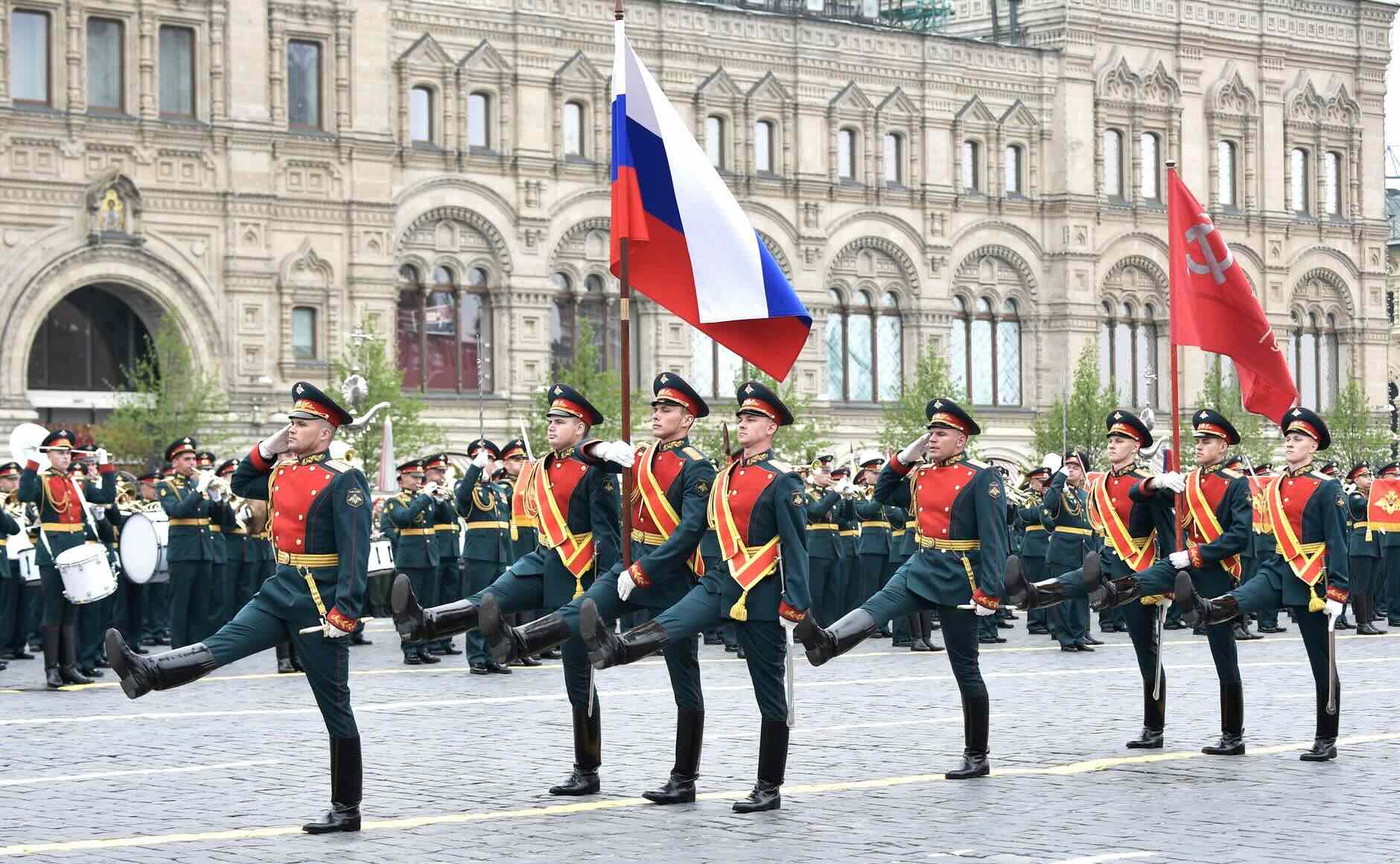
The event, held each year on Red Square to mark the Soviet Union’s victory over Nazi Germany in 1945, has long been used by the Kremlin as a display of military power. Tanks, armoured vehicles, missile systems and other heavy equipment have usually formed a central part of the spectacle. This year, however, the parade will be limited to marching personnel and an aerial component, including Russian aerobatic teams and Su-25 aircraft.
The Russian Defence Ministry said the parade would include servicemen from the armed forces and representatives of military branches involved in what Moscow continues to call its “special military operation” in Ukraine. Russian state-linked media reported that columns of military equipment would not take part “in connection with the current operational situation”. Some military cadets are also expected to be absent from the procession for the same stated reason.
The decision marks a further reduction in the military scale of Victory Day commemorations since Russia launched its full-scale invasion of Ukraine in February 2022. In recent years, Russian regional authorities have either scaled down or cancelled some events associated with 9 May, often citing security considerations. In Moscow, the parade has remained politically significant, but the visible reduction in military hardware has become more pronounced as the war has continued.
The absence of armoured vehicles and missile systems from Red Square is notable because the parade has traditionally served several functions for the Kremlin. Domestically, it presents the Russian state as the successor to the Soviet victory in the Second World War. Internationally, it is used to project military strength and continuity. Since 2022, the event has also been incorporated into the Kremlin’s wartime narrative, linking the memory of the Second World War with Russia’s current campaign against Ukraine.
The official explanation leaves open several possible factors. Security concerns in and around Moscow have increased in recent years following repeated Ukrainian drone attacks on Russian territory. Russian air defence activity, airport disruptions and tighter security restrictions have become more frequent in the period surrounding major state events. At the same time, Russia’s armed forces remain heavily engaged in Ukraine, where equipment losses, logistical demands and operational priorities may limit the willingness to divert military hardware for ceremonial purposes.
This year’s parade will mark the 81st anniversary of the Soviet victory over Nazi Germany, but without the usual display of equipment because of the operational situation related to the war in Ukraine.
The 9 May parade is also taking place against a strained diplomatic background. Slovak Prime Minister Robert Fico has said that Lithuania and Latvia would not permit his aircraft to use their airspace for travel to Moscow for the Victory Day commemorations. Baltic officials have taken a firm line towards Russia since the invasion of Ukraine, while Fico has maintained a more conciliatory stance towards Moscow than most EU leaders.
Fico attended the 2025 Moscow Victory Day parade, becoming the only EU leader present at the event, despite criticism from other European officials. His participation drew objections within the EU, where the Kremlin’s use of Second World War symbolism has been viewed in the context of Russia’s continuing war against Ukraine.
For Moscow, the parade remains a central state ceremony even when its military content is reduced. President Vladimir Putin has repeatedly used Victory Day speeches to frame Russia’s contemporary conflicts through historical memory. The removal of military vehicles from this year’s parade does not diminish the political importance of the occasion, but it does alter the visual message that the Kremlin has traditionally sought to project.
The change is also likely to be interpreted outside Russia as a sign of the pressures created by the war. While Moscow continues to present itself as militarily resilient, the decision to remove equipment from one of the country’s most symbolic public events indicates that security and operational considerations now affect even the most carefully choreographed state ceremonies.
The Kremlin is expected to proceed with the parade as planned, relying on marching formations, aircraft and official messaging rather than the heavy mechanised display that has long defined the event. For a ceremony built around the projection of strength, the absence of military hardware will itself become part of the wider political reading of this year’s 9 May commemorations.