NASA’s unveiling of the crew for the forthcoming SpaceX Crew-13 mission to the International Space Station is not merely a routine operational update; it is a testament to the enduring strength of scientific partnership and shared ambition.
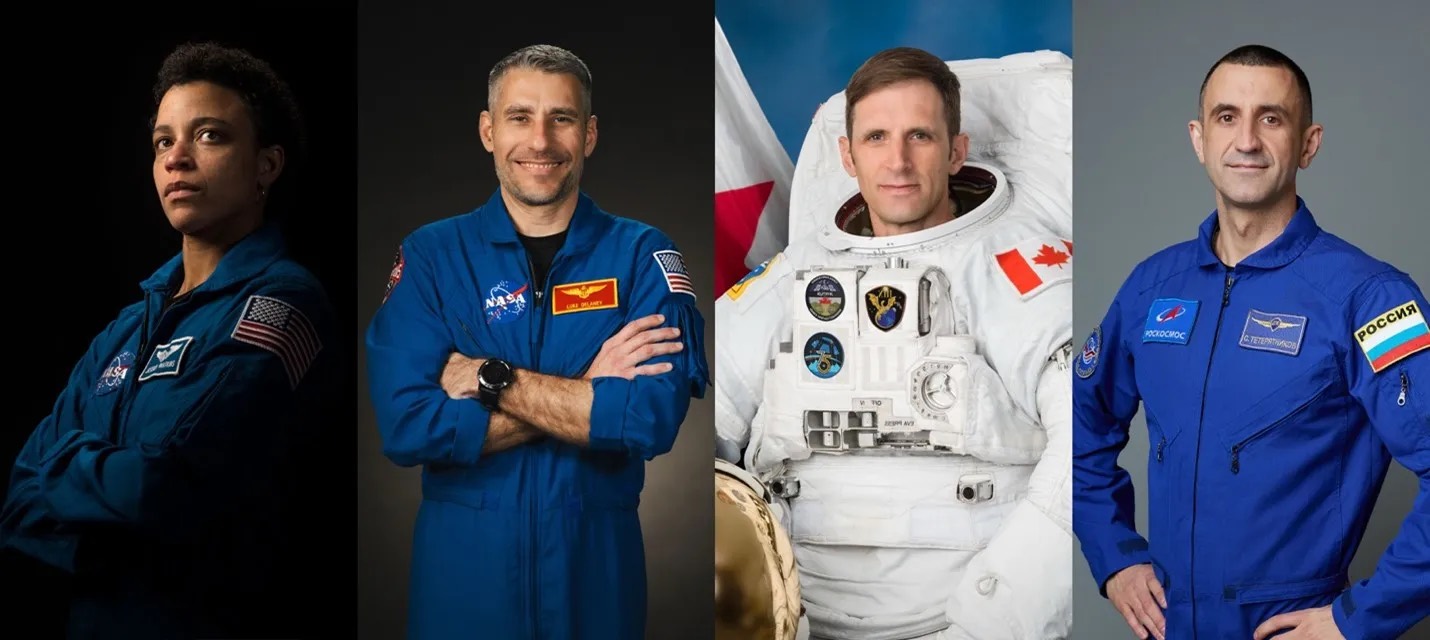
Set to launch no earlier than mid-September, the Crew-13 mission will carry four astronauts representing three major space agencies. Two are from NASA itself — Jessica Watkins and Luke Delaney — joined by Joshua Kutryk of the Canadian Space Agency and Sergey Teteryatnikov of Roscosmos. Together, they will embark on a long-duration scientific expedition aboard the International Space Station, continuing a tradition of collaboration that has endured even during periods of geopolitical strain.
There is something quietly reassuring about the composition of this crew. In a world often characterised by division, the sight of American, Canadian and Russian astronauts preparing to live and work side by side in orbit speaks volumes. Space, it seems, remains one of the few arenas where pragmatism and shared curiosity still trump rivalry.
The mission itself forms part of NASA’s Commercial Crew Program, under which private enterprise — in this case SpaceX — provides transportation to and from the station. It is a model that has matured impressively over recent years, combining governmental oversight with commercial agility. Crew-13 will mark the thirteenth operational flight of this programme, and the twenty-first crewed journey of a Crew Dragon spacecraft, underscoring just how rapidly what was once novel has become routine.
Yet routine should not be mistaken for mundane. Each mission to the ISS carries with it a dense programme of scientific research, technological testing and operational maintenance. Astronauts will conduct experiments ranging from human physiology in microgravity to materials science and Earth observation — work that frequently yields insights with direct applications on Earth, from medicine to climate monitoring.
For some members of the crew, this will also be a milestone moment. Joshua Kutryk, for instance, is set to undertake his first spaceflight, representing not only Canada’s continued commitment to space exploration but also the next generation of astronauts stepping into roles once occupied by pioneers. His inclusion reflects the careful balance NASA and its partners strike between experience and fresh perspective.
Equally notable is the leadership structure of the mission. Jessica Watkins, already a seasoned astronaut, is expected to take on a senior role, continuing her trailblazing career and reinforcing NASA’s steady emphasis on diversity and inclusion within its astronaut corps. Alongside her, Luke Delaney will make his first journey into orbit, embodying the programme’s ongoing renewal.
The presence of a Roscosmos cosmonaut, Sergey Teteryatnikov, is perhaps the most symbolically resonant aspect of all. Despite the complexities of terrestrial politics, cooperation in orbit persists. The ISS, after all, was conceived as a joint endeavour, and its continued operation depends on precisely this sort of collaboration. In that sense, Crew-13 is as much a diplomatic mission as it is a scientific one.
There is also a broader narrative at play. As humanity edges towards more ambitious ventures — the return to the Moon, and eventually missions to Mars — the ISS remains an indispensable proving ground. Long-duration stays in orbit provide invaluable data on the physiological and psychological demands of spaceflight, while also allowing engineers to test the systems that will underpin future exploration.
The reliability of the Crew Dragon system, launched atop SpaceX’s Falcon 9 rocket, has been central to this progress. What was once an experimental partnership between NASA and a relatively young private company has evolved into a cornerstone of modern space operations. The seamless integration of public and private expertise has, in many respects, reshaped the economics and logistics of human spaceflight.
For all its technical sophistication, however, the enduring appeal of missions like Crew-13 lies in something simpler: the human story. Four individuals, drawn from different nations and backgrounds, will leave Earth together, live in close quarters hundreds of kilometres above its surface, and work collectively in pursuit of knowledge that benefits all.
It is a narrative that retains its power precisely because it is real. At a time when headlines are often dominated by discord, the steady rhythm of space missions offers a counterpoint — a reminder that cooperation, when anchored in shared purpose, can still flourish.
As Crew-13 prepares for its journey, it does so carrying more than scientific instruments and supplies. It carries the quiet optimism that, even in an uncertain world, there are still frontiers where humanity moves forward together.
Europe’s Space Ambitions Risk Splintering as Germany Pushes Ahead Alone