Ankara produced major procurement announcements, but the mix of surveillance drones, missiles and enabling capabilities shows that higher European spending still often strengthens transatlantic dependence rather than replacing it.
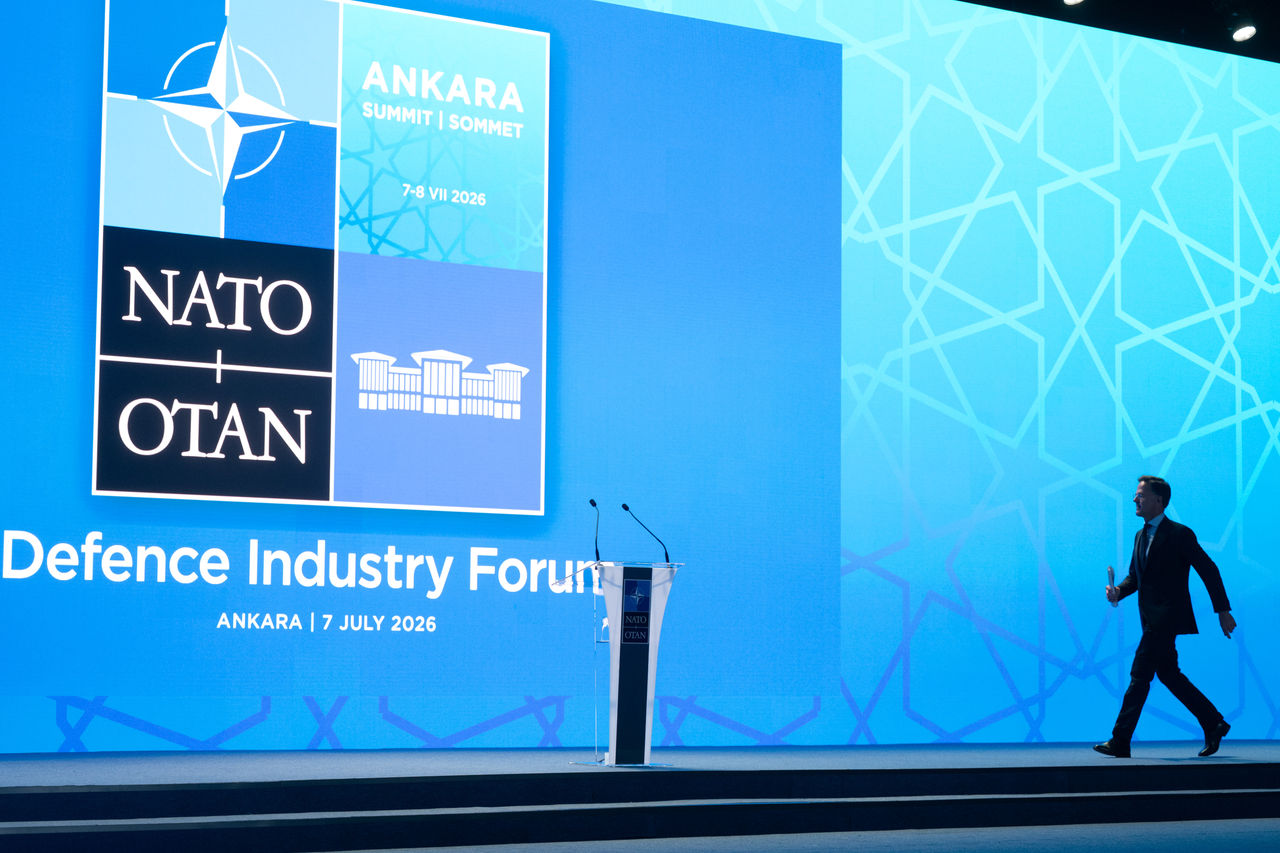
NATO’s defence-industry forum in Ankara produced at least $50 billion in announced contracts and initiatives, giving the Alliance a powerful visual answer to years of American complaints about European underinvestment. The procurement pattern, however, also exposed how difficult it will be for Europe to translate larger budgets into strategic autonomy.
The package combined European programmes with major purchases and industrial arrangements involving US suppliers. Allies agreed to acquire up to five Northrop Grumman MQ-4C Triton high-altitude surveillance drones, explore a European maintenance hub for Lockheed Martin’s PAC-3 interceptor and pursue missile cooperation with American companies. NATO also advanced Saab GlobalEye surveillance aircraft and multinational Airbus airlift and tanker projects.
The agreements unveiled in Ankara demonstrate real investment. They do not yet demonstrate that Europe can supply all the capabilities required for its defence without US technology, approvals and production capacity.
Europe produces advanced aircraft, missiles, armoured vehicles, submarines and sensors. Its weaknesses are concentrated in capabilities that connect and sustain those forces: long-range surveillance, ballistic-missile defence, aerial refuelling, strategic lift, space support and command networks.
Those are precisely the areas in which US systems remain prominent. The Triton purchase will improve maritime surveillance, but it ties participating allies to an American platform, software environment and sustainment chain. PAC-3 maintenance in Europe would improve availability while leaving missile design and much of production under US control.
This is not necessarily poor procurement. Buying mature systems can close urgent gaps faster than launching new programmes. Russia’s war against Ukraine and uncertainty over the US force posture leave little time for industrial purity. The problem arises when every urgent purchase reinforces a dependency that Europe says it intends to reduce.
The decision to negotiate for Saab GlobalEye aircraft offers a European alternative to NATO’s ageing US-built AWACS fleet. The A400M and A330 MRTT initiatives similarly pool European-built aircraft to provide lift and refuelling that smaller allies cannot efficiently maintain alone.
Defence Matters recently examined why NATO’s Saab turn is about more than replacing AWACS. Ankara confirms that the Alliance can choose European systems where a credible product and multinational operating model already exist.
Yet even European-branded platforms contain global components and may depend on US weapons, communications or export permissions. Strategic autonomy is therefore not a label attached to the final assembly line. It is the ability to operate, repair, modify and replenish a capability during a crisis without external political approval.
The political pressure to show rapid delivery encourages national governments to sign bilateral deals. That may produce equipment quickly, but it can also create fleets with different maintenance, training and ammunition requirements.
NATO needs interoperable forces, not identical equipment. Nevertheless, excessive variety raises costs and makes wartime logistics harder. Europe can spend far more while still failing to generate scale if orders remain divided among national variants and short production runs.
The Alliance’s new 5 per cent investment framework gives governments fiscal direction. The industrial forum was intended to show that money is becoming contracts. Its next test is whether those contracts create larger common stockpiles, resilient production and assured access to components.
The United States will remain NATO’s leading military and technological power. European autonomy should not be understood as exclusion of American suppliers or duplication of every US capability. The practical objective is to prevent a political decision in Washington, a production bottleneck or an export restriction from disabling European defence plans.
That requires European production rights, shared intellectual property where possible, geographically distributed maintenance and sufficient ammunition stocks. It also requires investment in areas where the United States currently has no European substitute.
The Ankara showcase was therefore both a success and a warning. It showed allies moving beyond pledges into procurement. It also showed that Europe’s fastest route to readiness still runs through American companies in several critical sectors.
The balance will be judged over the next decade. If European spending expands domestic capability while sustaining transatlantic interoperability, dependence will become more manageable. If the continent simply becomes a larger customer for systems it cannot fully support or replace, the $50 billion showcase will have strengthened NATO without solving Europe’s strategic vulnerability.