Russia’s overnight barrage against Kyiv and other Ukrainian cities has turned Ukraine’s air-defence shortage from a strategic problem into a measurable daily risk. Ukrainian officials said the attack began at about 01:30 local time and involved 41 missiles and 125 drones, while Ukrainian forces reported intercepting only 18 of the missiles. The figures, reported by Reuters and expanded in Associated Press coverage of the wider strike wave, matter because they show the difference between defeating drones and defeating ballistic threats.
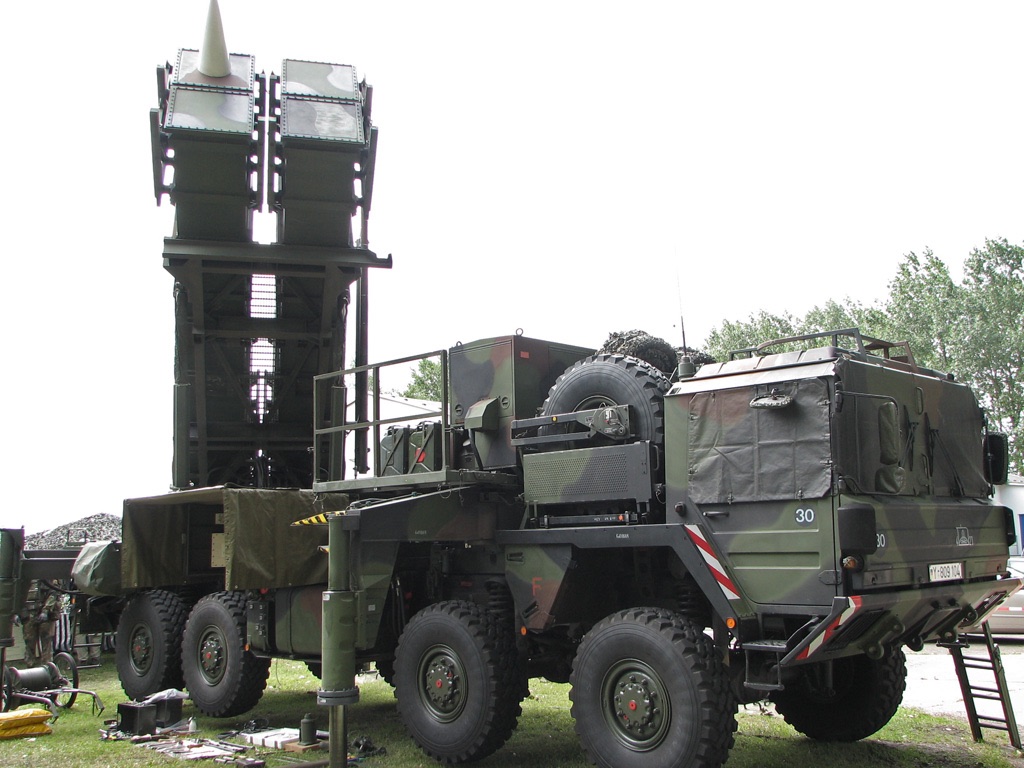
Ukraine can use a range of systems against Shahed-type drones, cruise missiles and slower targets. Mobile fire groups, electronic warfare, short-range missiles and gun systems all contribute to the layered defence. Ballistic missiles are different. Their speed, trajectory and short warning time place most of the burden on high-end systems such as Patriot and, in some scenarios, SAMP/T. That is why a single night’s interception ratio carries broader significance. It is not simply a question of whether Ukraine has enough air-defence equipment overall; it is whether it has enough interceptors and launchers capable of meeting the hardest target set.
Earlier analysis of Ukraine’s pursuit of a Patriot production licence and Europe’s Freyja-related missile-defence ambitions identified two longer-term routes to greater resilience. That assessment of Ukraine’s Patriot licence and the Freyja project remains relevant, but Sunday’s attack underlines its central limitation: licensing, industrial expansion and new European interceptor programmes do not create ready missiles overnight.
For Kyiv, the dangerous period is the interval between political agreement and factory output. Even where partners accept the need for larger production, the sequence is slow. Contracts must be placed, supply chains expanded, components sourced, workers trained, certification completed and delivery schedules protected. Missile-defence production is also competing for motors, seekers, electronics and energetic materials that are already under pressure across NATO inventories.
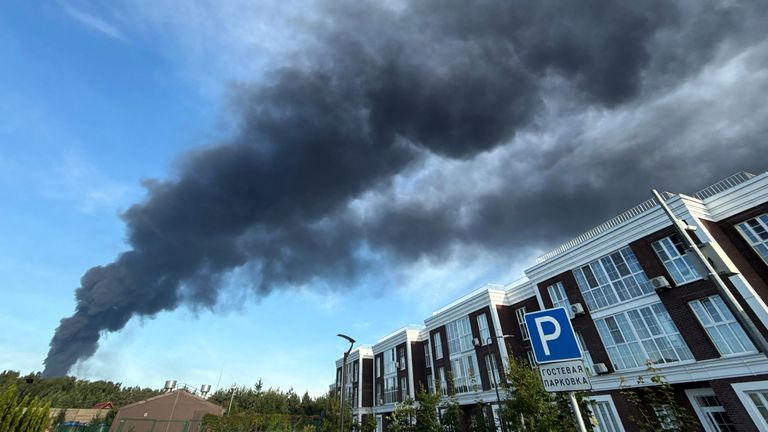
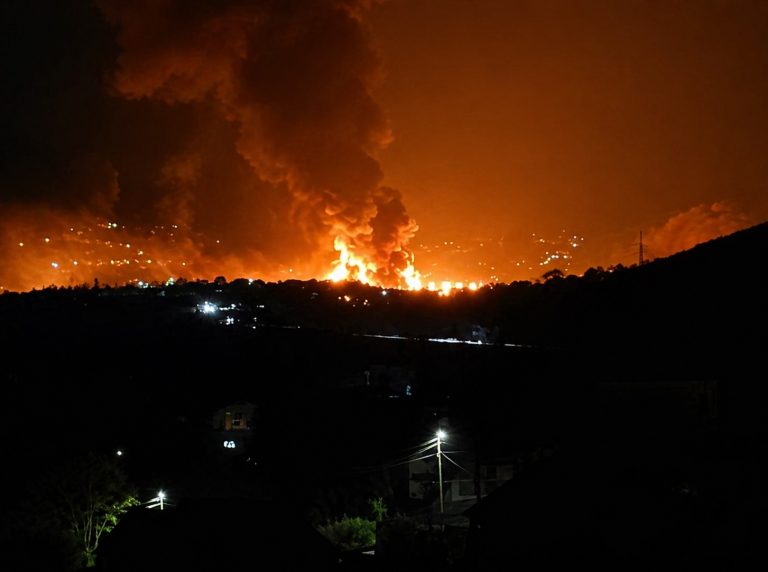
The target distribution reported after the attack shows why this gap is so difficult to manage. Kyiv Mayor Vitali Klitschko said fires broke out in residential and commercial areas, including a dormitory, a residential block and a supermarket. Ukrainian regional officials also reported damage in the Kyiv region. Russian claims that military-industrial facilities were targeted do not remove the operational burden on Ukrainian defenders, because ballistic weapons aimed at a city create lethal risk across civilian districts even when the declared target is military-related.
The attack package also reflects Russia’s continuing effort to saturate Ukrainian defences. Drones force radar operators, command posts and mobile teams to remain active for hours. Cruise and ballistic missiles then compress decision time and demand high-value interceptors. The result is a resource imbalance. Russia can combine cheaper drones with expensive missiles in one package, while Ukraine must decide when to spend scarce interceptors and when to accept the risk that a target cannot be covered.
The immediate requirement is therefore not only more Patriot batteries. Ukraine also needs deeper magazines, predictable resupply and a better mix of lower-cost systems to prevent drones from consuming attention and munitions intended for more complex threats. Every drone intercepted by a cheaper system preserves the high-end missile stock for the weapons that only high-end systems can defeat.
The political discussion around future Patriot production can obscure this urgency. A licence or joint-production pathway would be strategically important because it could reduce dependence on ad hoc transfers from allied inventories. It could also allow Ukraine to plan around its own expected consumption rate rather than wait for emergency packages. But the operational question after Sunday’s attack is what Ukraine can fire during the next barrage, not what a production line may deliver in two or three years.
European governments face the same timing problem. New interceptor projects, including those discussed under broader European air-defence initiatives, are necessary if the continent wants to avoid permanently draining US stockpiles. Yet European industry will not solve Ukraine’s 2026 shortage unless governments bridge the interval with transfers, accelerated procurement and firm multiyear orders that allow manufacturers to add capacity without fearing a post-war demand collapse.
The Kyiv barrage also demonstrates that Russia does not need to defeat the whole Ukrainian air-defence network to produce strategic effect. If enough ballistic missiles get through, the attack can kill civilians, damage industry, force emergency repairs, disrupt transport and keep pressure on Ukraine’s political leadership. That is attritional warfare by another route: not only at the front line, but against the state’s ability to absorb punishment.
For allies, the lesson is uncomfortable but clear. Announcements about future production are useful only if paired with near-term stockpile decisions. Ukraine’s defenders need both tracks: immediate interceptor supply for the present fight and industrial expansion for the next phase of the war. Sunday’s figures show that the first track is still short of the threat.