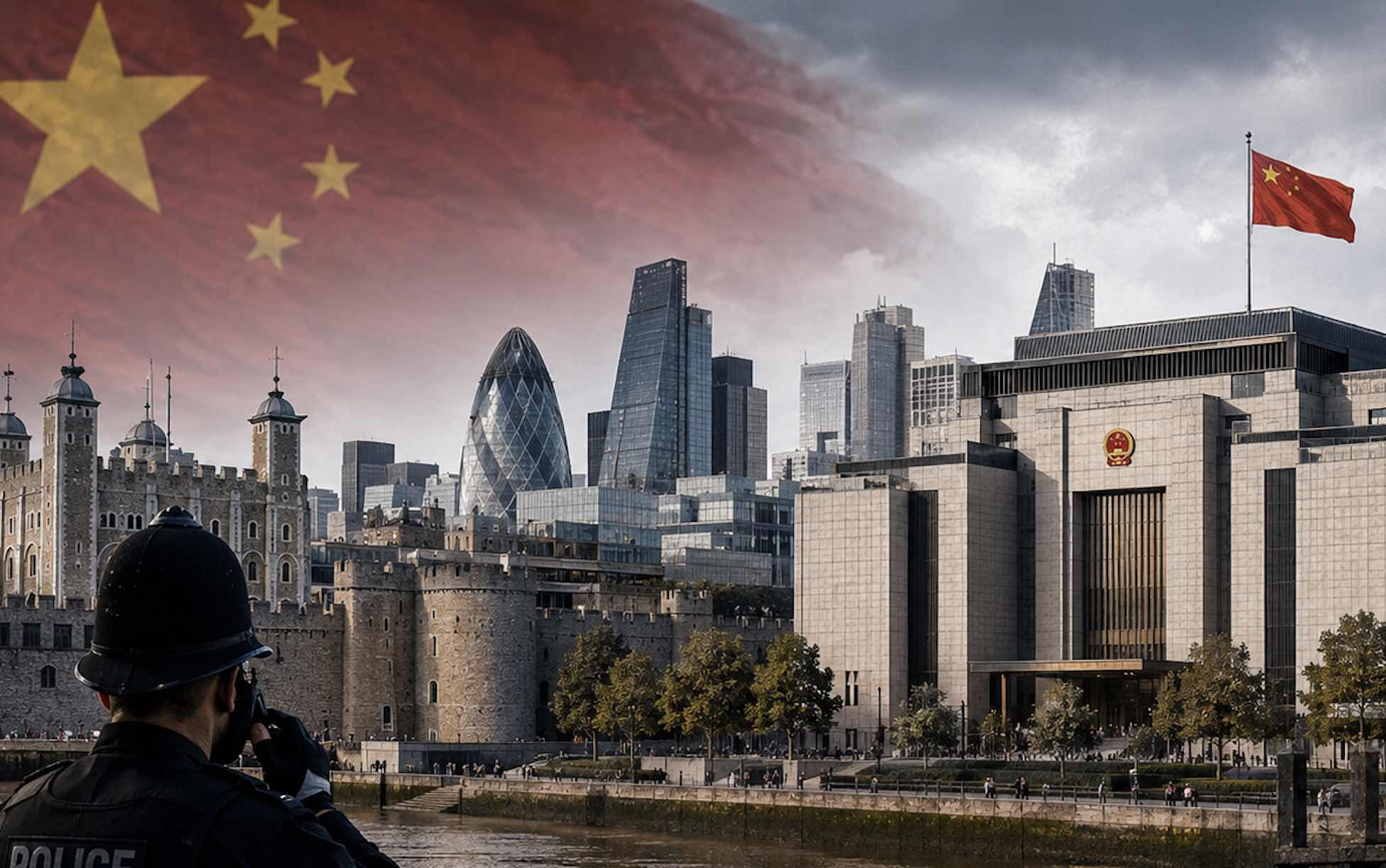
It is now a test of how Britain balances diplomatic engagement with national security in an increasingly contested geopolitical environment.
The issue has divided ministers, intelligence specialists, local residents and former security officials. At first glance, the development appears to represent little more than a substantial diplomatic investment. China has outgrown its existing embassy in Marylebone, while its commercial and political interests in Britain have expanded considerably over the past two decades. Larger premises are, on the surface, an understandable administrative requirement.
The debate becomes considerably more complicated, however, once diplomacy intersects with strategic competition.
Relations between London and Beijing have undergone a profound transformation since the era when Britain enthusiastically proclaimed a “golden age” in bilateral ties. Successive governments have become markedly more cautious following concerns over cyber espionage, alleged interference in democratic institutions, intellectual property theft, human rights issues in Xinjiang and Hong Kong, and China’s increasingly assertive foreign policy.
The United Kingdom has already removed Huawei equipment from critical telecommunications infrastructure, tightened scrutiny of Chinese investment through the National Security and Investment Act and expanded the role of MI5 in warning about foreign influence operations. Against that backdrop, approving an embassy complex of unprecedented scale inevitably raises legitimate questions.
Diplomatic premises enjoy extensive legal protections under the Vienna Convention. These protections exist for good reason: they allow states to conduct diplomacy free from interference. Yet those same protections inevitably limit the host country’s ability to inspect or monitor activities taking place within embassy grounds.
No responsible government should assume that every diplomatic mission is engaged solely in routine consular work. History demonstrates otherwise. During the Cold War, embassies frequently served as centres for intelligence gathering. Modern intelligence services continue to use diplomatic cover across the world, regardless of nationality.
China’s intelligence capabilities have become increasingly sophisticated. British security agencies have repeatedly warned of state-sponsored cyber activity and attempts to influence political, academic and commercial institutions. Such warnings do not automatically mean that every Chinese diplomatic facility presents a security threat. They do, however, require decision-makers to evaluate risk rather than intention.
Location is another critical factor. Royal Mint Court occupies a strategically sensitive position in central London. It sits close to financial institutions, transport networks and numerous government facilities. While much commentary has occasionally drifted towards speculation, the broader concern is not fanciful. Intelligence professionals assess risk by considering opportunity as much as proven conduct.
There is also the question of scale.
The proposed complex would accommodate several hundred diplomatic staff and extensive support facilities. Larger diplomatic missions naturally generate greater communications infrastructure, more secure facilities and significantly increased operational capacity. None of this is inherently improper. Nevertheless, governments are entitled to ask whether such capacity is proportionate to legitimate diplomatic requirements or whether it creates vulnerabilities that deserve closer examination.
Equally important is public confidence.
Residents have voiced concerns about the disruption that regular demonstrations could bring to the area. China’s embassies frequently attract protests relating to Hong Kong, Tibet, Xinjiang and broader human rights issues. Policing such demonstrations in one of London’s busiest districts would impose substantial demands on the Metropolitan Police while potentially affecting local businesses and transport.
This is not merely a local planning dispute. It is a decision with national implications.
Supporters of the project argue that rejecting the application would send an unnecessarily hostile signal to Beijing at a time when Britain seeks stable economic relations with the world’s second-largest economy. Diplomacy, they contend, requires functional diplomatic facilities. Denying permission could invite reciprocal action against British diplomatic interests overseas while further straining already difficult relations.
Those arguments deserve consideration. Britain cannot isolate itself from China, nor should it seek to do so. The two countries remain important trading partners, and dialogue is essential on issues ranging from climate policy to global financial stability.
Yet diplomacy should never become detached from strategic reality.
The defining feature of contemporary international politics is that economic engagement increasingly coexists with geopolitical rivalry. Governments across Europe have learnt that commercial dependence can create strategic vulnerability. Decisions once viewed as purely administrative now carry wider implications for national resilience.
Britain has spent the past several years strengthening investment screening, improving cyber resilience and reducing dependence on potentially hostile suppliers. Approving a diplomatic complex that many former security officials believe warrants exceptional caution would appear inconsistent with that broader strategic direction.
Ultimately, this is a question of prudence rather than hostility. Rejecting the proposal would not amount to severing diplomatic relations with China, nor would it represent an abandonment of engagement. Britain already hosts a Chinese embassy, and there is no reason why diplomatic functions could not continue from appropriately scaled premises that raise fewer strategic concerns.
Governments exist first and foremost to safeguard national security. Where credible questions persist about long-term risks, caution is not weakness but responsibility. The burden of proof should rest with those arguing that such a significant expansion presents no meaningful security implications.
Planning authorities will naturally consider heritage, transport and environmental issues. Ministers, however, must also consider the strategic landscape in which this decision will resonate for decades. Britain’s relationship with China is too important to be shaped by wishful thinking, but it is equally too important to be conducted without vigilance.
On balance, the risks associated with approving what would become China’s largest diplomatic complex in Europe outweigh the potential diplomatic benefits. In an era defined by strategic competition, resilience must take precedence over symbolism. The government should therefore decline permission for the Royal Mint Court development and seek an alternative solution that preserves diplomatic engagement without creating avoidable security concerns.