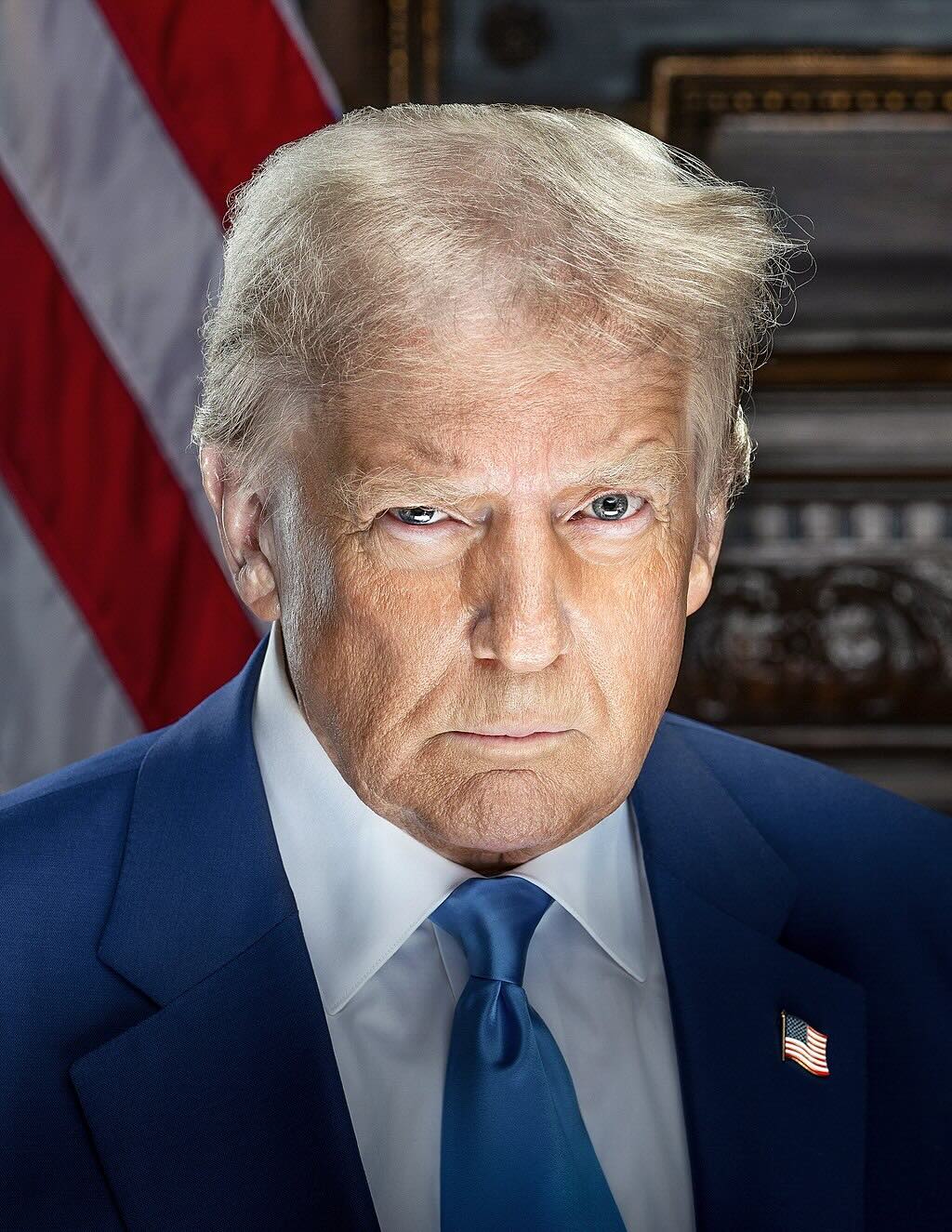
To some, it reads as the latest in a catalogue of reckless gambits. To others, it is a reminder that the world has not seen a leader as bold, as willing to act decisively, since the days of Ronald Reagan and Margaret Thatcher.
Trump’s Greenland posturing is, at first glance, absurd. Greenland, an autonomous territory of Denmark with a population of barely 57,000, seems an improbable prize for global dominance. Yet, in the mind of the current American president, strategic calculus often trumps geographic common sense. The island’s vast mineral resources, strategic location between the North American and European continents, and potential military value in a world increasingly defined by great-power competition make it, in his estimation, a jewel worth claiming.
Critics are quick to decry the rhetoric as destabilising. European leaders, particularly in Paris, Berlin, and Copenhagen, have moved swiftly to coordinate contingency plans, wary that a White House willing to consider “all options” might destabilise a NATO alliance built on trust and mutual respect. The French Foreign Minister’s declaration that Paris is “working with allies” underscores a shared European anxiety: that American exceptionalism, expressed with Trumpian flair, can morph into unilateralism with real-world consequences.
Yet, it would be intellectually dishonest to dismiss the President entirely as a mere provocateur. In a world dominated by cautious, consensus-driven politics, Trump’s decisiveness stands out. Europe’s recent leaders, constrained by bureaucratic inertia and public opinion, often approach crises with a timid, incrementalist approach. Trump, by contrast, moves with the certainty of a chess master willing to sacrifice pawns to control the board. There is a clarity of purpose, however controversial, that Western democracies have sorely lacked.
Consider the comparison with Reagan and Thatcher. Reagan, confronting the Soviet Union in the 1980s, projected strength and unwavering commitment to principle. Thatcher, with her steely resolve, navigated Cold War tensions and domestic upheaval alike with a combination of blunt rhetoric and calculated force. Trump’s Greenland gambit, for all its theatricality, taps into the same instinct: the belief that strong leaders must act, decisively and visibly, in defence of national interest. For a world accustomed to compromise and delay, there is an undeniable, if unsettling, appeal to such directness.
Still, decisiveness does not excuse recklessness. The very idea of claiming Greenland, even rhetorically, strains the norms of international law and tests the patience of allies. Denmark has unequivocally rejected any notion of U.S. acquisition, and Greenlandic leaders have demanded respect for self-determination. By raising the prospect of military options, Trump risks not only undermining trans-Atlantic trust but also inadvertently strengthening European cohesion — an outcome contrary to his apparent intent. The President’s characteristic blending of bravado with strategic calculation thus becomes a double-edged sword.
Trump’s approach also exposes a fundamental tension in contemporary leadership: the balance between the spectacle of strength and the substance of diplomacy. To many in Washington, his Greenland statements are an extension of his transactional worldview — a theatre in which the United States must leverage every asset for maximum advantage. To European allies, however, the same statements read as destabilising posturing that elevates symbolic bravado over measured strategy. The challenge for the free world is to reconcile the benefits of decisiveness with the risks of provocation.
And yet, one must admit: in an era when global leadership often feels muted, constrained by public opinion, media cycles, and bureaucratic caution, there is something almost refreshing in a leader willing to lay bare intentions, however controversial. Trump’s directness forces conversations that others would prefer to sidestep: about strategic resources, alliance responsibilities, and the distribution of global power. Even when miscalculated, this brand of leadership catalyses action and debate — something that, ironically, strengthens democratic engagement on an international scale.
Europe’s response, meticulous and coordinated, underscores the very tension Trump embodies. French and German officials, working in concert with Denmark, are drafting contingency plans and reaffirming alliances. Brussels is preparing for discussions at NATO, emphasizing that sovereignty and law cannot be overridden by unilateral ambition. This measured counterpoint highlights a crucial truth: while boldness can catalyse action, restraint and consensus are indispensable for sustainable international order.
History will judge Trump not merely by the controversies he sparks, but by the lens through which future generations view his decisiveness. Was Greenland a reckless provocation, or a calculated display of American strength in a multipolar world? The answer, undoubtedly, is both. There is brilliance in the audacity, danger in the execution. The President’s style — brash, confrontational, unapologetically nationalistic — ensures that the United States remains at the centre of global strategic calculations. Yet it also risks alienating allies whose cooperation remains essential in an era of complex, intertwined threats.
In the end, the Greenland episode is emblematic of a broader question facing the free world: does leadership mean caution and consensus, or decisiveness and audacity? Trump offers the latter, for better or worse. European leaders, while wary, cannot ignore the clarity of his intent: the United States will act where it perceives interest, and it will do so with the confidence of a leader unafraid to challenge norms. In a time when the world often yearns for moral certainty and strategic boldness, Trump provides both — though not without generating controversy at every turn.
For those in Copenhagen, Paris, and Berlin, the lesson is clear. They must navigate a leader who is, simultaneously, a disruptor and a decisive force. Trump’s Greenland gambit is less about geography than about principle: the assertion of American strength and the willingness to act when others hesitate. Whether this approach ultimately strengthens or weakens trans-Atlantic relations remains to be seen. But in the age of strategic ambiguity, there is no denying that the free world has not witnessed such overt, unflinching decisiveness since the days of Reagan and Thatcher. And for better or worse, that is Trump’s enduring — and unnerving — gift.
Russian submarine escorts Marinera as US pursuit of ex-Bella 1 continues