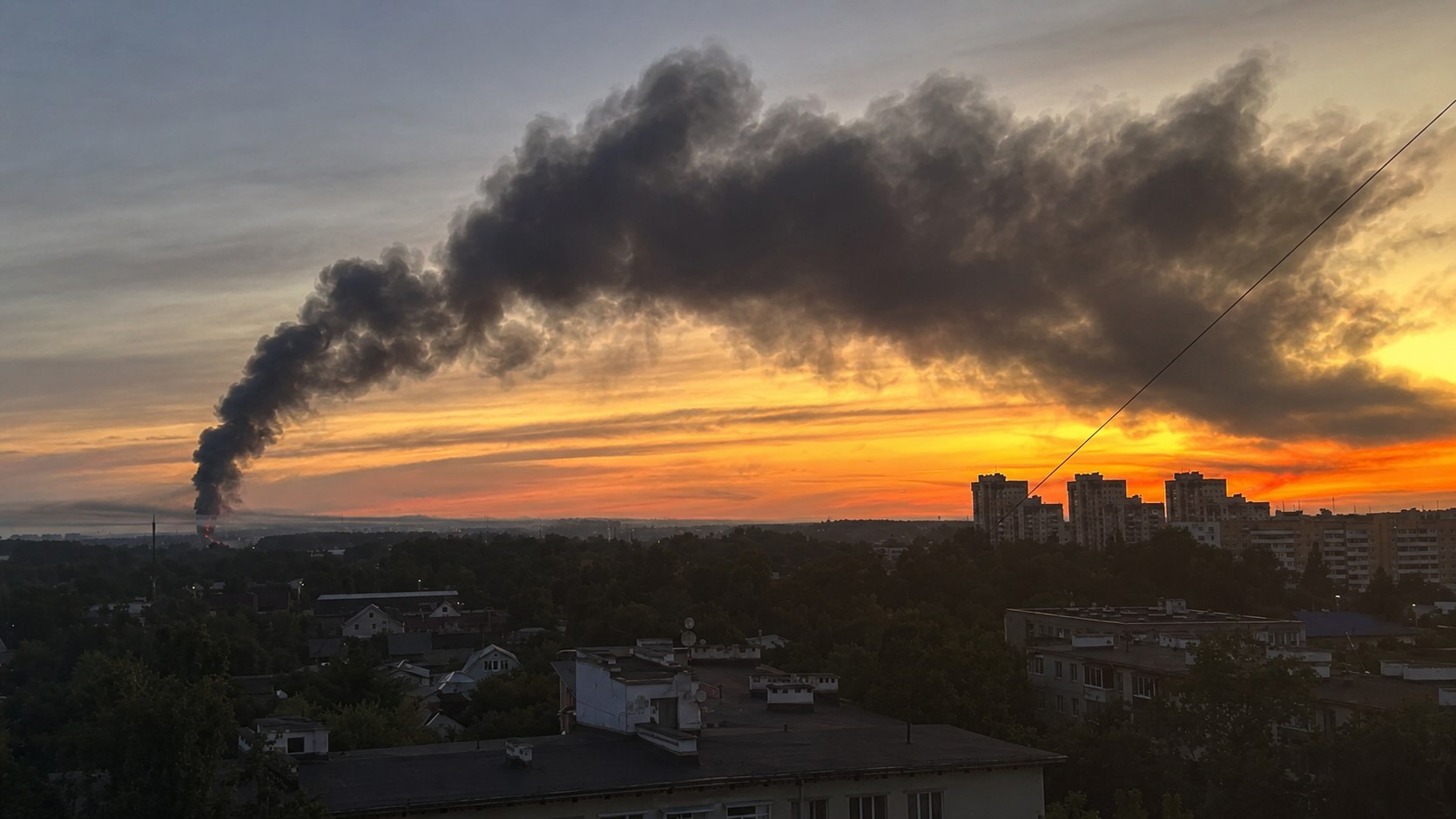
A large Ukrainian drone wave across Russian regions has again exposed the central operational problem facing Moscow: defending military sites, industrial infrastructure, logistics hubs and cities at the same time.
Russian officials said two people were killed and that Ukrainian drones struck sites including a Wildberries warehouse, while Moscow claimed to have intercepted 635 drones, according to Reuters reporting on the latest attacks and regional statements. The interception total and damage reports should be treated as Russian claims unless independently confirmed.
Even with that caution, the scale of the reported attack is operationally significant. Ukraine’s long-range drone campaign is no longer confined to symbolic strikes or isolated infrastructure targets. It is forcing Russia to distribute air-defence assets across a wide domestic geography.
The military significance of drone warfare lies partly in cost and volume. A state can defend a small number of high-value targets with concentrated air defence. It is harder to protect refineries, warehouses, military depots, rail nodes, airports, command sites and urban areas simultaneously.
If Russia is regularly facing large drone packages, the problem becomes cumulative. Radar crews, air-defence units, electronic-warfare operators and emergency services must respond repeatedly across multiple regions. Each alert consumes personnel time, interceptor readiness and command attention.
That does not mean every Ukrainian drone causes physical damage. It means each large wave can impose a defensive burden even when most drones are intercepted. Defence Matters has repeatedly examined how Ukraine’s long-range strike campaign is moving from individual attacks to pressure on Russia’s wider logistics and industrial base, including recent coverage of Russian fuel infrastructure and domestic supply disruption.
The reported strike on a Wildberries warehouse also matters because it broadens the category of affected targets. Warehouses, logistics platforms and commercial distribution centres are not the same as military depots, but in wartime they can still form part of a country’s economic and transport resilience.
For Russia, the challenge is not only to prevent military losses. It is to reassure businesses, local authorities and the public that the state can protect the home front. Repeated drone penetrations complicate that message, especially when attacks disrupt transport, fires, airports or commercial facilities.
Ukraine’s logic appears to be based on pressure over time. By forcing Russia to defend more territory, Kyiv can compel Moscow to move air-defence systems away from other missions or to accept greater vulnerability inside Russia. That can have consequences for front-line protection, energy infrastructure, industrial output and domestic confidence.
The scale of the latest incident remains difficult to verify independently. Russia has an interest in emphasising successful interceptions and limiting public discussion of damage, while Ukraine is likely to stress disruption to military and industrial targets. Confirmation often emerges only gradually, particularly when strikes are spread across several regions.
Moscow’s claim that 635 drones were intercepted should therefore be treated as an official assertion rather than a confirmed total. Even so, the reported scale points to a wider operational problem. Russia is no longer dealing only with the defence of individual high-value sites, but with the cumulative pressure created by repeated, geographically dispersed attacks.
Ukraine’s expanding capacity to produce, modify and deploy long-range drones is forcing Russia to make increasingly difficult choices over where to concentrate air-defence systems. Military bases, energy infrastructure, defence plants, logistics hubs and major cities cannot all receive the same level of protection.
Those decisions are becoming an important measure of Russia’s ability to sustain the war while protecting critical infrastructure far beyond the front line.