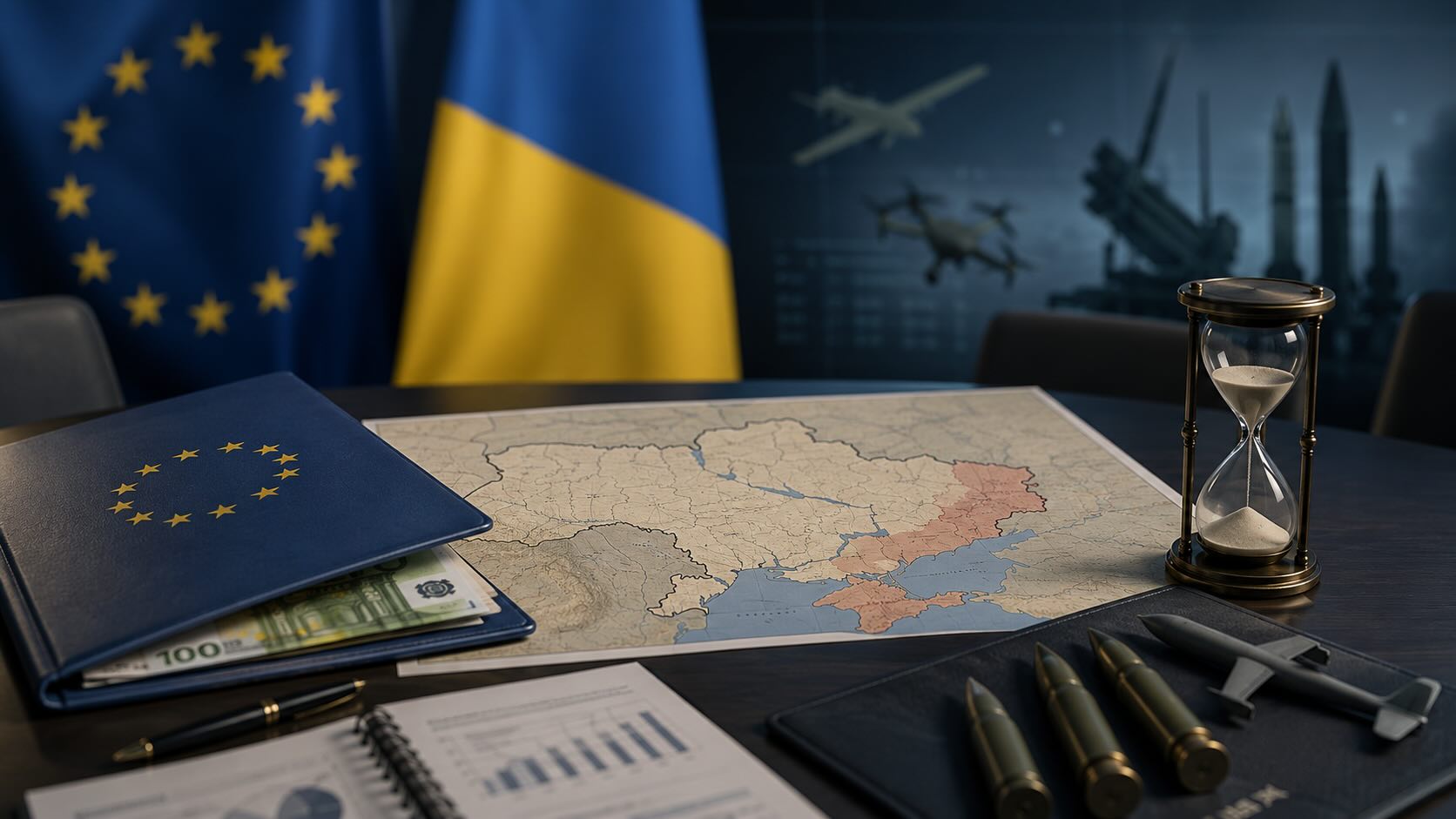
Kyiv says the next six to nine months offer a battlefield opportunity and wants €6.6 billion from the European Peace Facility converted rapidly into weapons, testing whether EU finance can move at wartime speed.
Ukraine is asking European Union governments to direct €6.6 billion available through the European Peace Facility into military assistance while what Kyiv describes as a six-to-nine-month battlefield window remains open.
In a letter reported by Reuters, Defence Minister Mykhailo Fedorov estimated Ukraine’s total defence requirement at about €136 billion this year, of which the national budget can cover around €53 billion. The country expects a further €28.3 billion for defence from the EU’s €90 billion loan, but says substantial needs remain unfunded.
The request is not simply for another political commitment. It is an argument about timing: money agreed too late cannot purchase, produce and deploy the capabilities required during the period Kyiv believes offers operational opportunity.
The European Peace Facility is an off-budget EU instrument used to support military assistance and reimburse member states. Funds can finance common procurement, replenish contributors and support training, but each route involves decisions, contracts and delivery schedules.
Defence Matters reported in June that Hungary’s veto over €6.6 billion was moving towards resolution. The new Ukrainian request adds a clear operational deadline and a fuller picture of the funding gap.
Unblocking the money would be significant, but it would not place weapons at the front. Member states must agree how to allocate it. Procurement authorities need to identify available production. Contracts must account for training, maintenance, ammunition and transport.
Those delays are especially costly for rapidly changing capabilities such as drones and electronic warfare. A system specified today may require modification within months as Russia changes frequencies, protection and tactics.
Kyiv has not published a complete operational explanation for the six-to-nine-month period. The phrase should not be treated as a promise of decisive victory. It is better understood as an assessment that current Russian vulnerabilities, Ukrainian capabilities and allied political conditions create an opportunity that may not persist.
Russia is also adapting. It is expanding drone use, improving electronic warfare, rebuilding units and sustaining pressure through missiles and guided bombs. Delayed European support gives Moscow time to reinforce, disperse targets and increase production.
Ukraine’s requirements therefore combine immediate consumables with longer-term systems: air-defence interceptors, drones, artillery ammunition, long-range strike weapons, vehicles, communications and repair capacity. The most useful EPF package would prioritise items that can be contracted and delivered inside the stated window.
The request exposes a recurring European problem. The Union can mobilise large headline sums, but its instruments were not designed for the tempo of high-intensity war. National preferences, reimbursement disputes and industrial fragmentation slow conversion of finance into capability.
Reimbursing earlier donations is politically important because it keeps member states engaged. New procurement is more directly relevant to current operations. A workable compromise may need both, while reserving a defined share for Ukraine’s most urgent requirements.
Direct orders from Ukrainian manufacturers could also accelerate delivery. Denmark’s financing model and other initiatives show that Ukrainian firms can produce battlefield-proven systems when capital is available. European orders can complement that output with advanced weapons and components Ukraine cannot manufacture at scale.
The €6.6 billion request is large, but it should be compared with the cost of allowing Russia to regain momentum. Ukraine’s estimate of a €136 billion annual defence need reflects the scale of the war, not an ordinary assistance programme.
Europe’s credibility will depend on whether it can distinguish between money announced, money contracted and equipment delivered. The gap between those stages is where strategic opportunities are lost.
Defence Matters has repeatedly argued that Ukraine needs capabilities rather than signals. The EPF request gives that principle a specific amount and timetable.
EU governments now have to decide not only whether to release the funds, but how to shorten the route from Brussels accounting to Ukrainian units. If Kyiv’s battlefield assessment is correct, the relevant deadline will arrive long before the administrative one.