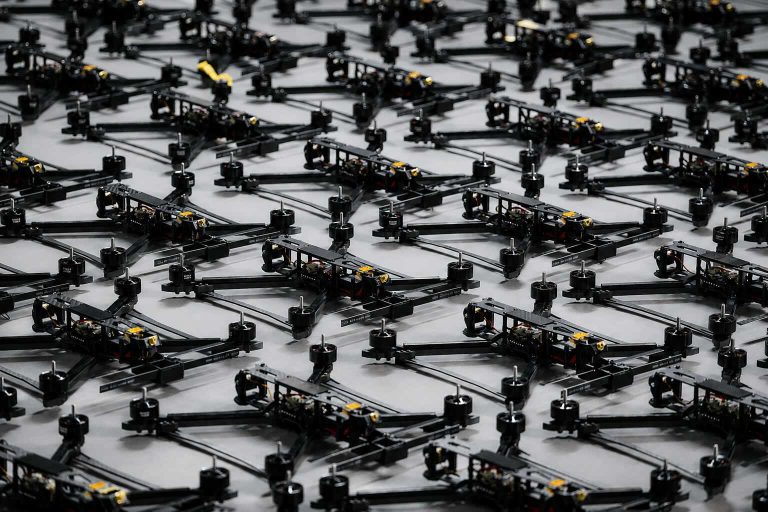
Ukraine has carried out a coordinated drone operation against Russian military targets in occupied Crimea, striking naval assets in Sevastopol and aviation facilities near the city, according to Ukrainian and open-source reporting.
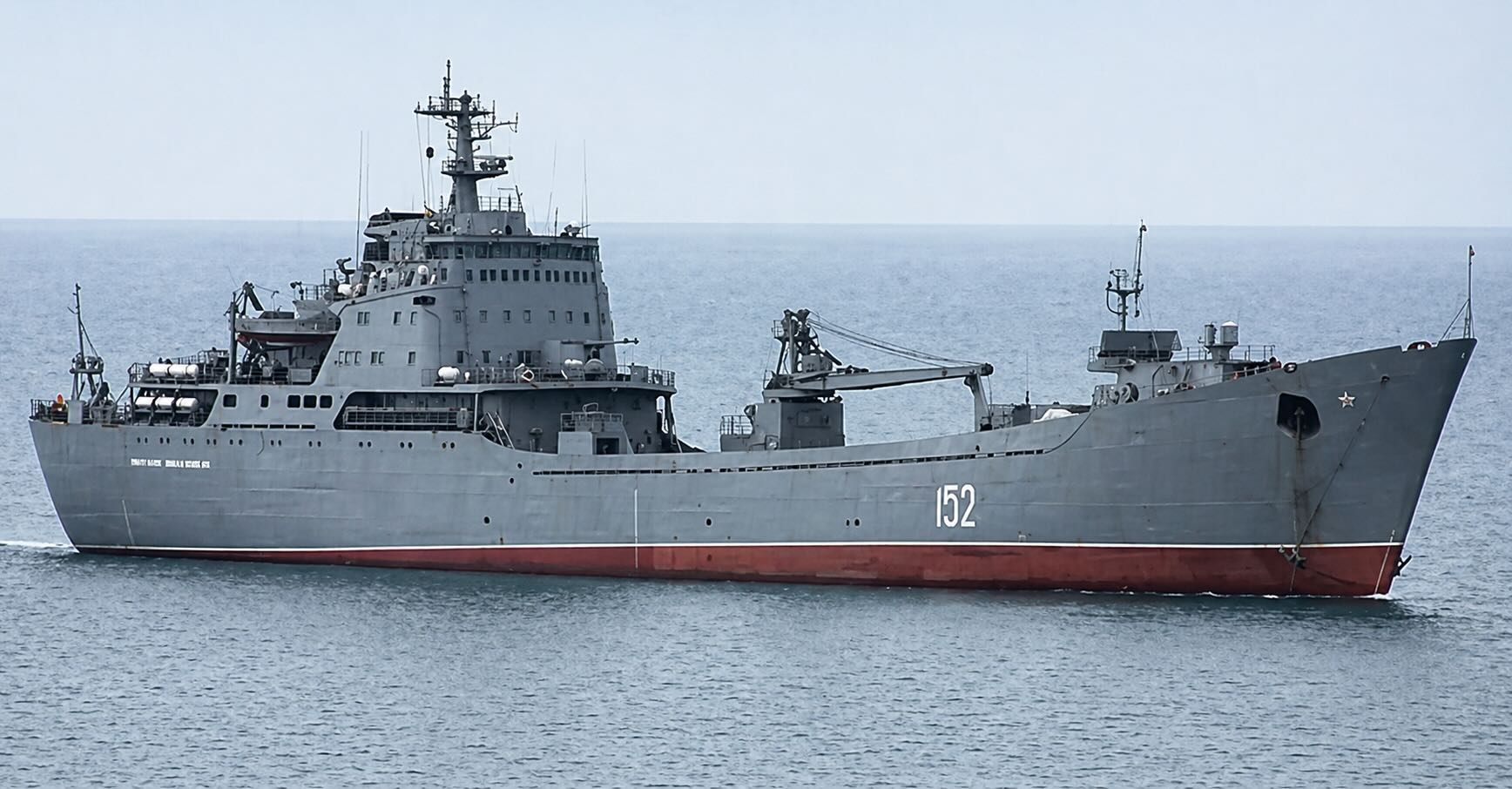
The operation, reported on 26 April, appears to have targeted several elements of Russia’s Black Sea Fleet and supporting infrastructure. Ukraine’s Security Service, the SBU, said its drones hit three Russian vessels: the large landing ships Yamal and Nikolai Filchenkov, and the reconnaissance ship Ivan Khurs. A MiG-31 fighter aircraft was also reportedly damaged at Belbek airfield, together with air defence and radar facilities, according to Ukrainian media citing the SBU.
The attack reportedly took place in two waves. The first began late on Saturday evening, while the second followed before dawn on Sunday. Residents in and around Sevastopol reported explosions and sustained air defence activity overnight. Russian-appointed officials acknowledged a major drone attack, with Mikhail Razvozhayev, the Moscow-installed governor of Sevastopol, saying one person had been killed and three others wounded. He also claimed that dozens of drones had been intercepted, according to The Moscow Times.
The reported damage to the landing ships is militarily significant, even if neither vessel has been confirmed sunk. Ships of this type are designed to transport troops, armoured vehicles and heavy equipment for amphibious operations. Since the beginning of Russia’s full-scale invasion of Ukraine, Black Sea Fleet landing ships have been among the assets most exposed to Ukrainian strikes, particularly in and around Sevastopol.
The Yamal, a Ropucha-class landing ship, has previously been reported damaged in Ukrainian attacks. The Nikolai Filchenkov, an older landing ship, has also been used by Russia’s Black Sea Fleet for military transport. If both vessels were again put out of action, even temporarily, this would further reduce Russia’s ability to move military cargo by sea in the Black Sea theatre.
The inclusion of the Ivan Khurs among the reported targets is also notable. The vessel is a reconnaissance and signals intelligence ship, designed to collect electronic and communications data. Damage to such a platform would not only affect Russia’s naval presence but could also weaken its capacity to monitor Ukrainian movements and drone activity in the Black Sea.
The strike also appears to have targeted Russia’s surveillance network in Crimea. Defence reporting identified a Mys-M1 coastal radar station among the systems hit. This type of radar is used for detecting and tracking surface targets, including vessels and smaller craft. Its loss or degradation could create gaps in Russian coastal surveillance around Sevastopol, where Ukraine has previously used both aerial and naval drones, according to Defence Express.
Belbek airfield, near Sevastopol, was also reportedly struck. Ukraine said a MiG-31 aircraft was damaged there. The MiG-31 is a long-range interceptor used by Russia for air defence and, in some configurations, as a launch platform for Kinzhal missiles. The extent of the reported damage remains unclear and has not been independently verified.
The latest operation forms part of a sustained Ukrainian campaign against Russian military infrastructure in Crimea. Since 2022, Ukraine has repeatedly struck Black Sea Fleet ships, headquarters, airbases, radar stations, oil facilities and logistics nodes across the peninsula. The campaign has forced Russia to disperse elements of its fleet and reduce its reliance on Sevastopol as a secure operating base.
For Moscow, Crimea remains both a military hub and a political symbol. Russia annexed the peninsula in 2014, a move not recognised by Ukraine, the European Union, the United Kingdom or most of the international community. The Kremlin has long presented Crimea as a central achievement of President Vladimir Putin’s rule. Repeated Ukrainian strikes therefore carry consequences beyond the immediate military damage.
For Ukraine, the purpose is to reduce Russia’s ability to use Crimea as a launch pad for attacks against Ukrainian territory and to weaken the security of Russian forces stationed there. The latest attack, if confirmed in full, would demonstrate that Ukraine retains the ability to conduct coordinated long-range drone operations against several categories of target in a single night: ships, aircraft, radar systems and command infrastructure.
As with many strikes in occupied Crimea, the full extent of the damage may take time to establish. Russian authorities generally acknowledge drone attacks while limiting information about military losses. Ukrainian services often publish target lists before independent imagery is available. Nevertheless, the pattern is clear: Sevastopol, once treated by Moscow as a secure naval stronghold, is now repeatedly exposed to Ukrainian precision attacks.