Speaking to reporters aboard Air Force One, Trump indicated that a ground operation was not under immediate consideration, but said it remained possible under exceptional circumstances. Pressed on whether US troops might at some stage be used to secure Iran’s stockpile of enriched uranium, he suggested that this could be contemplated later in the conflict. He also repeated his claim that Iran’s military capacity had been heavily degraded.
The comments mark a further hardening of rhetoric from the White House. In recent days Trump has demanded Iran’s “unconditional surrender” and warned that the country would be “hit very hard”, while the administration has signalled confidence that US objectives can still be achieved through the present campaign. Reuters reported on 6 March that the White House said the United States was moving towards control of Iranian airspace, and earlier reporting indicated that the Pentagon had been preparing for the possibility of weeks-long operations if ordered by the president.
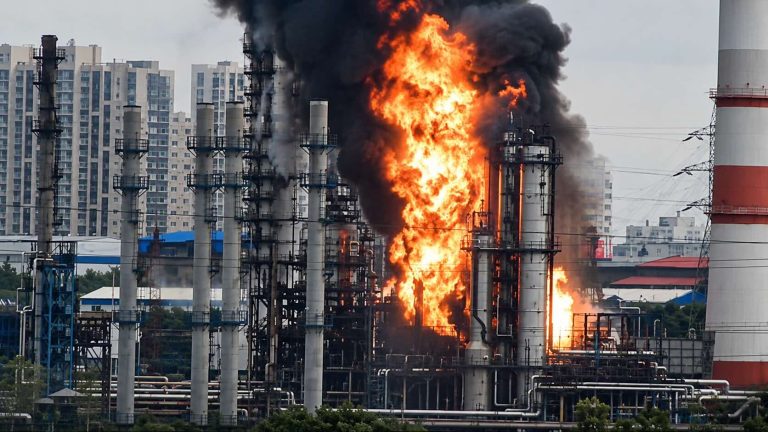
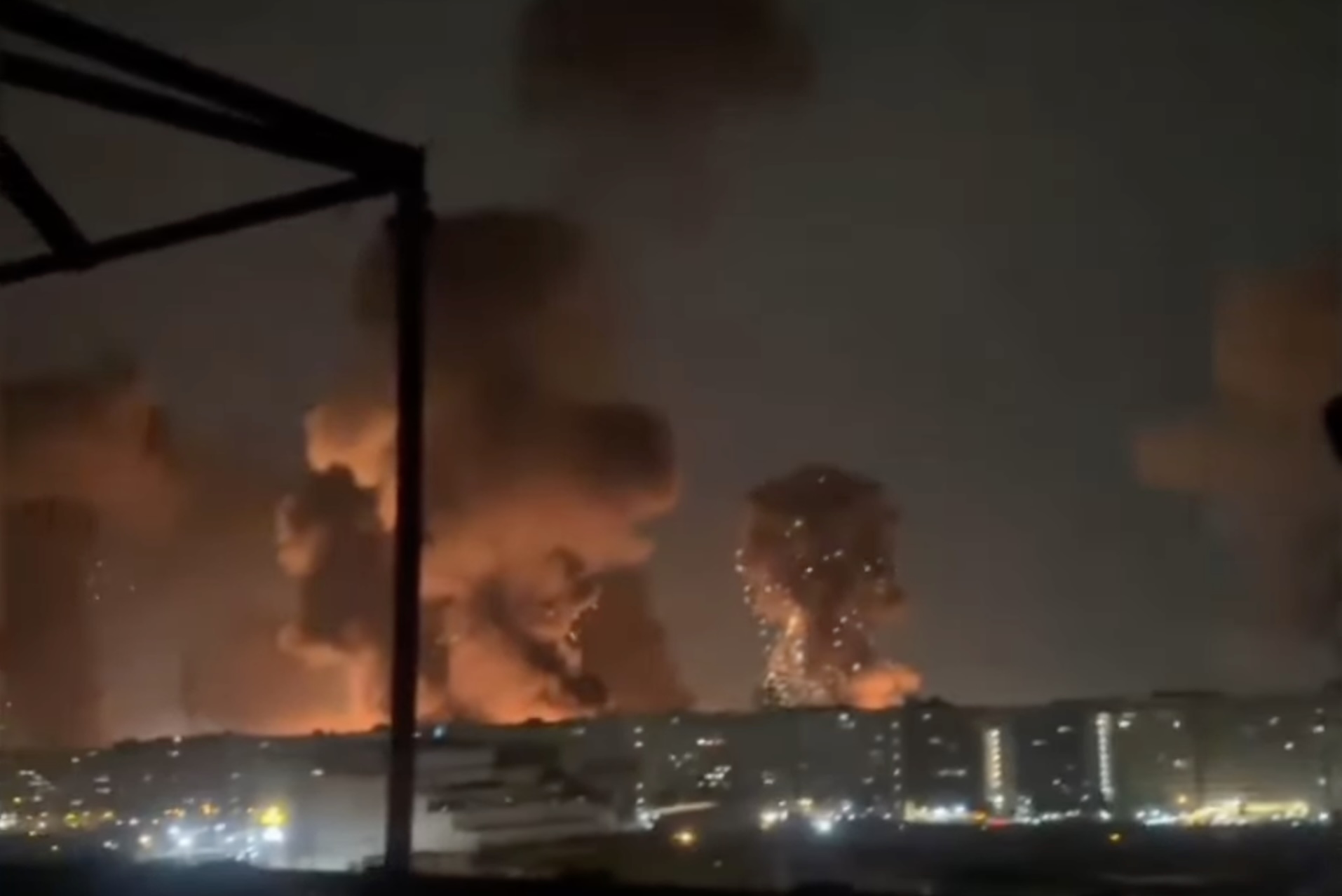
At the same time, the military picture on the ground has become more serious. Associated Press and other outlets reported that strikes hit oil facilities in Tehran, sending large fires into the night sky in what appeared to be the first attack on civilian industrial infrastructure since the present war began. Iranian state media blamed the United States and Israel for the attack. AP said the sites struck included an oil storage facility serving Tehran and neighbouring northern provinces.
Additional reports suggested that several fuel and storage locations were affected, including sites in Shahran and Kouhak in Tehran and installations in Karaj to the west of the capital. Some media reports also referred to roughly 30 storage tanks being targeted. Those details have appeared in regional and specialist reporting, though not all have been independently verified in full by major international agencies. What is clear is that the strikes expanded the target set beyond missile launchers, air defence and military command structures to include parts of Iran’s fuel distribution system.
That shift matters strategically. Fuel depots, storage hubs and refining infrastructure are central not only to the civilian economy but also to military mobility. Damaging them can complicate transport, logistics and the supply of both armed units and emergency services. Analysts have long noted that, in any campaign intended to degrade a state’s capacity to sustain military operations, fuel infrastructure becomes an obvious pressure point. In the current conflict, such attacks also carry wider economic and political implications because they raise the risk of prolonged domestic disruption inside Iran and further volatility in regional energy markets.
Speculation has meanwhile grown around a possible US troop deployment. The immediate trigger was a Washington Post report that the Army had abruptly cancelled a major exercise involving the headquarters element of the 82nd Airborne Division, an elite formation associated with rapid deployment, airfield seizure and crisis response missions. The report said no deployment orders had been issued as of Friday, and noted that one previously scheduled helicopter deployment involving the 82nd was already expected later in the spring. That means the cancellation has fuelled speculation, but it does not in itself confirm preparations for a ground invasion of Iran.
This distinction is important, because much of the commentary circulating online has gone well beyond confirmed facts. Claims that a US ground operation is now effectively decided, or that Washington has settled on regime change through direct land intervention, are not supported by the current public record. On the contrary, Reuters and the Washington Post reporting both suggest an administration keeping options open while the military continues to rely primarily on air and naval power.
There is also evidence that key assumptions behind a broader war remain contested within Washington. A Washington Post report on a classified National Intelligence Council assessment said US intelligence analysts judged that even a large-scale American assault would be unlikely to remove Iran’s ruling structure. Reuters, meanwhile, reported this week that it had found no sign of the mass anti-regime uprising that some supporters of the campaign had expected the bombardment to trigger.
For now, Trump appears to be maintaining deliberate ambiguity. He has not announced a decision to send troops into Iran, but neither has he excluded that possibility. By linking a potential ground intervention to the question of Iran’s enriched uranium and by allowing speculation over force movements to grow, he has ensured that the military and political debate is no longer confined to air strikes alone. As the targeting expands to include energy infrastructure around Tehran, the conflict is moving into a more dangerous and potentially more consequential phase.