Yet across the continent—and in the United Kingdom—the ability to recruit and retain sufficient numbers of personnel is steadily eroding. The result is a widening gap between ambition and capacity, one that raises difficult questions about the future of Europe’s military posture.
At the heart of the problem lies a structural imbalance rather than a temporary downturn. Recruitment shortfalls are now evident in both large and small states. Germany, often seen as central to Europe’s defence revival, has acknowledged that manpower is its most pressing constraint. Southern European countries such as Greece and Portugal report declining enlistment, while smaller nations struggle even more acutely to attract volunteers. The UK, despite its long-standing professional military tradition, has repeatedly missed recruitment targets, particularly in the army.
This pattern reflects deeper societal and demographic shifts that no single policy can easily reverse. Europe is ageing. The proportion of young people—the primary recruitment pool—is shrinking, and within that pool, not all are eligible. Health issues, including rising obesity rates, and stricter educational requirements mean that a significant share of potential recruits are filtered out before they even reach the application stage. What remains is a narrower, more competitive segment of the population, one that is also highly sought after by civilian employers.
The competition from the private sector is perhaps the most decisive factor shaping recruitment outcomes. Modern European economies offer a range of opportunities that did not exist in earlier decades: flexible working arrangements, rapid career progression, and salaries that often outstrip those available in the armed forces. For technically skilled individuals—engineers, IT specialists, pilots—the disparity is even more pronounced. Armed forces across Europe increasingly find themselves in the position of training personnel who then leave for better-paid roles in industry.
Retention, therefore, has become as critical as recruitment. In some respects, it is the more revealing metric. High dropout rates during training and early service indicate a mismatch between expectations and reality. New recruits often enter with a limited understanding of the demands of military life, only to encounter rigid hierarchies, frequent relocations, and prolonged deployments. For those with families, these pressures can be decisive. The result is a steady outflow of trained personnel, which in turn places greater strain on those who remain.
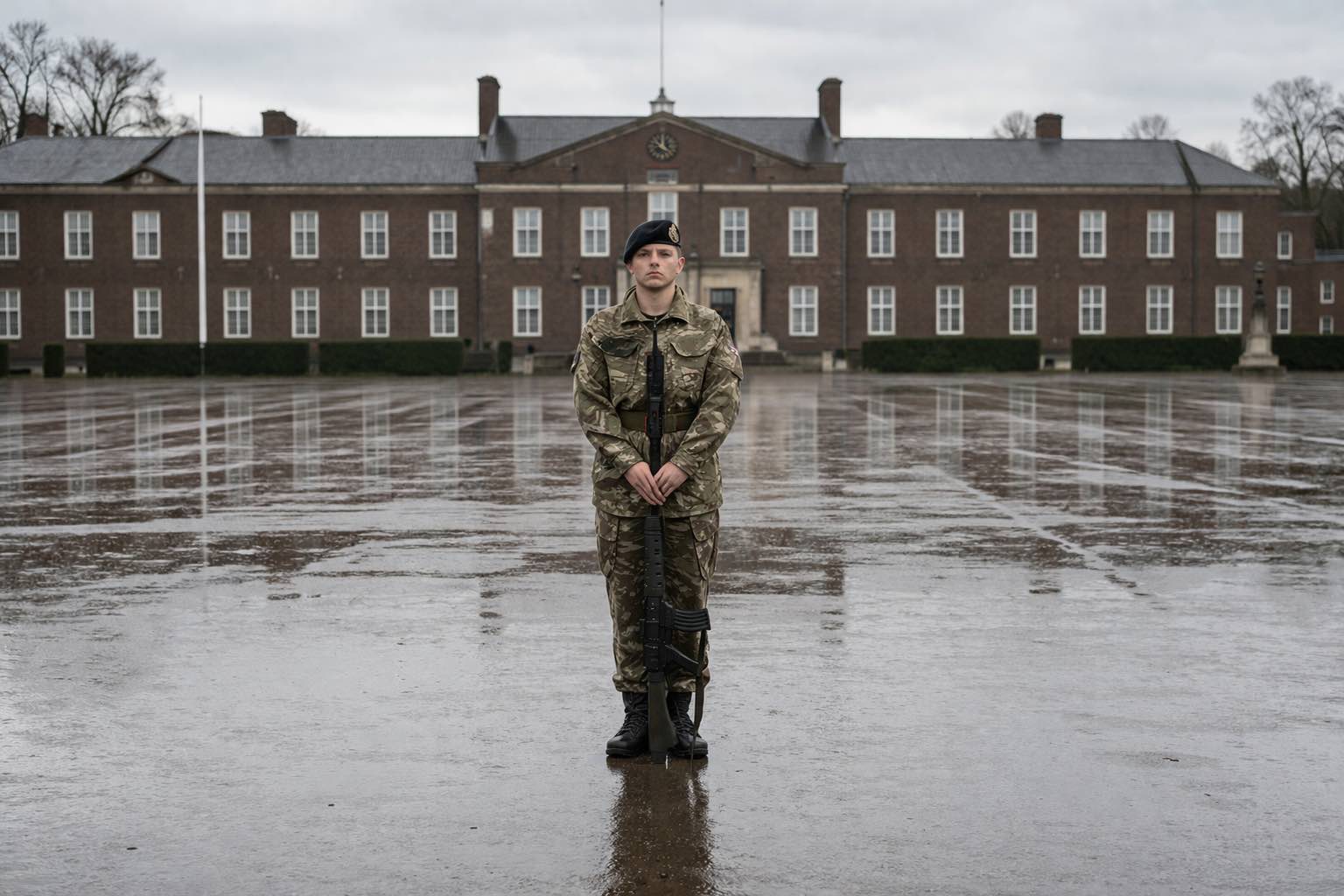
The United Kingdom offers a clear illustration of this dynamic. Despite ongoing recruitment campaigns and outsourcing efforts aimed at modernising the process, the armed forces continue to struggle with both inflow and retention. Skilled personnel, particularly in technical and specialist roles, are difficult to hold onto. Concerns about morale, overstretch, and limited career progression recur in parliamentary reports and independent reviews. While these issues are not unique to Britain, they underscore the broader challenge facing professional volunteer forces.
Pay and conditions sit at the centre of this equation. European militaries generally operate within tighter fiscal constraints than their American counterpart, and this has direct consequences for personnel policy. Although defence spending has increased since the escalation of tensions in Eastern Europe, much of that funding has been directed toward equipment and modernisation rather than salaries or benefits. Advanced weapons systems and digital capabilities require significant investment, but they do not solve the underlying manpower problem.
In comparison, the United States maintains a clear advantage. Its defence budget is not only larger in absolute terms but also more flexible when it comes to personnel incentives. American service members benefit from a comprehensive package that includes competitive salaries, housing allowances, healthcare, and educational benefits such as the GI Bill. Recruitment campaigns are supported by substantial signing bonuses and retention incentives, particularly in high-demand fields. While the U.S. military has also faced recruitment challenges in recent years, these structural advantages provide a buffer that most European forces lack.
The disparity is not merely financial; it is also cultural. The United States has a more deeply embedded tradition of military service, reinforced by national narratives and public recognition. In many European countries, by contrast, the armed forces occupy a less prominent place in public life. Decades of relative peace following the end of the Cold War contributed to a perception that large standing armies were no longer essential. Although recent events have begun to shift this perception, cultural attitudes tend to change slowly.
This brings into focus the renewed debate over conscription. Several European countries never abandoned compulsory military service, particularly in Northern and Eastern Europe. Nations such as Finland, Estonia, and Greece continue to rely on conscription as a means of maintaining readiness and building reserves. Others, including Sweden and Lithuania, have reintroduced some form of mandatory service in response to changing security conditions. Croatia’s decision to reinstate conscription from 2026 reflects a broader reassessment taking place across the continent.
Conscription offers certain advantages. It expands the pool of available personnel, strengthens reserve forces, and can foster a sense of national cohesion. In countries with “total defence” models, it is integrated into a broader strategy that includes civil defence and societal resilience. However, it also raises significant political and ethical questions. Many Western European societies moved away from conscription precisely because it was seen as incompatible with modern notions of individual choice and professionalisation. Reintroducing it would likely encounter resistance, particularly among younger generations.
Moreover, conscription does not address all aspects of the recruitment challenge. Modern militaries require highly trained specialists, not just large numbers of personnel. Short-term conscripts may not acquire the level of expertise needed for increasingly complex systems and operations. As a result, even countries that retain conscription often supplement it with professional forces, creating hybrid models that carry their own administrative and financial burdens.
Budgetary constraints further complicate the picture. Although European governments have committed to increasing defence spending, these commitments are unevenly distributed and often subject to domestic political pressures. Allocating additional resources to personnel—through higher pay, improved housing, or expanded benefits—requires sustained investment over time. Yet such measures may compete with other priorities, including healthcare, education, and social welfare.
There is also an inherent tension between technological modernisation and manpower needs. As armed forces invest in advanced capabilities—drones, cyber systems, artificial intelligence—they require fewer personnel in some areas but more in others. The demand shifts toward highly specialised roles, intensifying competition with the private sector. Recruitment strategies must therefore adapt not only to attract more people but to attract the right kind of people.
Administrative and institutional factors should not be overlooked. In several countries, recruitment processes remain cumbersome, with lengthy application procedures and bureaucratic hurdles that discourage potential candidates. Efforts to modernise these systems are underway, but progress is uneven. In an era where job seekers expect rapid responses and streamlined processes, delays can translate directly into lost applicants.
The perception of risk is another subtle but important factor. While heightened geopolitical tensions might be expected to boost recruitment by increasing a sense of urgency, they can also have the opposite effect. The prospect of deployment in a high-intensity conflict may deter some potential recruits, particularly when weighed against safer civilian alternatives. This is especially relevant in countries where military service is not deeply ingrained in the national identity.
When comparing Europe to the United States, it becomes clear that both face challenges, but the scale and context differ. The U.S. military has also struggled to meet recruitment targets in recent years, reflecting broader societal trends such as declining eligibility and changing career preferences. However, its larger population base, more generous compensation packages, and stronger institutional support provide greater resilience.
Europe, by contrast, must contend with fragmentation. Each country operates its own recruitment system, with varying standards, incentives, and strategic priorities. This lack of uniformity can make it harder to implement coordinated solutions at the continental level. While initiatives within NATO and the European Union aim to enhance cooperation, recruitment and personnel policy remain firmly within national control.
The United Kingdom occupies an interesting position within this landscape. As a major military power with global commitments, it faces pressures similar to those of larger European states, yet it also shares some of the constraints common to its neighbours. Its reliance on a fully professional force means that it must compete directly with the civilian labour market for talent. At the same time, its defence budget, while significant, is not immune to competing demands.
Looking ahead, it is unlikely that any single measure will resolve Europe’s recruitment difficulties. A combination of approaches will be required: improving pay and conditions, enhancing retention through better career management, streamlining recruitment processes, and, in some cases, reconsidering the role of conscription. Equally important is the need to rebuild the social contract between the armed forces and the societies they serve.
This may involve a broader cultural shift, one that redefines military service not only as a duty but as a viable and rewarding career. Public engagement, education, and transparency will play a role in this process. Without such efforts, recruitment campaigns risk addressing symptoms rather than causes.
In the final analysis, Europe’s recruitment crisis is less about numbers than about alignment. The expectations of modern societies, the realities of military service, and the constraints of national budgets are not currently in harmony. Bridging that gap will require sustained political will and a willingness to confront uncomfortable trade-offs.
For now, the situation remains unresolved. Europe is investing in its defence, but without sufficient personnel, even the most advanced capabilities cannot be fully realised. The challenge is not simply to build stronger armies, but to ensure that there are enough people willing—and able—to serve in them.