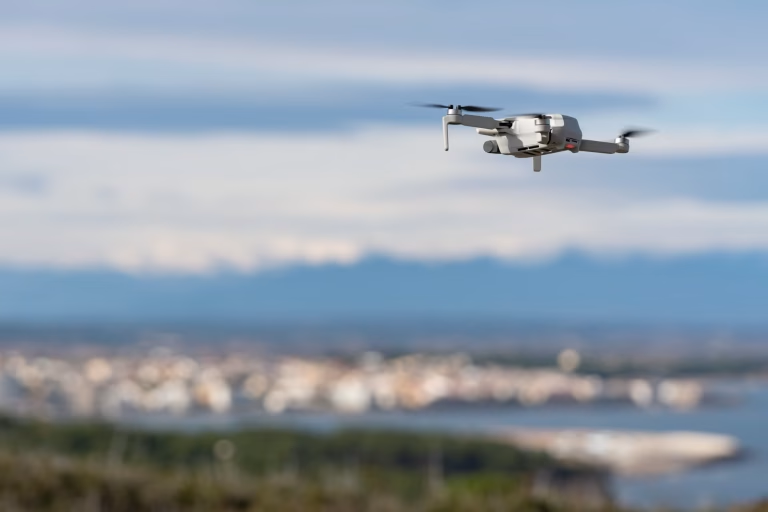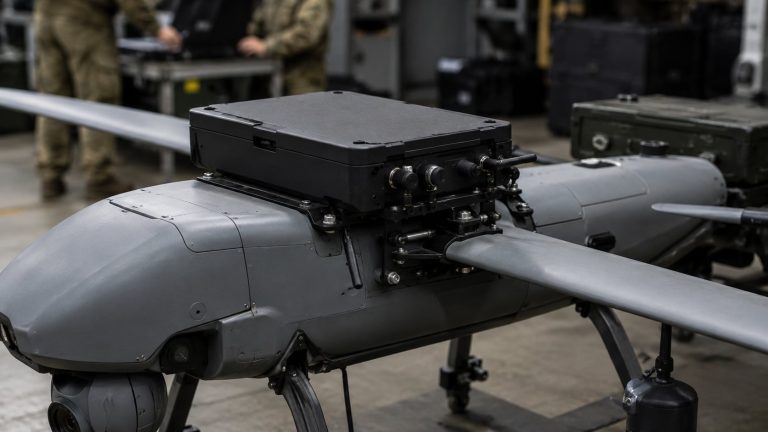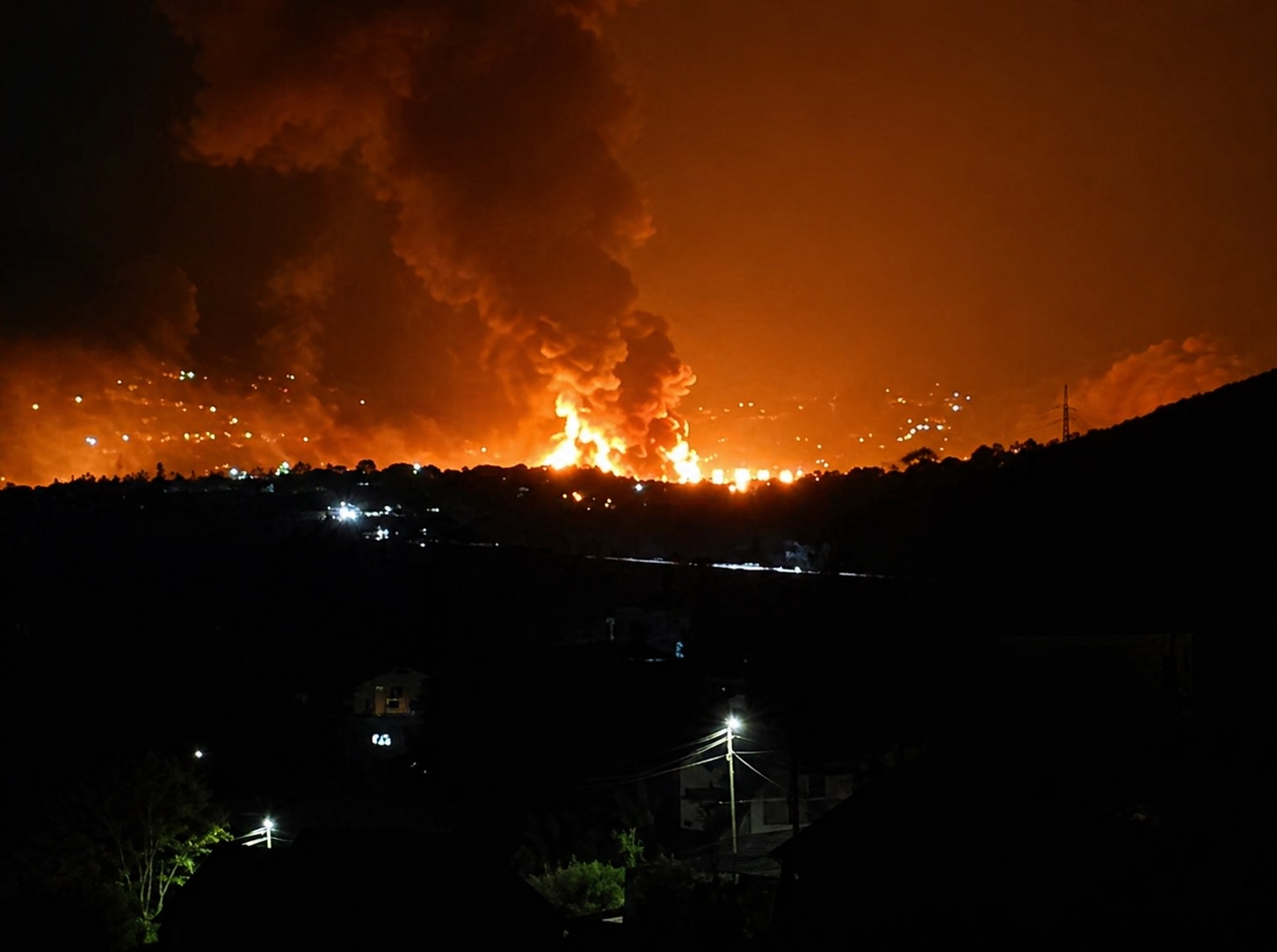
Russian authorities have reported another fire at the Tuapse oil refinery in Krasnodar Krai after a Ukrainian drone strike, in the latest sign that Kyiv is intensifying its campaign against Russia’s oil-processing and export infrastructure.
The attack, reported on April 28th, caused a blaze at the Black Sea facility and led to evacuations in nearby areas. According to Reuters, it was the third attack on Tuapse in less than two weeks. The refinery, owned by Rosneft, has an annual capacity of around 12 million tonnes, or roughly 240,000 barrels per day.
Tuapse has become one of the most visible targets in Ukraine’s long-range drone campaign. Earlier fires at the refinery and associated port infrastructure took several days to bring under control, with local authorities warning residents to remain indoors because of possible toxic emissions. Reuters previously reported that the fire at the oil terminal had been contained after several days, but repeated attacks on the same site indicate continuing vulnerabilities in Russian air defence around strategic energy assets.
The significance of Tuapse lies not only in its refining capacity, but also in its role as an export-oriented facility on the Black Sea. Disruption there affects both the processing of crude and the movement of petroleum products. For Moscow, this creates a practical problem: Russia’s energy sector remains a central source of state revenue, export earnings and wartime financial resilience.
The latest strike forms part of a broader pattern. In recent weeks, Ukrainian drones have targeted several Russian refineries and oil logistics sites, including Kirishi in Leningrad Region, Primorsk and Ust-Luga on the Baltic Sea, and the Sheskharis terminal near Novorossiysk. Reuters has reported that Kirishi, one of Russia’s largest refineries, halted processing after drone strikes in March.
The operational effect varies by site. Some facilities have resumed partial activity after repairs or rerouting, while others remain constrained. Reuters reported in April that Ust-Luga loadings had restarted after a suspension of nearly two weeks, while Primorsk had previously lost at least 40 per cent of its storage facilities in drone attacks, according to satellite imagery reviewed by the agency.
This distinction matters. Ukraine’s campaign is not necessarily designed to destroy Russia’s energy system in a single phase. Its immediate effect is cumulative: forcing shutdowns, delaying shipments, raising repair costs, complicating logistics, and obliging Moscow to move resources into air defence and emergency response. Such pressure can reduce operational reliability even where individual facilities return to service.
The timing is also relevant. Russian oil exports remain important to Asian buyers, including India and China, particularly when market conditions are affected by sanctions, shipping restrictions and wider instability in the Middle East. Reuters has reported that Russian sales to India were expected to remain near record levels following a new US sanctions waiver, with refiners securing supply through non-sanctioned entities and vessels.
At the same time, attacks on refineries and terminals complicate Moscow’s ability to benefit fully from such openings. Russia may be able to redirect cargoes, rely on alternative ports, or use parts of its shadow fleet, but physical damage to refining, storage and loading infrastructure imposes limits that sanctions alone do not create.
For Ukraine, strikes on oil infrastructure serve a clear military and economic purpose. Kyiv has repeatedly argued that Russian energy revenues help finance the war. Long-range drone attacks allow Ukraine to impose costs deep inside Russian territory without matching Russia’s conventional missile arsenal. Associated Press reporting has noted that Ukraine’s drone capabilities have expanded substantially, with long-range systems now able to reach targets far from the front line.
For the Kremlin, the challenge is more complex than public messaging. Each successful strike raises questions about the ability of Russian air defences to protect critical infrastructure across a vast territory. Refineries, pumping stations and ports are fixed targets; defending all of them requires systems, manpower and coordination that may otherwise be used near the battlefield or around major cities.
The political consequence is that Russia’s war economy is increasingly exposed to asymmetric pressure. The country’s oil and gas sector has long provided revenue, influence and fiscal stability. If refineries burn, terminals suspend loadings, and storage tanks are repeatedly damaged, the war becomes more expensive and the economic margin for Moscow narrows.
Tuapse is therefore more than another local emergency. It is a sign of a changing phase in the war, in which Ukraine is seeking to weaken Russia’s capacity to sustain aggression by targeting the infrastructure that underpins its export earnings. Whether this pressure becomes decisive will depend on the scale, frequency and accuracy of future strikes — and on Russia’s ability to repair, defend and reroute its energy flows under continued attack.