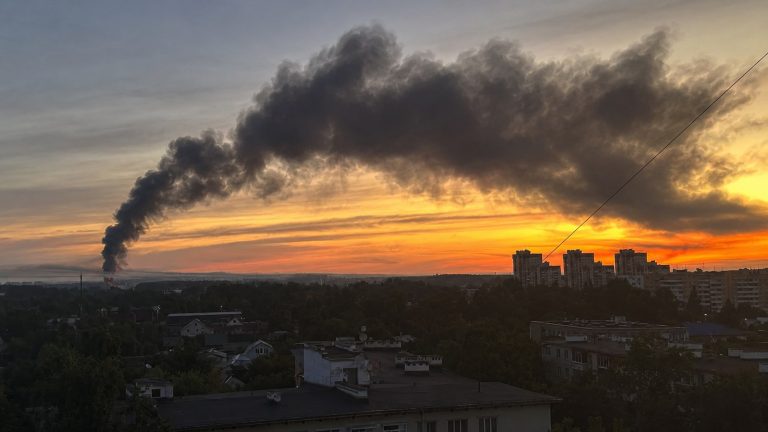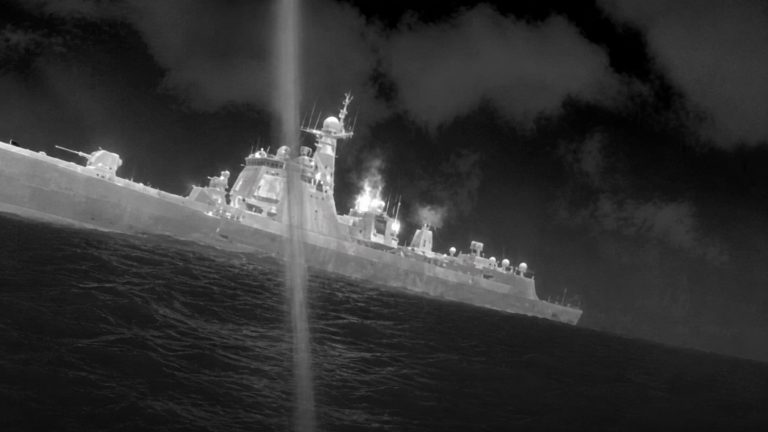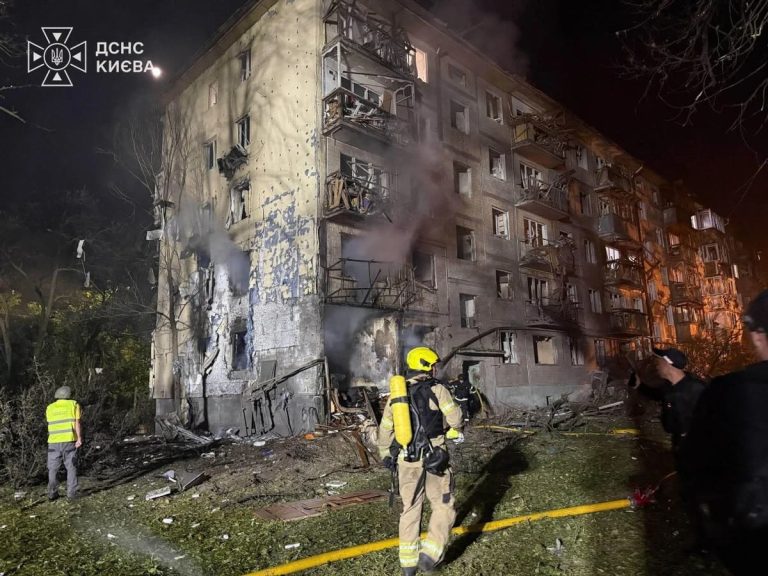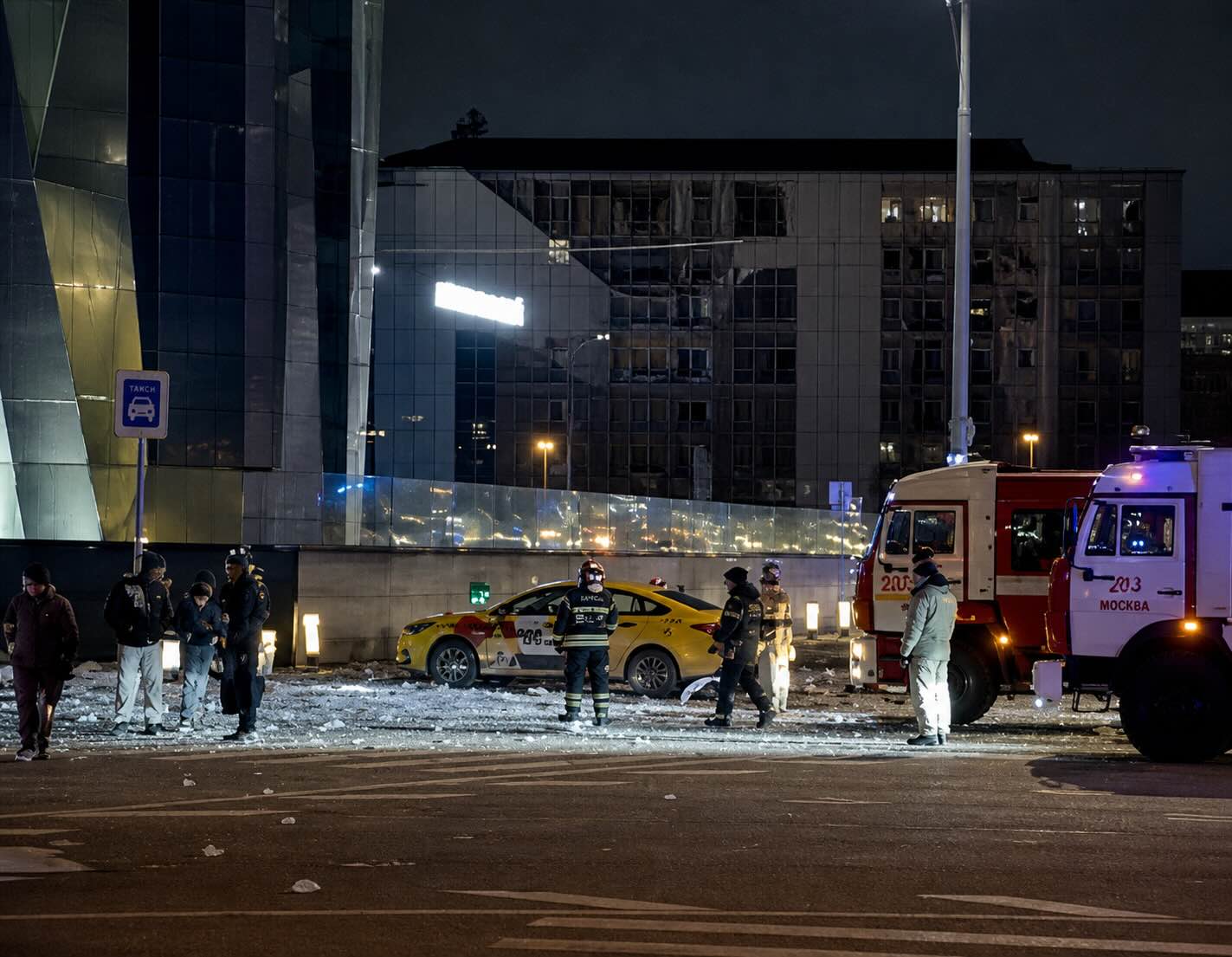
An explosion was reported in Moscow overnight on May 4, with Russian officials saying that a drone had struck a building in the west of the capital, approximately six kilometres from the Kremlin.
The incident occurred in the area of Mosfilmovskaya Street, according to early reports by Russian Telegram channels and later confirmation by Moscow Mayor Sergei Sobyanin. Residents reported hearing a blast during the night, while images circulated online appeared to show damage to a building. Emergency services were sent to the scene.
Sobyanin said, according to preliminary information, that a drone had hit a building in the Mosfilmovskaya district. He added that there were no casualties and that municipal and emergency services were working at the site. Several hours later, he reported that two further drones flying towards Moscow had been neutralised by air defence systems.
Russia’s civil aviation authority, Rosaviatsiya, also reported temporary restrictions at Moscow’s Domodedovo and Vnukovo airports. Such measures are introduced during suspected drone activity to halt departures and arrivals while airspace is assessed. The restrictions underlined the sensitivity of drone incidents close to the Russian capital, where even limited attacks can disrupt civilian aviation and emergency procedures.
The reported strike took place less than a week before Russia’s annual May 9 Victory Day events, which are traditionally used by the Kremlin as a major political and military display. Russian authorities have not publicly attributed the latest incident in detail beyond referring to a drone attack, and Ukraine has not issued an immediate official comment on the specific explosion in Moscow.
The location of the reported impact is significant. Mosfilmovskaya Street lies in western Moscow and is relatively close to central government districts. Ukrainian and Russian media noted that the site was around six kilometres from the Kremlin, placing the incident well inside the capital’s main security perimeter.
The attack, if confirmed in the form described by Russian officials, would fit a wider pattern of long-range drone operations during the war. Moscow has repeatedly claimed to have intercepted drones heading towards the capital, while Ukraine has increasingly demonstrated an ability to strike targets deep inside Russian territory. Previous attacks have led to temporary airport closures, damage to buildings, and heightened air defence activity around major Russian cities.
The Russian authorities have generally presented such incidents as attempted Ukrainian attacks, although independent verification is often limited. Much of the initial information comes from Telegram channels, local residents, regional officials and Russian state bodies. In this case, the early reports from Baza, Astra and Mash were followed by Sobyanin’s statement acknowledging that a drone had struck a building.
No fatalities or injuries had been reported by the Moscow authorities at the time of the initial statements. The extent of material damage was not fully clear. Photographs published by Russian channels appeared to show damage to the façade or upper part of a building, but there was no immediate independent assessment of the site.
The incident also came amid continued Russian drone and missile attacks on Ukraine. On the same night, Ukraine’s Air Force reported that Russia had launched 155 attack drones and decoys, including Shahed-type drones, Herbera, Italmas and Parodiya systems. Ukrainian officials said air defence units had neutralised 135 of them, while impacts were recorded at ten locations.
The parallel reporting illustrates the continued expansion of drone warfare beyond the immediate front line. Both sides have adapted unmanned systems for long-range missions, surveillance, strikes on military infrastructure and pressure on logistics networks. For Russia, repeated drone activity near Moscow carries political implications because it challenges official narratives of security far from the battlefield.
For Ukraine, long-range drone operations have become a means of reaching military, industrial and logistical targets that support Russia’s war effort. Kyiv rarely comments directly on individual incidents inside Russia, particularly those affecting the capital, but Ukrainian officials have previously argued that facilities contributing to Russia’s military campaign are legitimate targets.
The immediate operational impact of the May 4 Moscow incident appears limited, based on the first official statements. However, the political and symbolic impact is larger. A reported drone strike within a short distance of the Kremlin, combined with restrictions at major airports, reinforces the vulnerability of Russian airspace despite extensive air defence deployments around the capital.