That assumption is now being eroded at alarming speed by Donald Trump, whose conduct towards allies increasingly resembles the language of coercion rather than partnership.
The latest evidence comes from the Arctic, where Canada has begun deepening defence cooperation with the Nordic nations in direct response to Trump’s repeated threats surrounding Greenland and his broader hostility towards longstanding allies. According to reporting by Reuters, Ottawa is strengthening military and strategic ties with Denmark, Finland, Iceland, Norway and Sweden as confidence in Washington weakens.
That should concern anyone who cares about NATO cohesion.
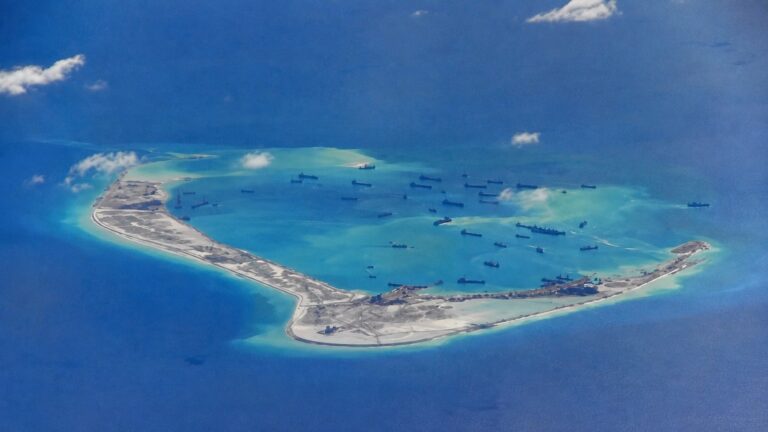
The Arctic is not some distant geopolitical sideshow. It is rapidly becoming one of the most strategically important regions on earth. Melting sea ice is opening shipping lanes, exposing mineral wealth and intensifying military competition. Russia has spent years militarising its Arctic frontier, while China has openly declared itself a “near-Arctic state”. Under normal circumstances, this would be the moment for Washington to reinforce allied unity.
Instead, Trump has managed the remarkable feat of making America itself part of the problem.
His obsession with Greenland — including repeated suggestions that the United States should somehow acquire the territory — has caused profound unease across Europe and North America. Denmark and Greenland have repeatedly rejected any suggestion that the island is for sale. Yet Trump persisted, even reportedly refusing at points to rule out coercive measures.
Such behaviour may play well to a domestic audience enthralled by nationalist theatre, but internationally it has been catastrophic. Allies that once instinctively coordinated through Washington are now quietly building alternative security arrangements in case the United States becomes unreliable or openly disruptive.
Canada’s response is particularly telling.
For generations, Ottawa relied heavily on the American security umbrella in the Arctic through NORAD and NATO structures. But Trump’s threats against Canada itself — including his grotesquely unserious musings about Canada becoming the “51st state” — have shaken assumptions that would once have seemed unbreakable. Reuters reports that Canadian officials now speak openly about strengthening “middle power” alliances to reduce overdependence on Washington.
This is no trivial diplomatic adjustment. It represents a profound strategic recalibration.
Prime Minister Mark Carney and Foreign Minister Anita Anand are deepening Arctic military cooperation with Nordic countries, expanding cyber-defence coordination and increasing defence procurement ties. Canada has even opened a consulate in Nuuk, Greenland’s capital, signalling a long-term commitment to Arctic diplomacy independent of Washington’s whims.
What makes this particularly dangerous is that America’s adversaries will inevitably exploit these fractures.
The Kremlin has long understood that NATO’s greatest strength lies not merely in military capability but in political trust. Once allies begin doubting one another’s intentions, deterrence weakens. Trump’s approach actively corrodes that trust. Every threat against Denmark, every insult aimed at Canada, every suggestion that alliances are conditional upon personal loyalty or transactional gain chips away at the credibility of the Western alliance.
Nor is this merely a European anxiety. The broader democratic world is watching carefully. Countries that once viewed the United States as the anchor of stability increasingly see volatility instead. Trump’s defenders argue that he is simply demanding fairer burden-sharing from allies. Yet there is a vast difference between pressing partners to spend more on defence and threatening their sovereignty.
One strengthens alliances; the other poisons them.
The irony is that many of Trump’s underlying criticisms contain an element of truth. European underinvestment in defence has long been a legitimate frustration for Washington. Canada itself spent years lagging behind NATO targets. Yet the proper response to allied weakness is leadership, not intimidation.
Indeed, Trump’s conduct may ultimately accelerate precisely the outcome he claims to oppose: a world in which American influence declines while regional blocs increasingly hedge against Washington itself.
The Nordic states appear to understand this clearly. Since Russia’s invasion of Ukraine in 2022, northern Europe has moved with remarkable seriousness to bolster collective defence. Finland and Sweden joined NATO, Arctic exercises intensified, and military cooperation deepened across the High North. The expectation was that the United States would remain the indispensable organising power within this framework.
Now allies are quietly preparing for the possibility that it may not.
None of this means America is suddenly abandoning NATO. The United States remains militarily indispensable to Western defence, and many within the American establishment remain deeply committed to the alliance. But under Trump, uncertainty itself becomes a strategic liability. Allies can no longer assume continuity, predictability or restraint.
That uncertainty carries consequences far beyond the Arctic Circle.
The post-war Western alliance was built not only on power, but on trust: trust that democracies would defend one another, respect sovereignty and resolve disputes through cooperation rather than threats. Trump’s politics undermine each of those principles. In doing so, he is not making America stronger. He is encouraging allies to look elsewhere, hedge their bets and build structures designed to protect themselves not merely from Russia or China, but from Washington’s instability itself.
That is a historic strategic error — and America’s adversaries could hardly have designed it better themselves.
The New Polar Front: Why Greenland Matters Again to Western Defence