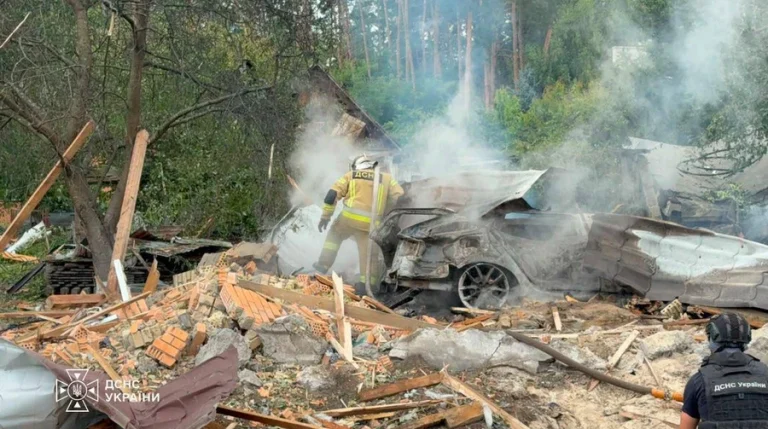
Ukraine’s latest strikes on northern Crimea point to a developing campaign against Russia’s military logistics network on the occupied peninsula. The immediate target is no longer only fixed bridge infrastructure. Ukrainian forces are now also striking the temporary and supporting systems Russia has brought in to compensate for earlier damage.
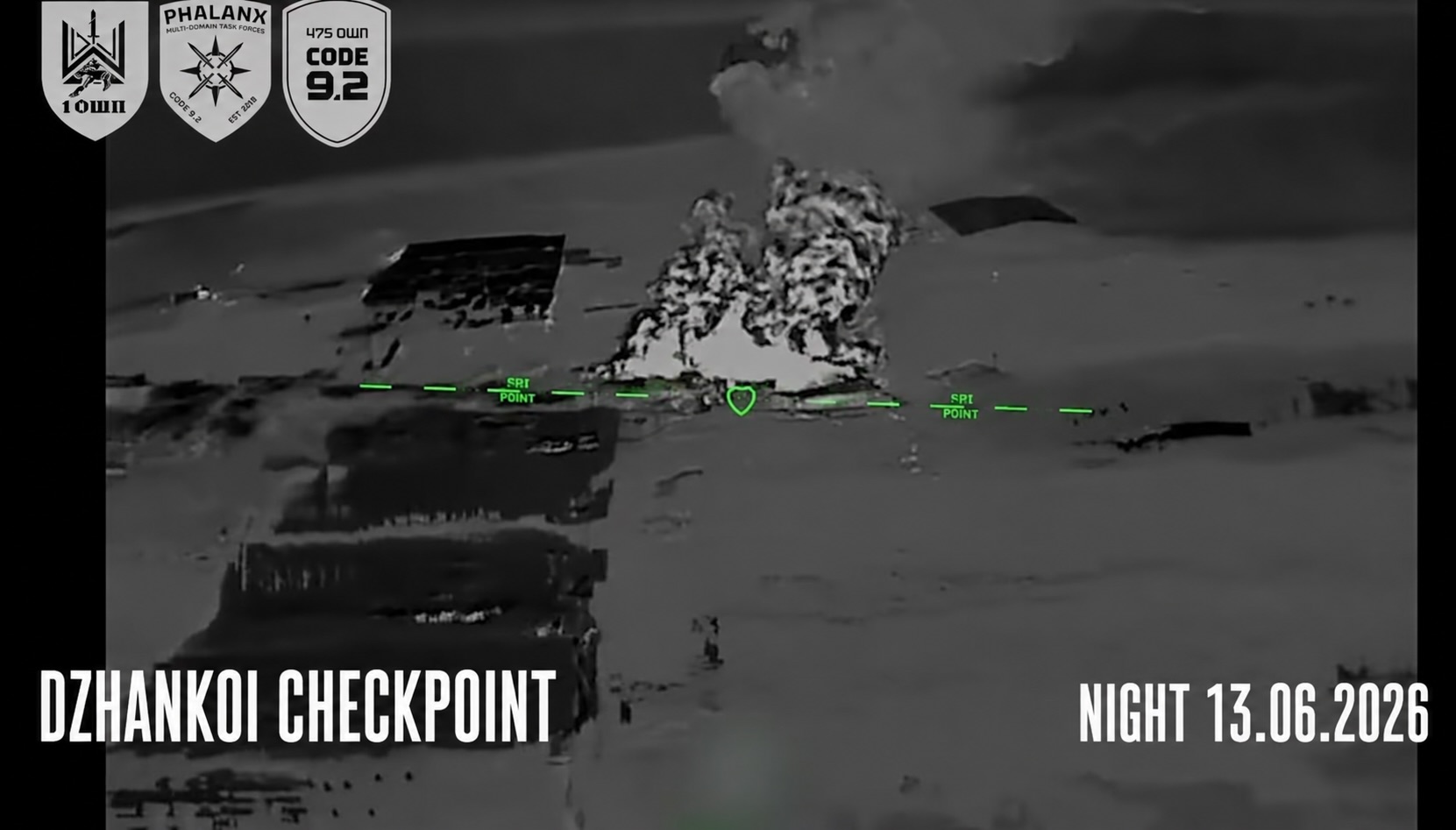
According to battlefield footage and statements attributed to Ukrainian strike units, the latest attacks hit several targets along the northern approaches to Crimea. These included a pontoon crossing, military trucks, the Dzhankoi checkpoint and a railway bridge in the Chonhar area. The claim is consistent with reports that Ukrainian drones struck transport infrastructure linking Crimea with occupied southern Ukraine, including the Dzhankoi gateway, a railway bridge, a pontoon crossing and military vehicles.
The sequence is operationally important. If bridges are damaged and traffic is forced onto pontoon crossings, those crossings become predictable targets. If checkpoints and holding areas are then hit, traffic management is disrupted and vehicles are forced to wait. If trucks accumulate near damaged crossings, they become vulnerable to further drone strikes. Satellite imagery cited by Ukrainian outlets showed lorry queues forming near a pontoon crossing at Chonhar after damage to the main bridge.
The Dzhankoi checkpoint is especially relevant in this context. In peacetime terms, a checkpoint may appear to be a minor facility. In wartime logistics, however, it is part of the system that controls the flow of vehicles, cargo and personnel. Barriers, inspection lanes, communications, holding areas and traffic-control points all help regulate movement. Damage to such a site can reduce throughput even if a bridge or pontoon remains partly usable.
The reported strike on a railway bridge adds another layer. Road bridges and pontoon crossings can provide temporary alternatives for vehicles, although with reduced capacity and higher vulnerability. Rail logistics are harder to replace. A railway bridge cannot be substituted by a pontoon crossing in the same way as a road link. If rail routes are also placed under regular threat, Russia’s ability to move heavier cargo, fuel and ammunition into Crimea becomes more constrained.
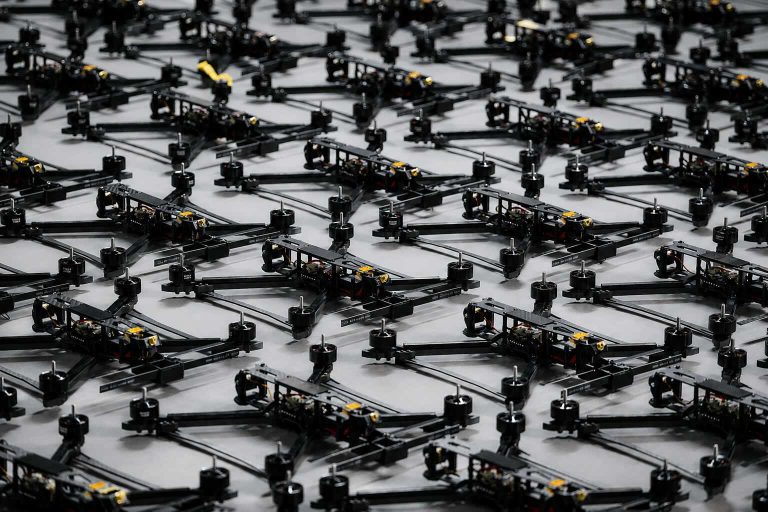
The Ukrainian account of the operation refers to a range of drone systems, including FirePoint FP-2 and Behemoth-type systems, alongside other platforms used for reconnaissance, targeting and damage assessment. Recent reporting has described Ukraine’s use of mid-range drones against bridges in the Armiansk, Henichesk and Chonhar areas, marking a shift from isolated strikes to a more systematic campaign against rear-area logistics.
The significance lies less in any single drone model than in the combined use of reconnaissance, strike and follow-up assets. This suggests a campaign designed not only to hit individual targets, but to observe Russian repair activity, identify replacement routes and attack the next layer of the logistics chain. In practice, every Russian adaptation creates another target.
Russia’s response appears to include improvised protection of the same routes. The Ukrainian account refers to BMP-2 infantry fighting vehicles being used in a local air-defence role against drones. If accurate, that would indicate both the pressure on Russian air defence and the difficulty of protecting dispersed, temporary infrastructure with conventional systems. Heavy air-defence missiles are costly and often unsuitable against numerous lower-cost drones. Mobile gun systems can help, but they are themselves exposed when deployed close to predictable logistics points.
The wider context is a visible Ukrainian effort to make Crimea more expensive for Russia to supply and defend. Fuel shortages have already been reported across the peninsula. Reuters witnesses described petrol stations running dry and queues forming after repeated Ukrainian attacks disrupted supply routes. Earlier restrictions included limits on fuel purchases and the suspension of some cash sales, with local authorities seeking to ration available supplies.
Those shortages matter because fuel is required not only for civilian transport, but also for generators, logistics vehicles, air-defence systems and Russian units operating in Crimea and southern Ukraine. If fuel deliveries become irregular, the peninsula’s value as a military rear area declines. Crimea then becomes less a secure platform for Russian operations and more a liability requiring continuous protection and resupply.
There are limits to what can be concluded from video material and battlefield claims. Ukrainian sources have an interest in emphasising the scale of disruption, while Russian-installed officials generally minimise the impact. Yet the pattern of strikes, traffic restrictions and fuel disruption points to a sustained attempt to weaken Crimea’s function as a Russian military hub.
The comparison often drawn with the Antonivskyi Bridge campaign in 2022 is not exact. Crimea is larger, farther from the front line and connected by several routes, including the Kerch Bridge and maritime supply options. Ukraine also does not appear to be preparing an immediate ground operation into Crimea. However, the operational logic is comparable: repeated strikes against narrow logistics points can gradually impose costs greater than the visible damage to any single bridge or vehicle.
For Russia, the problem is cumulative. Bridges can be repaired, pontoons can be laid, checkpoints can be restored and air-defence units can be moved. But each adaptation consumes additional resources. Engineering units, trucks, fuel, mobile air-defence assets and repair crews must all operate inside areas now subject to repeated Ukrainian surveillance and attack.
For Ukraine, the campaign serves several purposes. It disrupts Russian military supply lines, increases pressure on occupation authorities and demonstrates that Crimea is no longer a protected rear zone. It also forces Moscow to choose between accepting degraded logistics or committing more assets to defend routes that remain vulnerable.
The political effect is already clearer. Crimea, long presented by Moscow as a secured strategic asset, is being treated by Ukraine as an exposed logistics problem. That shift may not decide the war by itself, but it changes the operating conditions for Russian forces across the occupied south.