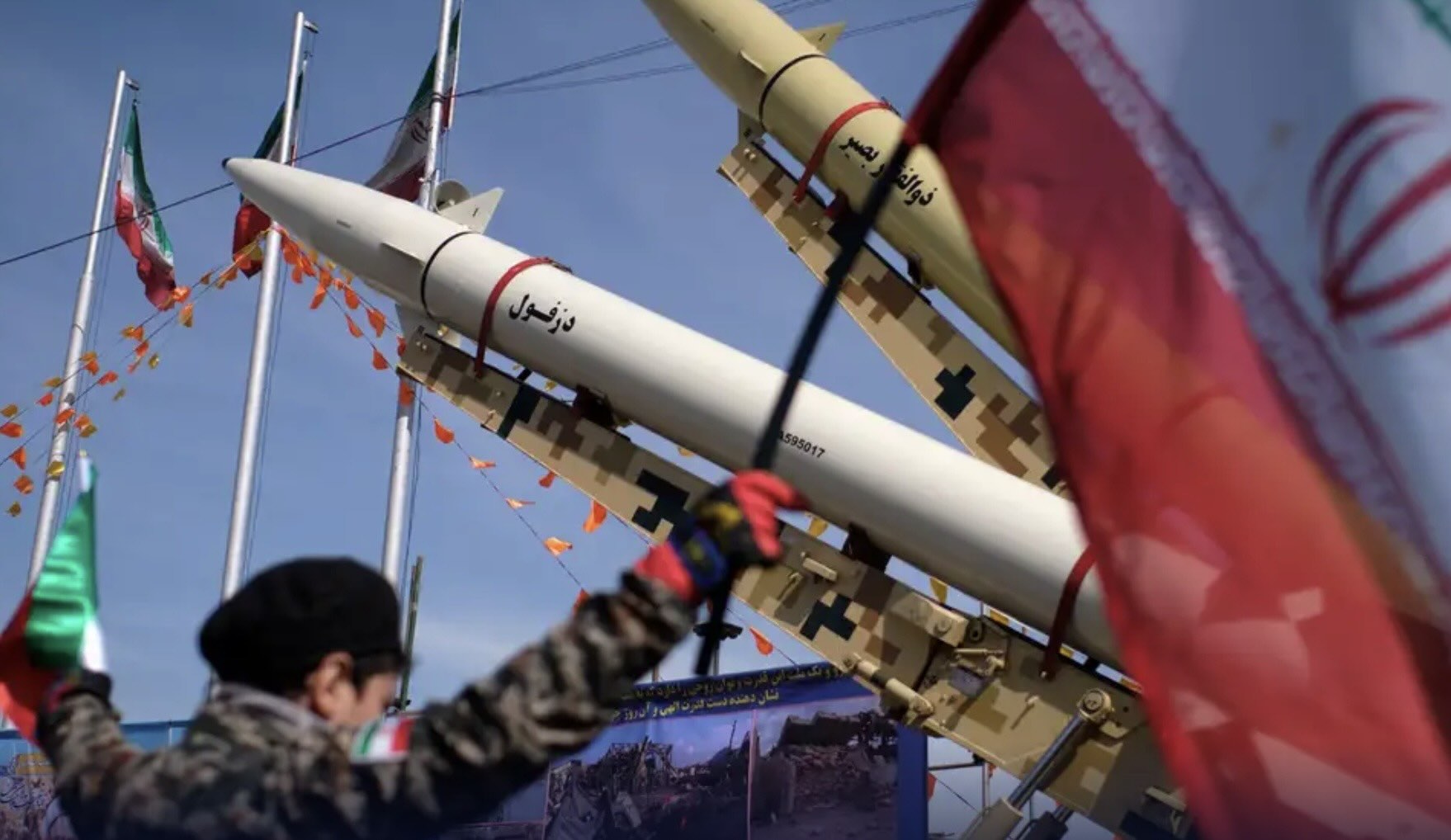
Iran may have used its eight-week ceasefire with the United States to rebuild much of its missile arsenal, possibly with Russian assistance, according to intelligence assessments reported by Bloomberg.
The assessments, cited by Bloomberg, suggest that Tehran now holds around three-quarters of the missile munitions it possessed before the war. That estimate sharply contrasts with US President Donald Trump’s claim last week that Iran had only around 21-22 percent of its missiles remaining.
If Iran’s missile stocks are closer to the higher allied estimate, Tehran would retain the ability to launch a large retaliatory strike if fighting resumes, even after the US-Israeli air campaign that targeted Iranian launchers, storage sites and command infrastructure.
According to the report, Iran may have received unspecified Russian-made missiles during the ceasefire period. One intelligence assessment reportedly indicates that these weapons were likely produced last year. The precise type, quantity and delivery route of the alleged Russian systems have not been publicly confirmed.
The report comes as Washington and Tehran appear close to signing a preliminary agreement aimed at extending the ceasefire, reopening the Strait of Hormuz and launching a new negotiation period over Iran’s nuclear programme. But if Iran has used the pause to restore missile capacity, the military balance behind those talks may be less favourable to Washington and Israel than public statements suggest.
Iran’s ballistic missile and drone arsenal is central to its deterrence strategy. During the conflict that began on 28 February, Iran launched more than 1,850 missiles across the region, along with at least twice as many Shahed-type drones, according to the reported estimates. Those strikes were aimed at Israel, US-linked targets and regional pressure points.
The US and Israel claimed significant success in degrading that capability. By the first month of the war, they estimated that around two-thirds of Iranian launchers had been destroyed. US Defence Secretary Pete Hegseth said in mid-March that Iran’s offensive capability had been reduced by 90 percent.
But the new assessments suggest that damage to Iran’s missile force may have been less decisive than previously presented. In March, intelligence estimates reportedly placed Iran’s remaining missile stockpile at about 60 percent of pre-war levels. The latest assessment of roughly 75 percent would imply either replenishment, recovery of previously inaccessible stocks, foreign assistance, or some combination of all three.
That matters because missile numbers are only one part of the equation. Launchers, storage access, targeting systems, command networks and warhead availability all determine how much of an arsenal can be used in practice.
One explanation is that many Iranian ballistic missiles and launchers were not destroyed outright, but “buried” or trapped by debris after US and Israeli strikes hit underground storage locations. Entrances may have been blocked, making systems temporarily unusable rather than permanently eliminated.
If that is correct, Tehran may have used the ceasefire to reopen storage sites, clear access routes and move surviving stocks. That would help explain why allied estimates of Iran’s available arsenal appear to have risen since March.
The distinction is important for battle damage assessment. Destroying a launcher or missile is not the same as blocking access to it. In a sustained campaign, an adversary can recover buried assets if given time, engineering equipment and freedom from repeated strikes. A ceasefire can therefore become a recovery window as well as a diplomatic pause.
For the United States and Israel, this raises a familiar operational problem: suppression of missile forces requires persistence. If strikes stop before storage and launcher networks are fully neutralised, the target state can rebuild enough capacity to restore deterrence.
The reported presence of Russian-made missiles would add another layer to the story. Moscow and Tehran have already deepened military cooperation through drones, ammunition, air defence and sanctions-evasion networks. Iranian Shahed drones became a major component of Russia’s war against Ukraine, while Russia has provided Tehran with diplomatic cover and military-technical support.
If Russia has helped Iran replenish missile stocks during a ceasefire with the United States, it would signal a more direct role in sustaining Tehran’s strike capacity. That would not only affect the Middle East balance. It would also reinforce the idea of an increasingly integrated anti-Western defence ecosystem linking Russia, Iran and other sanctioned actors.
For NATO and European defence planners, the implication is clear. The Iranian missile file cannot be treated as a separate regional problem. It intersects with the Ukraine war, Russian military supply chains, sanctions enforcement and the broader contest over missile and drone proliferation.
The timing is politically sensitive. Trump has said a US-Iran deal could be signed within days, while Iranian officials have said an agreement is closer than ever. Reports suggest the deal may reopen the Strait of Hormuz and create a 60-day period for nuclear talks.
But the missile issue may not be solved by such an agreement. Iran’s nuclear programme receives most of the diplomatic attention, yet its missile arsenal is the delivery system that makes the threat credible. If Tehran has rebuilt much of that arsenal during the ceasefire, any deal that postpones missile limits would leave a major military risk in place.