Yet the dramatic operation in the English Channel also unfolded against an uncomfortable domestic backdrop: mounting questions over whether the UK is investing sufficiently in the military capabilities required to sustain such commitments.
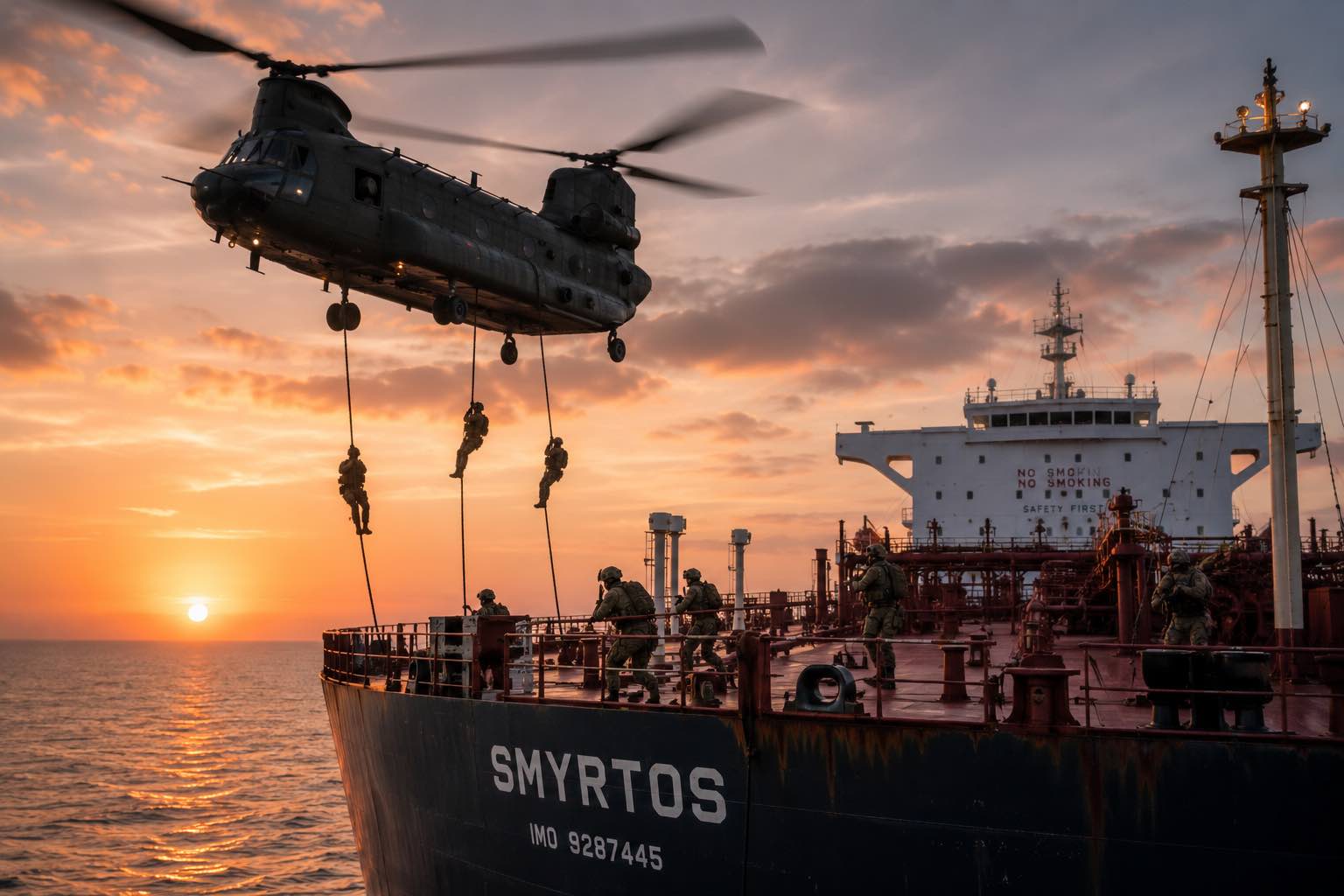
In the early hours of Sunday morning, British armed forces, supported by specialist officers from the National Crime Agency, intercepted and boarded the oil tanker Smyrtos as it transited the Channel. The six-hour operation, involving Royal Marine Commandos, RAF surveillance assets and Royal Navy vessels, culminated in the ship being escorted into British territorial waters, where it remains under investigation off the south coast of England.
Prime Minister Sir Keir Starmer characterised the operation as a direct challenge to those enabling President Vladimir Putin’s war in Ukraine.
“This successful operation delivers yet another blow to Russia and reminds those fuelling Putin’s war in Ukraine that we will not let them hide,” he said.
The vessel itself offers a textbook example of the tactics increasingly employed by Russia’s sanctions-evasion network. According to maritime tracking data, the tanker departed from Ust-Luga, one of Russia’s principal oil export terminals near St Petersburg, on 5 June. Sanctioned since July 2025, the ship has changed both its name and registration multiple times, operating under the flag of Cameroon at the time of its interception.
Western governments have become increasingly concerned about Russia’s shadow fleet — an opaque network of ageing tankers operating through complex ownership structures and frequent reflagging exercises. Britain’s Ministry of Defence estimates that these vessels transport around three-quarters of Russia’s sanctioned oil exports, providing a vital source of revenue for the Kremlin despite international restrictions.
The UK’s legal powers in this area have steadily expanded. Earlier this year, ministers confirmed that British authorities would be authorised to board sanctioned vessels passing through UK waters. Sunday’s operation represents the first practical application of those powers.
The government has imposed sanctions on more than 500 vessels connected to Russia’s energy exports. These measures prohibit ships from entering British ports and prevent UK-based firms from providing insurance, financial services or brokerage support linked to the transportation of Russian oil.
The timing of the operation, however, is politically significant.
It comes amid an unusually turbulent period for the government on defence policy. The long-delayed Defence Investment Plan, expected before next month’s Nato summit, has exposed divisions within the administration over the scale of military spending required to address an increasingly unstable security environment.
Last week saw the resignations of Defence Secretary John Healey and Armed Forces Minister Al Carns, both expressing concerns that the government’s proposed funding levels fall short of strategic necessity.
Healey warned that planned expenditure was insufficient to guarantee Britain’s security, while Carns argued that the emerging blueprint lacked both ambition and adequate financial backing.
The successful interception of Smyrtos may therefore serve a dual purpose for Downing Street. Internationally, it demonstrates Britain’s willingness to enforce sanctions robustly and coordinate closely with allies. French authorities, which have undertaken similar operations, worked alongside British counterparts during the mission.
Domestically, it offers tangible evidence of operational effectiveness at a moment when ministers are under pressure to justify future defence spending commitments.
Whether such operations become routine remains uncertain. Carns suggested that further interventions could follow should similar opportunities arise. Attorney General Richard Hermer emphasised that the government intended to pursue Russia‘s shadow fleet using “the full force of international law”.
As the Nato summit approaches, Sunday’s operation provides a reminder that economic sanctions, however extensive, ultimately depend upon credible enforcement. The interception of a single tanker will not fundamentally alter the trajectory of Russia’s energy exports. But it illustrates how maritime security, once considered peripheral to European defence, has moved back to the centre of strategic thinking.
For Britain, the challenge now lies in matching political resolve with the resources necessary to sustain it.
Russian warship’s escort through Channel puts Britain’s shadow fleet policy under immediate test