Germany and Poland’s new defence agreement marks a practical step in European military cooperation at a moment when NATO’s eastern flank is no longer a peripheral concern but one of the alliance’s central planning problems.
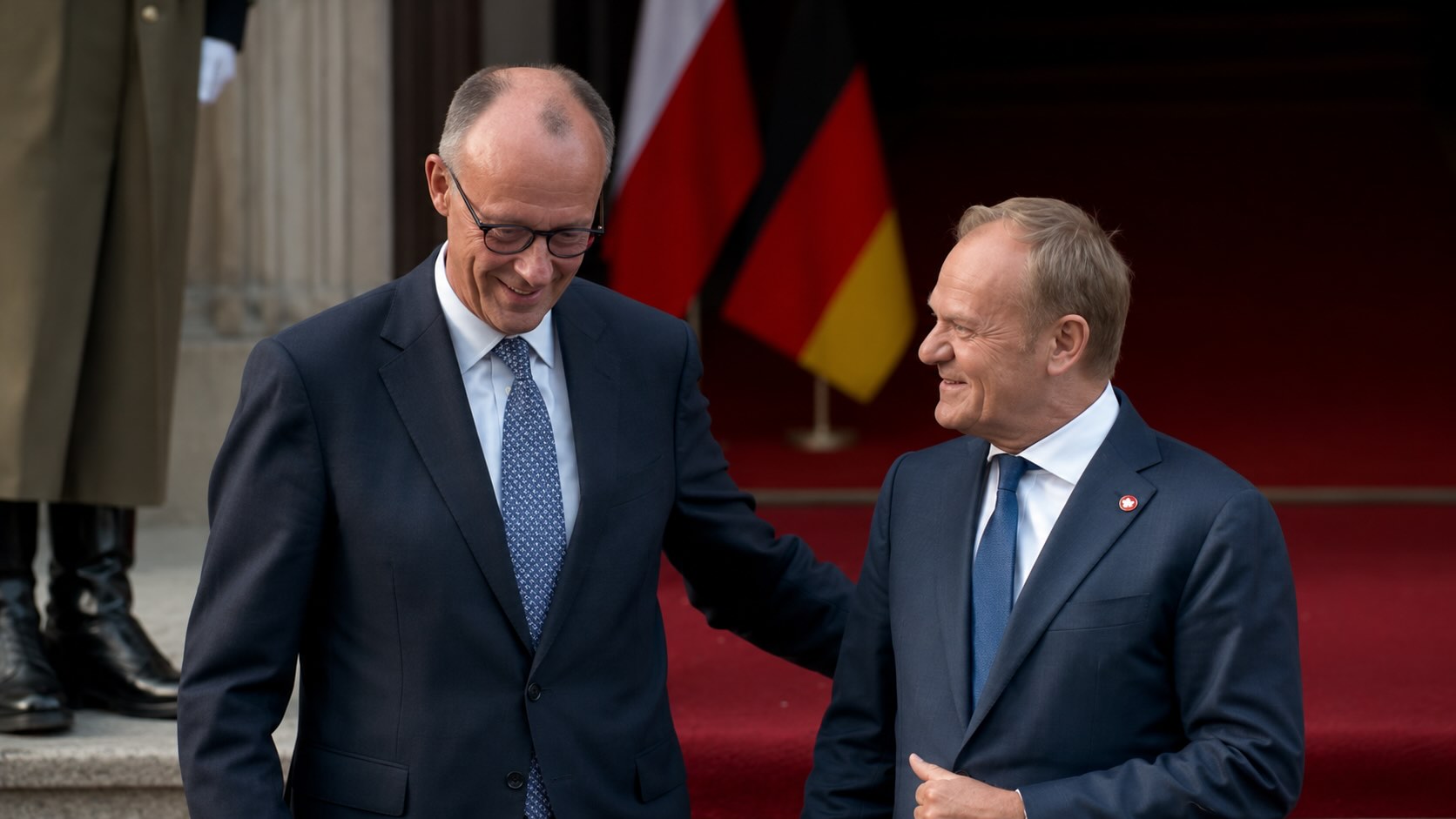
According to Associated Press, Berlin and Warsaw were set to sign the agreement on Wednesday, with the pact covering Baltic Sea security, military mobility, infrastructure, cyber defence and new technologies. The agreement comes as Russia’s war against Ukraine continues to reshape European defence priorities and as uncertainty over long-term US military engagement places more pressure on Europe’s own capabilities.
The significance of the agreement is not that Germany and Poland have suddenly discovered common interests. It is that their practical military interdependence is becoming harder to avoid. Germany is rebuilding the Bundeswehr after decades of underinvestment. Poland is spending heavily, expanding its armed forces and serving as a major logistics hub for support to Ukraine. Together, they sit on the route through which much of Europe’s defence of the Baltic region would have to move.
For years, European security debates were still often structured around a western core and an eastern flank. That language is becoming less useful. Poland is no longer simply a frontline state seeking reassurance from larger allies. It is becoming one of the countries that larger allies must work with if NATO’s regional defence plans are to function.
Poland’s geography explains part of that shift. It borders Ukraine, Belarus and Russia’s Kaliningrad exclave, and it sits between Germany and the Baltic states. Its territory is essential for military mobility, reinforcement routes, logistics, air defence and support to Ukraine. If NATO ever had to defend the Baltic region under wartime conditions, Germany’s role would be substantial, but German forces and supplies would still depend heavily on movement through or alongside Poland.
That is why the agreement’s focus on military mobility and infrastructure is strategically important. These are not secondary technical issues. In a crisis, the ability to move heavy forces, ammunition, fuel, engineering units and air-defence systems across borders could matter as much as headline troop numbers.
The Baltic Sea has also become a more contested operational space. Russia’s position in Kaliningrad, sabotage concerns, undersea infrastructure risks, and the accession of Finland and Sweden to NATO have all changed the region’s military geography. Most Baltic Sea coastal states are now NATO members, but that does not make the region simple to defend.
Germany has a major naval and logistical role in the Baltic, while Poland’s ports, coastline and land routes are increasingly important to alliance planning. Cooperation between the two countries can therefore strengthen both maritime awareness and the land-sea link that would be essential in any Baltic crisis.
The agreement’s inclusion of cyber defence and new technologies also reflects lessons from Ukraine. Modern deterrence is not only about tanks and brigades. It is about resilient networks, protected infrastructure, rapid warning, drone and counter-drone systems, and the ability to sustain communications under attack.
Defence Matters has recently examined how rear areas can no longer be treated as safe assumptions. The German-Polish agreement fits that wider pattern. Roads, railways, ports, cyber networks and energy systems are now part of the battlefield architecture, even before a shot is fired.
The pact also shows the limits of German-Polish reconciliation in defence policy. AP reported that the agreement is expected to be inter-ministerial and practical, rather than a broader political treaty comparable to the bilateral defence arrangements Germany and Poland have each signed with France or the United Kingdom.
That difference matters. Historical wounds remain politically sensitive in Poland, where the memory of Germany’s Second World War occupation and disputes over reparations continue to shape domestic politics. A formal political defence treaty with Germany would be much harder to sell inside Poland, especially to conservative and nationalist audiences.
Yet the practical relationship is moving forward because the strategic pressure is too strong to ignore. Russia’s war has made older political taboos less useful as guides to military planning. Berlin and Warsaw may not be ready for an expansive political defence treaty, but their armed forces, infrastructure planners and cyber agencies need deeper cooperation now.
The agreement also places responsibility on Germany. Berlin has declared ambitions to build the strongest conventional army in Europe and to become a central pillar of European defence. Those ambitions will be judged partly by how effectively Germany works with eastern allies, not only by how much money it spends.
For Poland, the test is different. Warsaw wants recognition as a central security actor, but it must also convert defence spending into interoperable capability, infrastructure and regional leadership. The German-Polish agreement offers a way to do that through practical projects rather than political declarations.
The deeper message is that Europe’s defence map is changing. The centre of gravity is moving toward the countries closest to Russia’s military pressure, but those countries still need western industrial capacity, logistics, command structures and political backing.
A Germany-Poland defence partnership cannot solve Europe’s security problems by itself. But it can help close one of the most important gaps in NATO’s regional posture: the connection between western European military mass and eastern European operational urgency.
If the agreement delivers on mobility, Baltic Sea protection, cyber defence and infrastructure, it will be more than a diplomatic gesture. It will be a sign that European defence is becoming less rhetorical and more geographic: built around the routes, ports, networks and states that would matter first in a crisis.