A senior NATO commander's warning that Western homelands can no longer be treated as safe rear areas points to a hard lesson from Ukraine: logistics, factories, ports, bases and civilian infrastructure are now part of the battlefield.
A senior NATO commander has warned that Western homelands can no longer be assumed to be safe rear areas in a future war, a shift that forces Europe to rethink deterrence beyond tanks, aircraft and ammunition stockpiles.
The warning, reported by Business Insider on 14 June, reflects one of the clearest lessons from Russia’s war against Ukraine. Modern conflict is no longer confined to front lines. Long-range missiles, drones, cyber operations, sabotage, electronic warfare and attacks on industrial infrastructure can reach deep into territory once considered distant from combat.
For NATO, that changes the planning baseline. The alliance cannot only prepare to defend forward-deployed troops on the eastern flank. It must also protect the ports that receive reinforcements, the railways that move armour, the airbases that launch aircraft, the factories that produce ammunition, and the civilian networks that keep military logistics functioning.
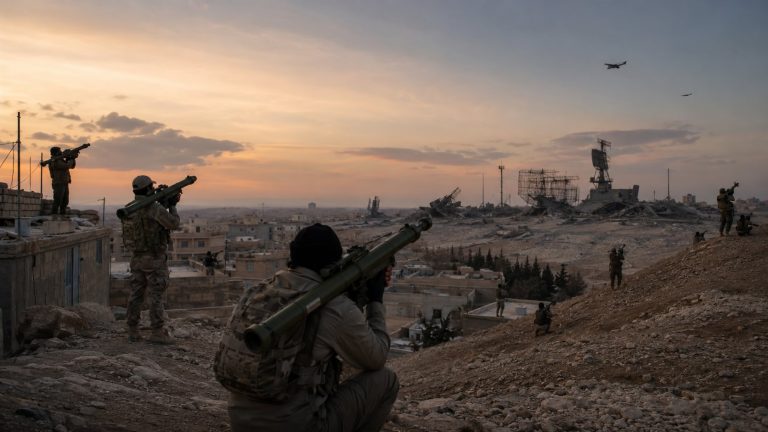
Ukraine has shown how quickly rear areas can become contested space. Russia has attacked energy grids, repair facilities, logistics hubs, railway infrastructure, airfields and defence-related production sites. Ukraine, in turn, has used drones and long-range strikes against Russian fuel depots, naval facilities, factories and supply routes.
The result is a war in which military power depends not only on what is deployed at the front, but on whether the state behind it can keep functioning under attack.
That is the central message for NATO. A European army may have modern equipment on paper, but it will struggle in a prolonged conflict if its ports are disrupted, its airfields are vulnerable, its ammunition plants are exposed, or its transport networks are not protected.
Defence Matters has already examined how US pressure on NATO exposed Europe’s air and naval capability gap. The homeland-defence warning adds another layer: even if Europe improves front-line capability, it must also protect the rear systems that allow those forces to operate.
The problem is not only military. Europe’s rearmament debate has focused heavily on output: more shells, more missiles, more drones, more armoured vehicles and faster procurement. But Ukraine’s experience shows that production capacity is only useful if it can survive attack.
That was the point of Defence Matters’ recent analysis of Ukraine’s distributed defence production model. Centralised factories may be efficient in peacetime, but they create obvious targets in wartime. Dispersal, redundancy, hardened infrastructure and rapid restart capacity are now part of industrial strategy.
For NATO members, this means defence planning must include civilian industry in a much more serious way. Ammunition plants, drone assembly sites, repair depots, fuel storage, semiconductor supply chains and transport infrastructure all become potential pressure points.
The question is no longer simply whether Europe can produce enough. It is whether Europe can keep producing while under attack.
NATO reinforcement plans depend on movement. US and Canadian forces would need to arrive through European ports, move across rail and road networks, and reach staging areas before joining forward operations. That process assumes that ports, bridges, tunnels, depots and command networks remain usable.
Russia’s war in Ukraine suggests that assumption is dangerous. An adversary does not need to defeat NATO forces directly if it can delay reinforcement, disrupt logistics, overload air defence or create political pressure through attacks on civilian infrastructure.
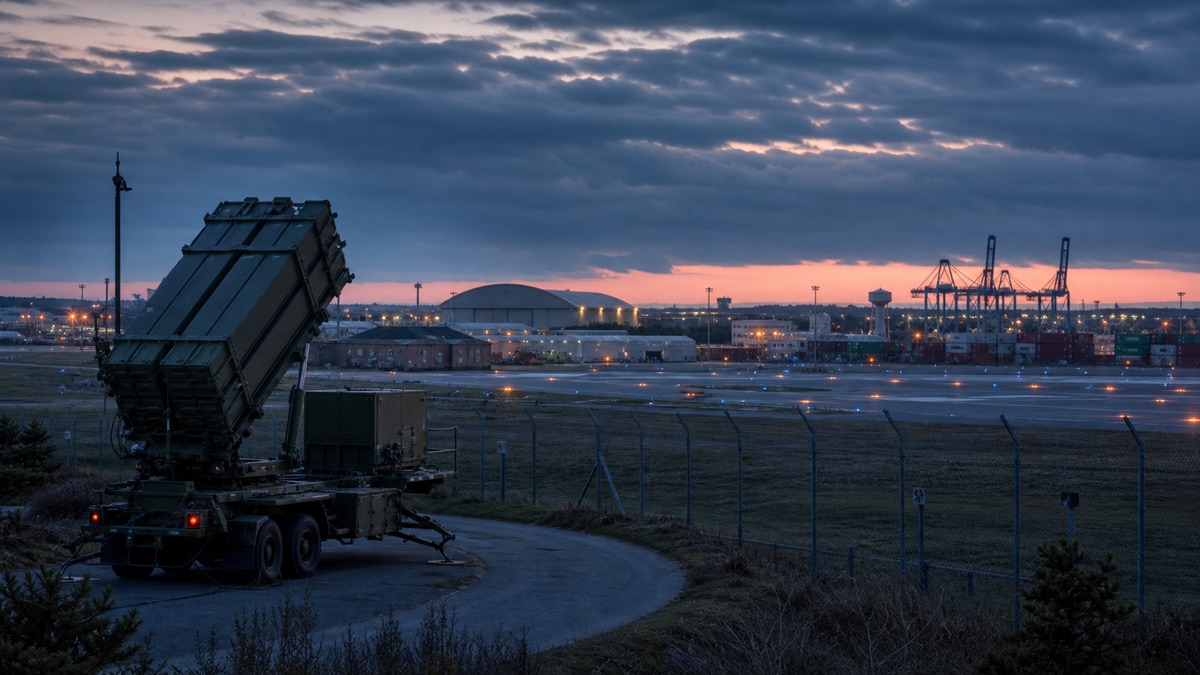
This makes homeland air defence central to deterrence. Europe needs systems that can defend not only capitals and military bases, but also logistics corridors, energy infrastructure and industrial nodes. It also needs passive protection: dispersal, camouflage, hardened shelters, backup power, cyber resilience and emergency repair capacity.
Defence Matters’ analysis of the UK defence spending row before the Ankara summit made the same point from a budget angle. Readiness is not only about deployable formations. It is about the factories, stockpiles, infrastructure and command systems that keep those formations in the fight.
The NATO warning should therefore be read as a doctrine shift. The alliance is moving from a model in which homeland territory supports the battlefield to one in which homeland territory may itself be contested.
That does not mean every European city becomes a front line. It means that critical infrastructure, logistics hubs and industrial capacity must be treated as military-relevant assets. The distinction between civilian rear area and military operating space is becoming less stable.
For European governments, this is politically uncomfortable. Homeland defence requires money for unglamorous things: shelters, stockpiles, local resilience, air-defence coverage, infrastructure protection, emergency communications and industrial continuity planning. These are harder to sell than fighter jets or tanks, but they may decide whether deterrence holds.
NATO’s message is blunt because Ukraine has made it impossible to ignore. Future wars may not allow Europe the luxury of safe depth. Ports, factories, bases and railways will have to be defended as part of the force.
The rear area is no longer safely behind the war. In modern European defence planning, it is part of the war’s first target set.