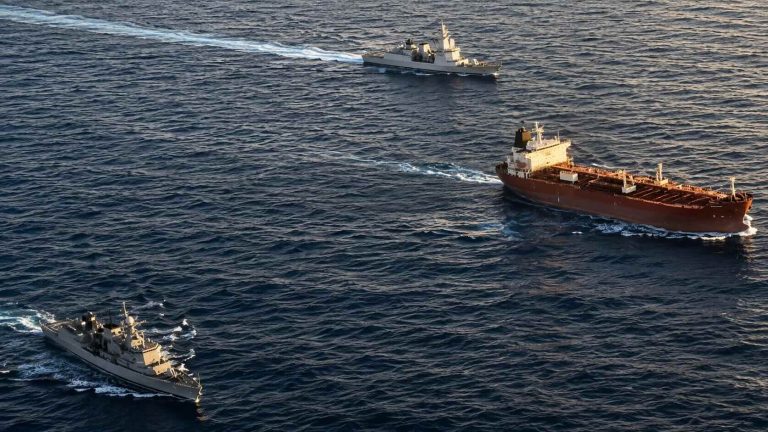
Germany’s decision to send two naval vessels towards the Red Sea has moved Europe’s planned Strait of Hormuz mission from diplomatic discussion into operational preparation.
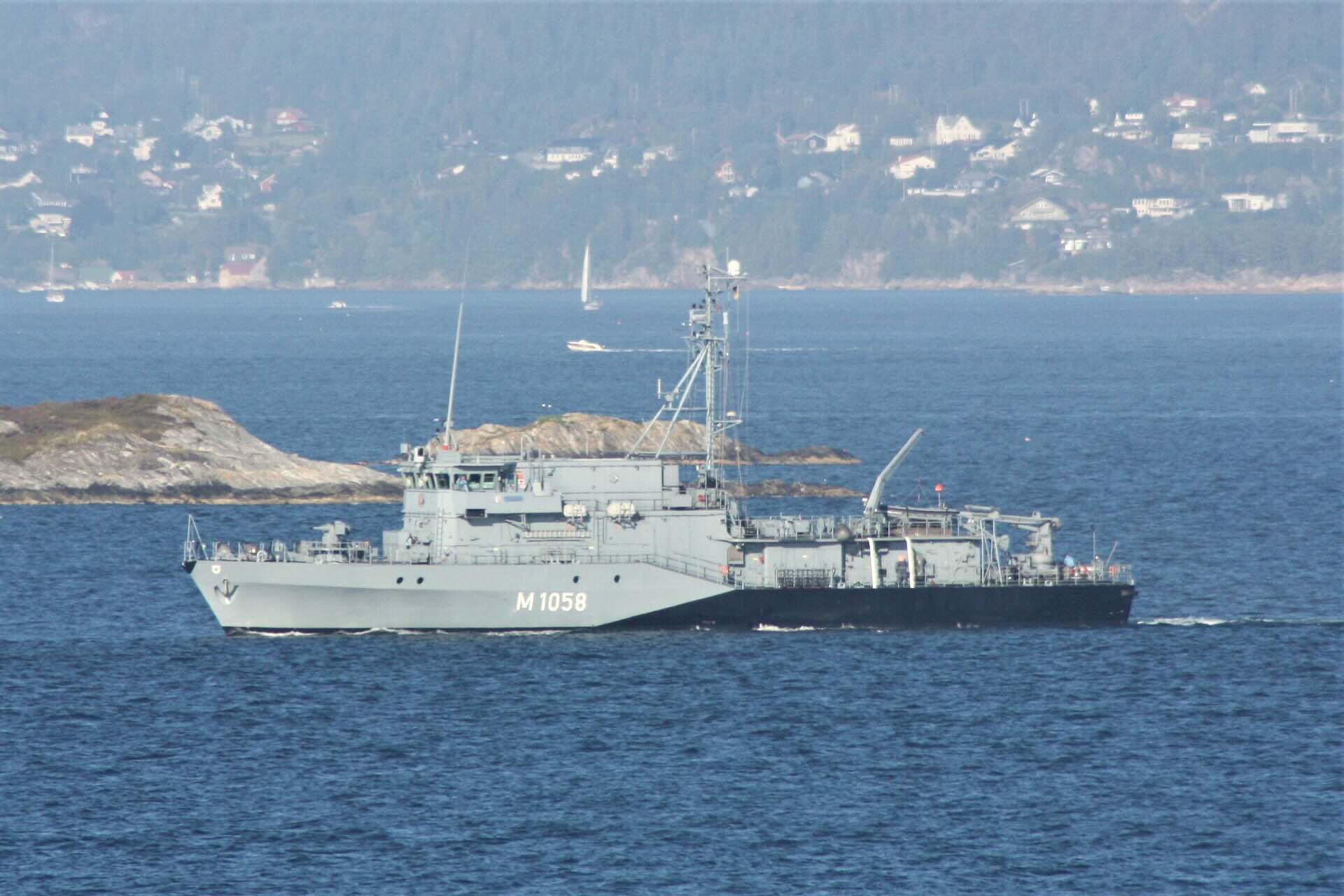
Defence Minister Boris Pistorius said Berlin had dispatched the minehunter Fulda and the supply ship Mosel through the Suez Canal in anticipation of a possible role in a future minesweeping mission. Speaking during a NATO meeting in Brussels, he made clear that any German participation would still depend on political and legal conditions, including the consent of Iran and Oman, according to details of the deployment.
That condition is central to the issue. The Strait of Hormuz is not simply a maritime chokepoint where outside powers can operate without consequence. It lies between Iran and Oman, and any Western naval presence there would carry legal and diplomatic sensitivities. For Berlin, the movement of ships is therefore not a deployment into the strait itself, but a positioning measure intended to reduce reaction time if a mission is authorised.
The step matters because it shows that Europe’s Hormuz planning is entering a practical phase. France and Britain have already pushed for a defensive multinational effort to help restore confidence for commercial shipping and support mine-clearance work. Germany’s move indicates that other European states are preparing to contribute assets if conditions allow.
The proposed mission would be narrowly framed. Its purpose would not be offensive action against Iran, but the reassurance of merchant shipping and the removal of possible hazards after a wider political settlement. Even under that limited model, the task would be difficult. Mine-clearance operations are slow, technical and risky. The presence or suspected presence of mines can keep insurers, shipowners and energy traders cautious long after a ceasefire or memorandum has been announced, with specialists warning that clearing the strait could take weeks rather than days.
This is why the Hormuz question is not only about military signalling. It is also about whether Europe can turn naval commitments into a credible security function in a high-risk trade corridor. The strait remains one of the world’s most important routes for oil and liquefied natural gas. If normal traffic cannot resume with confidence, the consequences reach well beyond the Gulf, affecting energy markets, shipping costs and European economic security.
Germany’s role is also politically sensitive at home. A full military mission would require proper authorisation and a legal basis. Berlin has previously been cautious about moving beyond defensive maritime security tasks. By sending the Fulda and Mosel closer to the region, the government is signalling readiness without yet committing itself to direct action in the Strait of Hormuz.
That distinction will be watched by allies. European governments have spent months discussing how far existing naval structures, including the EU’s Operation Aspides, could be adapted to wider maritime security requirements. Aspides was established to protect shipping in the Red Sea. Extending, linking or supplementing that effort for Hormuz would raise questions about command arrangements, rules of engagement, available ships and the political willingness of member states to accept risk.
The immediate operational issue is mine countermeasures. Europe has some relevant capabilities, but they are limited and highly specialised. Minehunters, support vessels, surveillance assets and command structures would need to work together in a congested and politically contested environment. A mission that appears simple in diplomatic language could prove demanding in practice.
There is also a strategic question. If European states are preparing to secure Hormuz after a US-Iran understanding, they are accepting a role in managing the military consequences of diplomacy in a region where Washington has traditionally dominated security planning. That does not mean Europe is replacing the United States. It does mean European navies may be asked to provide visible, practical support for the reopening of a route on which global markets depend.
For Germany, the deployment is therefore a calculated halfway step. It avoids a premature commitment, but places naval assets where they could be used if a mandate, regional consent and political agreement emerge. It also gives Berlin a role in shaping the European contribution rather than merely reacting to plans led by France and Britain.
The risk is that expectations move faster than authorisation. If Iran rejects a foreign naval presence, or if negotiations with the United States stall, the ships may remain a contingency force rather than part of an active mission. If a deal holds and shipping companies demand verified safe passage, pressure will increase on European governments to act quickly.
Germany’s movement towards the Red Sea is therefore less a show of force than a test of preparedness. Europe has discussed the strategic importance of Hormuz for months. The question now is whether it can assemble the legal mandate, naval assets and political consent needed to make that discussion operational.