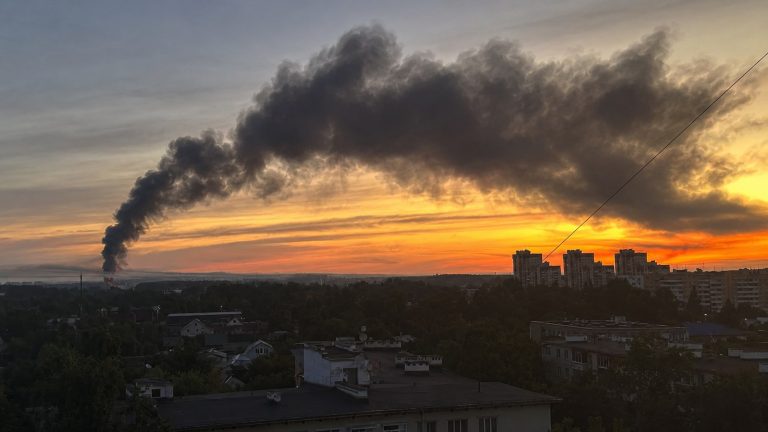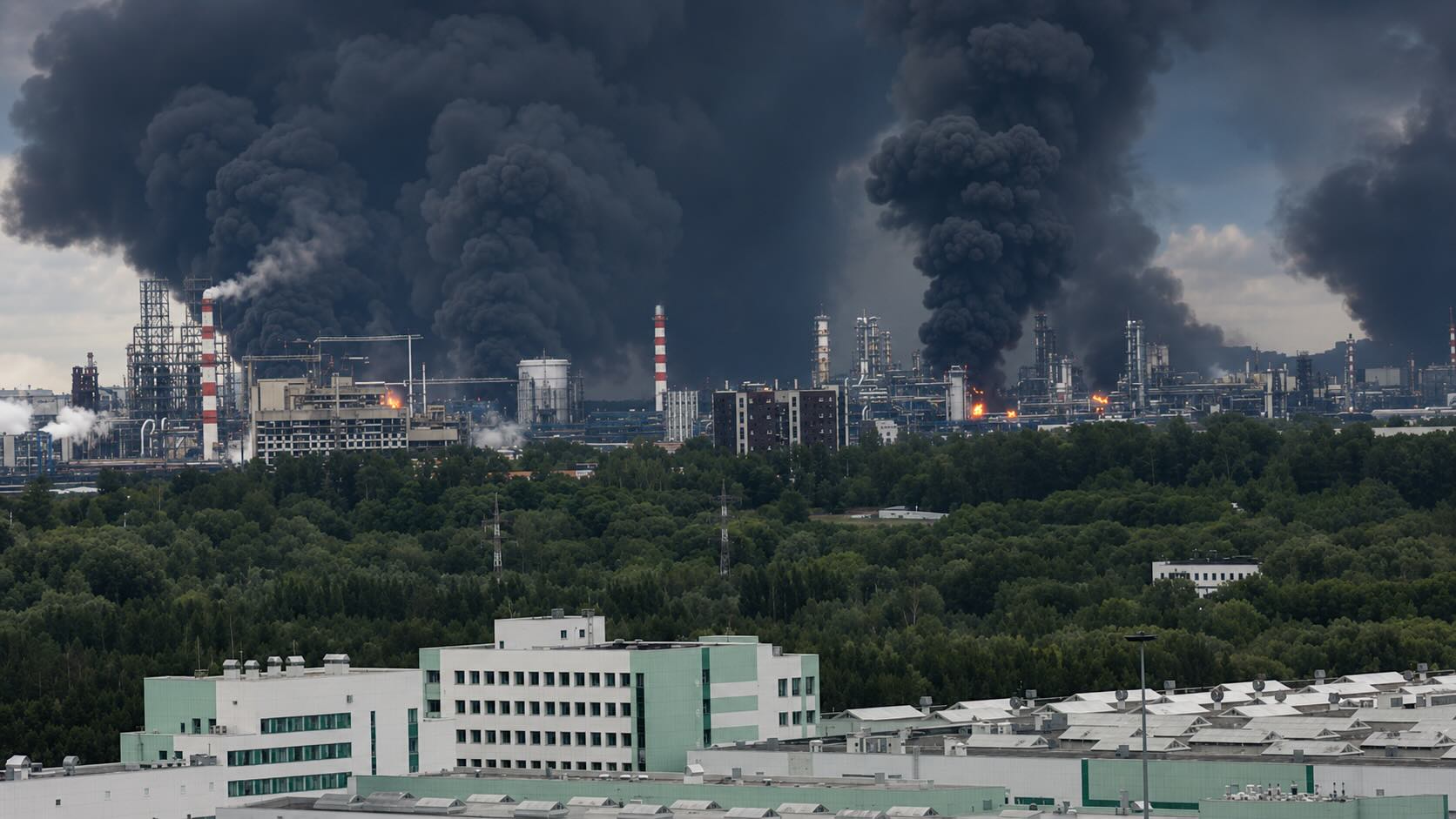
Ukrainian drones struck the Moscow Oil Refinery in Kapotnya early on Thursday, setting off a fire at one of the Russian capital’s main fuel-processing facilities and sending thick black smoke across parts of the city.
The attack on the refinery in south-eastern Moscow came during a large overnight drone operation against targets in and around the capital. Moscow Mayor Sergei Sobyanin said air defences were responding to a “massive attack” and acknowledged that several drones had reached the oil refinery, where emergency services were deployed.
Video footage circulated on social media showed flames within the refinery complex and heavy smoke rising above Kapotnya. Residents in Moscow and the surrounding region reported repeated drone activity during the night and early morning.
Russian authorities said large numbers of drones had been intercepted before reaching the capital. However, the fire at the refinery indicated that at least some aircraft penetrated the layered air defence system protecting Moscow. The scale of the attack also caused disruption to commercial aviation, with temporary restrictions imposed at several Moscow airports.
The Kapotnya facility is located roughly 15 kilometres from the Kremlin and is an important part of the Moscow region’s fuel infrastructure. Ukrainian sources say it supplies a substantial share of the region’s petrol and diesel demand, as well as aviation fuel. Those figures have not been independently confirmed, but previous reporting has described the refinery as the largest fuel supplier to the Moscow region.
The full extent of the damage was not immediately clear. Russian officials did not provide a detailed assessment of affected units, and claims about production disruption remain subject to confirmation. A previous strike on the same facility earlier this week was reported to have halted operations temporarily, according to industry sources.
Ukrainian drone strike on Moscow refinery extends pressure on Russia’s fuel infrastructure
The latest attack forms part of Ukraine’s wider long-range campaign against Russian energy infrastructure. Kyiv has repeatedly targeted refineries, fuel depots and logistics facilities in an effort to reduce Russia’s capacity to finance and sustain its war against Ukraine. The intensification of strikes has contributed to pressure on Russian refining operations and domestic fuel supply.
For Moscow, the political effect is also considerable. The capital is among the most heavily defended areas of Russia. A successful strike on an industrial facility within the city limits raises questions about the effectiveness of Russian air defences against repeated drone attacks, particularly when low-cost unmanned systems are used in large numbers.
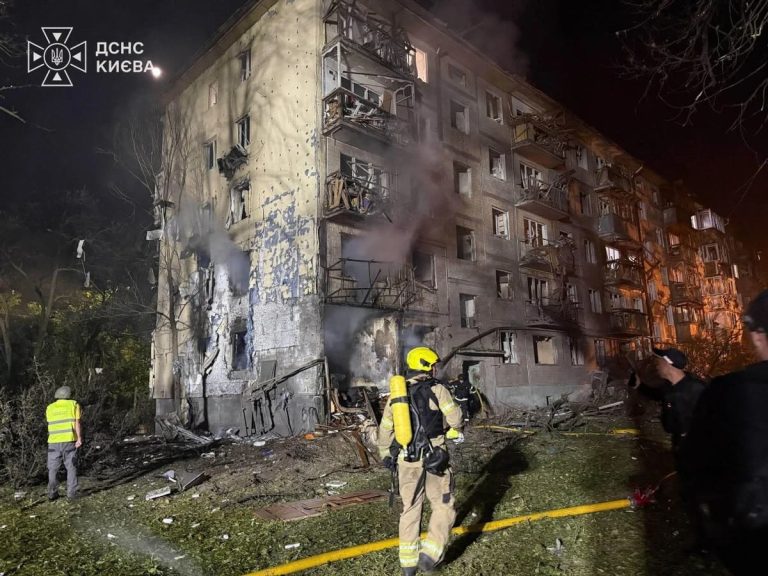
The incident came as Russia continued its own missile and drone attacks against Ukrainian cities. Ukraine has argued that strikes on Russian military-industrial and energy facilities are a response to Moscow’s continuing attacks on Ukrainian civilian and critical infrastructure. Russia routinely describes Ukrainian drone attacks on its territory as terrorism, while saying little about the military role of many targeted facilities.
The Kapotnya strike is unlikely to change the battlefield immediately. Its importance lies in the cumulative pressure created by repeated attacks on refineries and fuel infrastructure. Russia’s war effort depends on fuel supply, transport capacity and industrial resilience, not only on manpower and weapons production.
Even where Russian air defences intercept most incoming drones, a small number reaching high-value targets can still produce visible and costly effects. In this case, the smoke rising over Moscow carried a wider message: critical infrastructure in the Russian capital is no longer beyond the reach of Ukraine’s drone campaign.
The immediate consequences will depend on the scale of damage, the speed of repairs and whether refinery output is interrupted. Those details may take time to establish. What is already clear is that Ukraine has again placed pressure on Russia’s energy system, this time inside the capital itself.