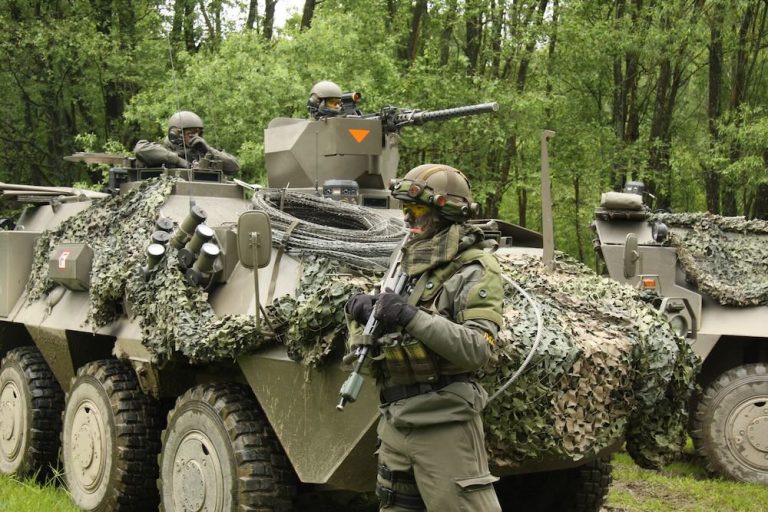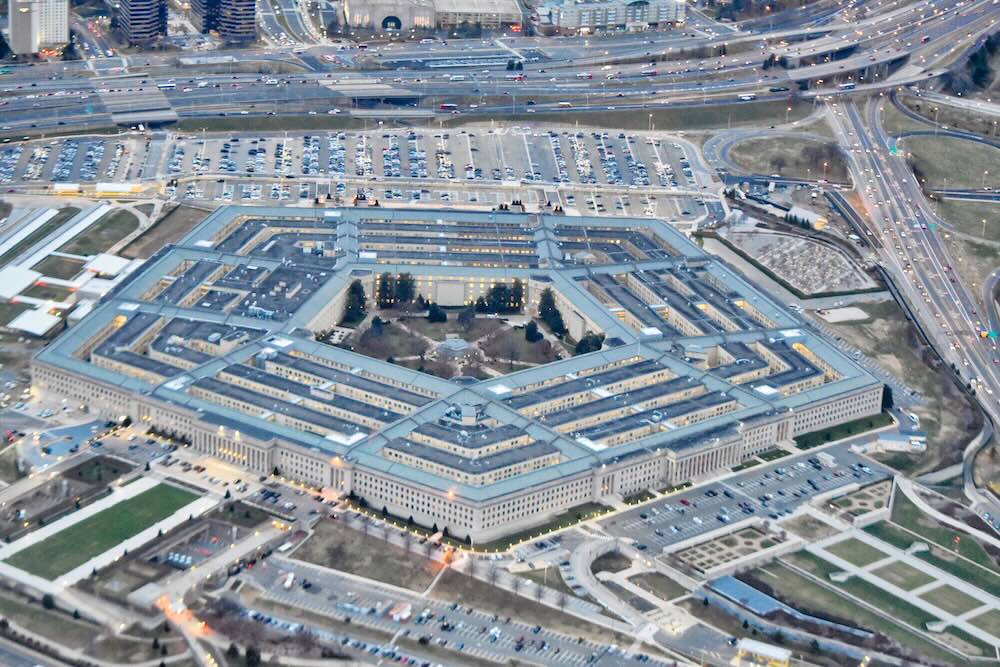
The Pentagon’s review moves NATO burden-sharing from speeches and spending targets to the harder question of which American forces, bases and specialist capabilities will remain in Europe.
The Pentagon has begun a review of the American military presence in Europe, turning a long-running argument about allied burden-sharing into a process that could alter bases, deployments and the specialist capabilities on which NATO still depends.
Elbridge Colby, the Pentagon’s under-secretary for policy, has presented the exercise as part of a transfer of primary responsibility for Europe’s conventional defence to European allies. Public reporting on Tuesday said the formal work had begun after being announced in June.
The administration has insisted that the United States is not leaving NATO. The Pentagon’s account of the review said it could last up to six months and would involve US and European military commands, Congress and allied governments.
That reassurance does not make the review inconsequential. “Presence” can be reduced without an alliance treaty being abandoned. A brigade can rotate less often; a headquarters can shrink; aircraft can return to the United States; or equipment can remain in Europe with fewer troops assigned to it.
The most important question is therefore not how many American personnel are counted on the continent on a particular day. It is which military functions they provide and how quickly Europe could replace them.
Public debate tends to focus on the total number of US troops in Europe. That figure is politically visible but strategically incomplete.
American forces provide intelligence, surveillance, air and missile defence, aerial refuelling, long-range fires, strategic lift, communications and command systems. They also connect European formations to US reinforcement and nuclear deterrence.
Some ground units can be replaced more readily than those enabling capabilities. Europe has substantial armies, but many allies still rely on American support to move, protect and sustain them at scale.
A review driven mainly by personnel totals could therefore produce a larger loss of capability than the headline suggests. Removing a small specialist unit may matter more than withdrawing a much larger formation that an ally can duplicate.
AFP reporting described the process as part of Washington’s effort to shift responsibility. The Pentagon should publish enough of its method for allies to understand whether the review is based on military risk, political pressure or the demand to free forces for the Indo-Pacific.
The most sensitive decisions concern NATO’s eastern members. Poland and the Baltic states see a visible American presence as both combat power and a political guarantee that the United States would be engaged immediately in a crisis.
Washington may argue that better-armed European allies can assume more of the conventional mission while American strategic power remains behind them. That is plausible only if the transfer is sequenced.
Air defence, ammunition stocks, logistics and command arrangements must be functioning before a US capability leaves. A promise that Europe will fill the gap several years later would create a period of greater vulnerability and invite Russia to test the alliance.
Defence Matters has already reported on signs of a US pullback affecting Estonia and NATO’s eastern flank. A continent-wide review materially advances that story because separate adjustments may now form part of a coherent posture decision.
European governments have spent years demanding a larger voice in transatlantic security while relying on American capabilities. They cannot credibly object to every transfer of responsibility.
They can, however, demand consultation and military logic. An abrupt reduction designed to produce a political headline would weaken the very European capacity Washington says it wants to build.
Allies need to identify which American functions they cannot replace by the review’s conclusion. Those should become urgent multinational procurement and readiness priorities. A vague commitment to “spend more” will not answer a decision about a particular reconnaissance, logistics or air-defence unit.
The European response should also avoid duplicating expensive structures country by country. Strategic lift, space-based intelligence and integrated command systems are natural areas for shared investment.
There is a risk of moral hazard in the other direction. If every European capability gap becomes a reason for the United States to stay indefinitely, allies have little incentive to complete the substitution. The review needs staged conditions: specific European outputs linked to specific American posture changes.
The administration’s wider strategic argument is that American forces are finite. Resources tied to Europe cannot simultaneously deter China in the western Pacific or protect the US homeland.
Colby has argued that Europe should become the primary conventional defender of its own theatre, supported by American strategic power. In a February NATO speech, he stressed usable forces, munitions, logistics and integrated command rather than spending figures alone.
That is a more serious standard than the familiar dispute over percentages of gross domestic product. It also exposes Europe’s weakness: additional budgets do not immediately produce trained units or industrial capacity.
Russia will examine the review for signs that deterrence is becoming less certain. China will watch whether a European reduction genuinely releases relevant American forces or merely creates a second set of costly reinforcement requirements.
The outcome should be judged in four areas: permanent bases, rotational ground and air forces, specialist enablers and pre-positioned equipment. Nuclear arrangements and the command structure require separate scrutiny because small changes can carry disproportionate political meaning.
Congress may resist withdrawals that affect local military interests or are judged to weaken deterrence. Host countries will lobby to retain bases that bring both security and economic benefits.
The review will also test whether consultation is substantive. Allies should be told what risk Washington believes a change creates and what European action would reduce it. Notification after a decision would not constitute burden-sharing; it would be unilateral retrenchment.
The United States is entitled to reconsider a posture shaped by earlier eras. Europe is obliged to develop more of the power needed for its own defence. Neither proposition answers how the transition should occur.
That is why the review matters. NATO burden-sharing has reached the point where rhetoric gives way to aircraft, depots, headquarters and people. The alliance will be strengthened only if responsibility moves after capability is ready—not before it.