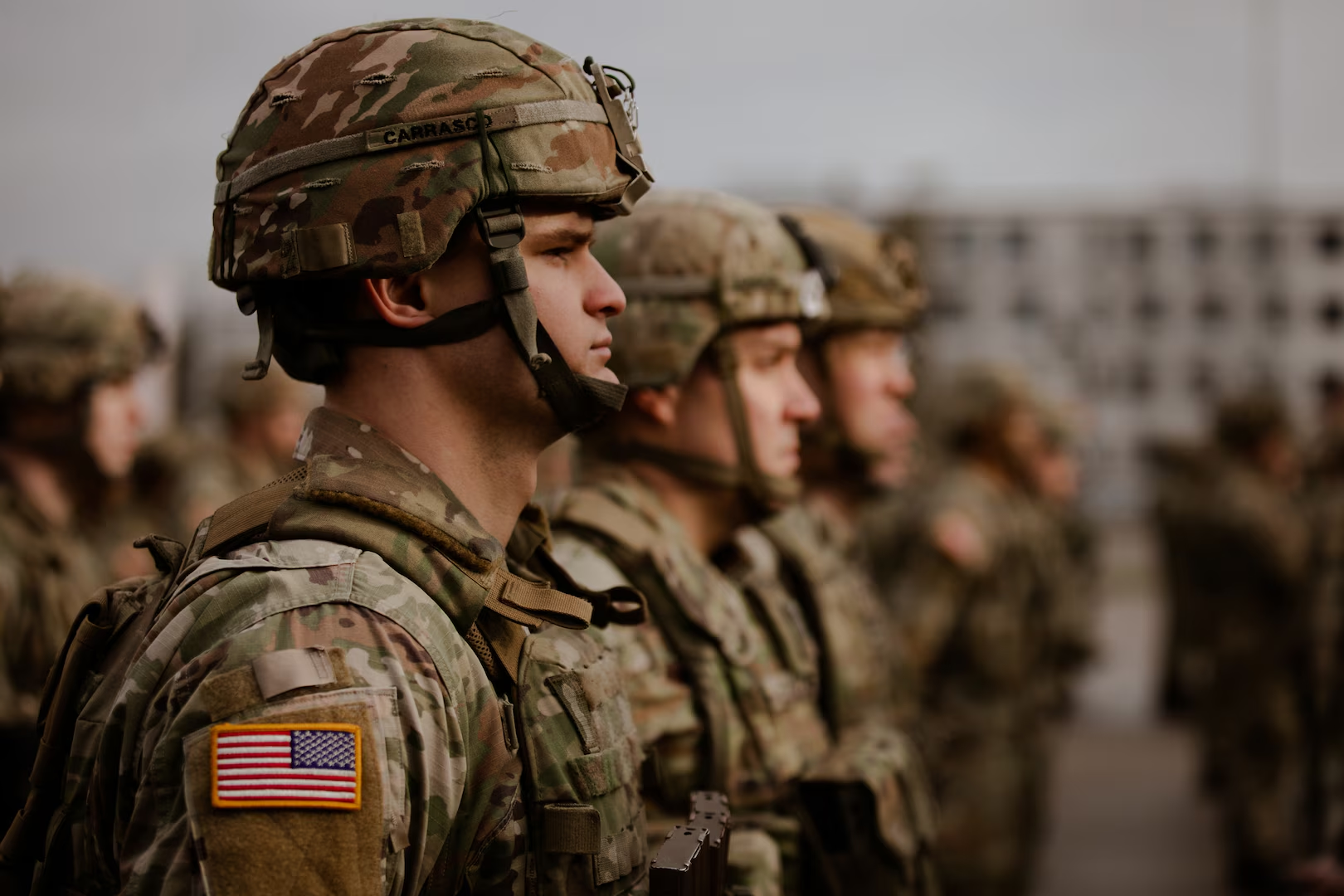
The quiet withdrawal of several hundred US troops from Estonia has unsettled NATO’s eastern flank, raising questions about whether European defence spending increases will translate into continued American military commitment.
Reuters, in a 17 July report, said Estonian Defence Minister Hanno Pevkur revealed before the Ankara NATO summit that US troops deployed to Estonia in winter had been withdrawn, with no clear indication of whether or when they would return.
The development is sensitive because Estonia, Latvia, Lithuania and Poland have presented themselves as the alliance’s most committed spenders. At Ankara, Baltic and Polish delegates wore badges marking them as members of the “five percent club”, reflecting their achievement of NATO’s spending target.
The implicit bargain has been that higher European spending would keep the United States politically invested in European defence. The Estonia withdrawal complicates that assumption. If Washington reduces its presence even where allies meet or exceed spending targets, eastern-flank governments will need to plan for more uncertainty.
The issue is not only numbers. US deployments in the Baltic region provide reassurance, deterrence and access to capabilities that smaller allies cannot easily replace. A few hundred troops may not determine the outcome of a war, but their presence signals that any attack would immediately involve American forces.
Defence Matters has recently covered Europe’s efforts to fill capability gaps and accelerate procurement, including Franco-German disputes over future weapons programmes. The US pullback adds another layer: European rearmament may be necessary not only to share the burden, but to hedge against reduced US availability.
For Estonia and its neighbours, the operational question is how to compensate. More national spending helps, but it does not instantly replace US intelligence, air defence, long-range fires, logistics or command assets. That is why eastern-flank states are likely to push for clearer NATO force-posture commitments.
The political question is sharper. If spending five per cent of GDP does not secure predictable US presence, the alliance’s burden-sharing debate will shift from money to reliability. That would force Europe to think about deterrence less as a budget target and more as a force-posture problem.