

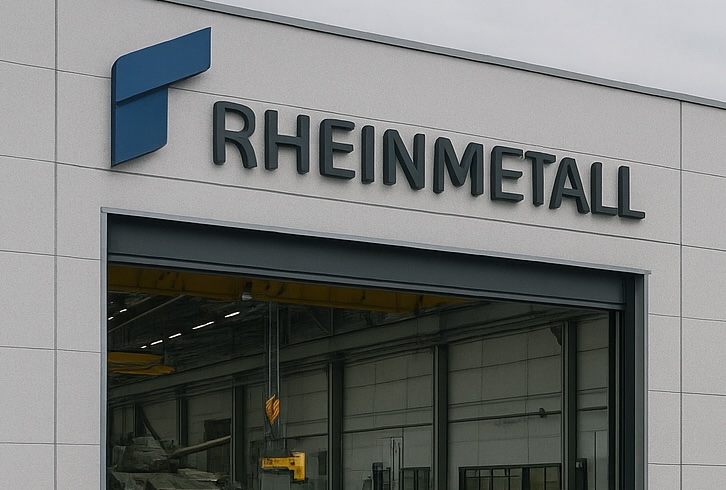
Record revenue and orders show the force of European defence demand, while negative operating cash flow exposes the strain of turning budgets into deliveries.
Rheinmetall’s preliminary second-quarter results offer a clear measure of Europe’s rearmament: revenue rose by nearly 70 per cent, operating profit exceeded market expectations and the group’s backlog climbed above €80 billion.
The less reassuring figure was operating free cash flow, which remained negative as the timing of advance payments, working capital and rapid expansion absorbed money. The combination, reported by Reuters, illustrates the industrial problem behind higher defence budgets. Contracts can be signed more quickly than factories, suppliers and cash cycles can adjust.
Rheinmetall said recent awards totalled €11.37 billion. Those orders provide years of future work and demonstrate demand across ammunition, vehicles, air defence and other systems. They also create obligations to buy materials, recruit staff, expand facilities and meet delivery schedules before the full contract value becomes cash.
The company’s performance is consequently both a success story and a warning. Europe is no longer short of declared demand. The challenge is converting that demand into sustained production without allowing financing or execution to become the next bottleneck.
A backlog records contracted work that has not yet been completed. It gives investors visibility and supports decisions to expand capacity. It does not mean that €80 billion is immediately available to fund factories.
Cash arrives according to contract terms. Governments may provide advances, pay against milestones or settle after delivery. Rheinmetall, meanwhile, must finance inventories, supplier deposits, labour and equipment.
When activity grows rapidly, working capital can consume cash even while profit rises. More shells and vehicle components are held at different stages of production; receivables increase; new sites require spending before they reach efficient output.
Negative operating free cash flow is therefore not automatically evidence of a weak business. In this context, it is partly the arithmetic of expansion. But it deserves attention because a persistent gap between profit and cash can constrain investment or increase borrowing.
The precise timing of customer advances matters greatly. Governments that want faster output cannot treat payment schedules as an administrative detail. Well-designed advances can support capacity; uncertain or delayed payments transfer financing pressure to manufacturers and their suppliers.
European governments have announced larger budgets and placed major orders after Russia’s full-scale invasion of Ukraine exposed depleted stocks and limited surge capacity. The early political question was whether spending would rise. The current industrial question is whether production can rise at the required pace.
Rheinmetall has expanded facilities, acquired businesses and increased output. Its first-quarter statement already showed strong growth driven by military demand.
Scaling defence production is more difficult than adding an ordinary consumer product. Explosives plants require permits and safety distances. Vehicle programmes depend on specialised parts. Skilled workers take time to train. Suppliers may hesitate to invest if orders beyond the current emergency are uncertain.
A record backlog helps resolve that uncertainty. It demonstrates enough demand to justify capital expenditure. Yet a backlog can also conceal congestion. If delivery dates extend too far, a large order book may reflect capacity constraints as much as commercial strength.
Customers should therefore scrutinise output, lead times and milestone performance rather than celebrating contract values alone.
Not every order in a defence pipeline is equally secure. Budgets change, governments alter requirements and multinational programmes can be delayed or cancelled.
Rheinmetall’s own notice concerning the possible consequences of cancellation of the F126 frigate programme shows how a political or procurement decision can affect industrial planning even during a period of exceptional demand.
A diversified backlog reduces dependence on a single programme, but it does not remove contractual risk. Companies must avoid building permanent cost structures around work that remains subject to options, parliamentary approval or design disputes.
Governments have a corresponding responsibility to give industry stable requirements. Repeated specification changes, short contracts and stop-start funding raise costs. If Europe wants capacity available during a crisis, it must support production through predictable multi-year orders.
Large prime contractors receive the headlines, but smaller suppliers often finance expansion on less favourable terms. They may need new machine tools, security clearances and additional staff to meet a prime contractor’s schedule.
If payments arrive late or volumes change, those businesses have less room to absorb the shock. A prime can report a strong backlog while a critical sub-supplier struggles for working capital.
Rheinmetall’s cash-conversion challenge should therefore be considered across the chain. Advance payments need to reach the companies actually purchasing materials and increasing output. Contract terms should not leave smaller firms financing national readiness.
Labour is another constraint. Rapid hiring can increase headcount before productivity rises. Experienced engineers and production managers cannot be created instantly, and competition across the defence sector may push up wages without expanding the total skills base.
Training partnerships and long-term visibility are as important as factory announcements.
The next results should be judged against several practical indicators: conversion of backlog into sales, development of inventories and receivables, capital expenditure, customer advances and delivery performance.
Margins matter, but a high margin on delayed output does not restore a depleted ammunition stock. Cash flow matters, but temporary investment-related outflows may be necessary to create strategic capacity.
The useful question is whether Rheinmetall can move from expansion financed by timing-sensitive advances to a stable cycle in which production, payment and reinvestment reinforce one another.
For governments, the figures are evidence that procurement policy and industrial policy are now inseparable. Faster contracting must be matched by timely payment, realistic requirements and support for suppliers. Otherwise, political urgency will accumulate as an order book that industry cannot deliver quickly enough.
Rheinmetall’s results show that Europe’s defence revival is commercially real. Revenue and backlog have moved beyond promises. The negative cash figure reveals the next stage of the problem: rearmament is not complete when a budget is voted or a contract signed. It is complete only when factories have the people, materials and financing to put usable equipment in military hands.
Rheinmetall chief’s drone remarks expose a wider defence-industry argument



Britain’s Consistent Message on Ukraine Carries Growing Weight at the OSCE